Table of Contents
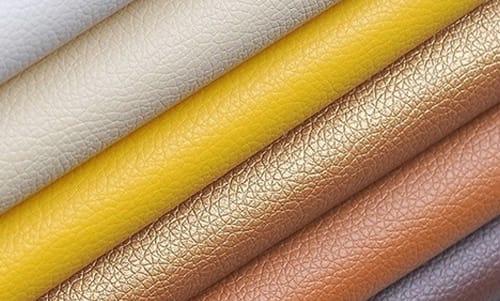
In modern synthetic leather manufacturing, lightweight performance and surface comfort are key competitive factors. Behind these qualities lies one of the most critical pieces of equipment in the production line—the PVC foaming furnace.
The foaming stage determines not only the weight of PVC leather but also its softness, elasticity, and structural stability. A poorly controlled foaming process can compromise the entire production batch, regardless of upstream coating quality.
Why Foaming Determines PVC Leather Performance
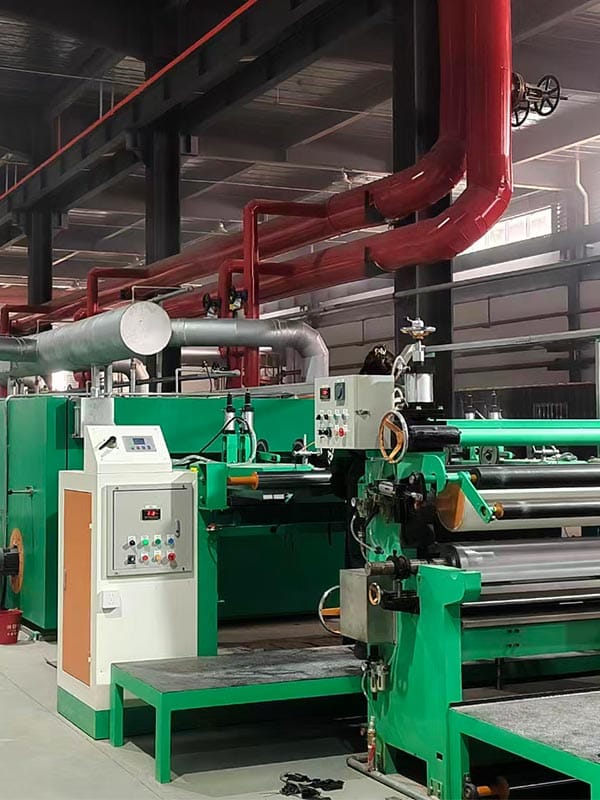
During PVC leather production, the PVC paste or compound undergoes controlled thermal expansion inside the PVC foaming furnace. This process creates a uniform microporous structure within the material.
The resulting foamed layer directly affects:
- Softness—Microcellular structure provides cushioning feel
- Elasticity—Proper expansion ensures resilience and flexibility
- Weight reduction – Controlled density lowers material weight
- Thermal insulation performance
- Surface smoothness and uniformity
If the foaming structure is inconsistent, the final synthetic leather may show uneven thickness, unstable density, or visible surface defects.
Therefore, the PVC foaming furnace is not simply a heating chamber—it is a precision thermal control system that defines product performance.
Key Control Factors in PVC Foaming
Achieving stable and repeatable foaming results requires precise coordination of multiple parameters. A high-performance PVC foaming furnace must ensure:
1. Precise Temperature Control
Foaming is highly temperature-sensitive. If the temperature is:
- Too low → incomplete foaming
- Too high → cell rupture or surface blistering
- Fluctuating → inconsistent density
Advanced temperature zoning and PID control systems are essential for maintaining thermal accuracy throughout the furnace length.
2. Uniform Heat Distribution
Uneven heating can cause:
- Local over-expansion
- Uneven thickness
- Surface waviness
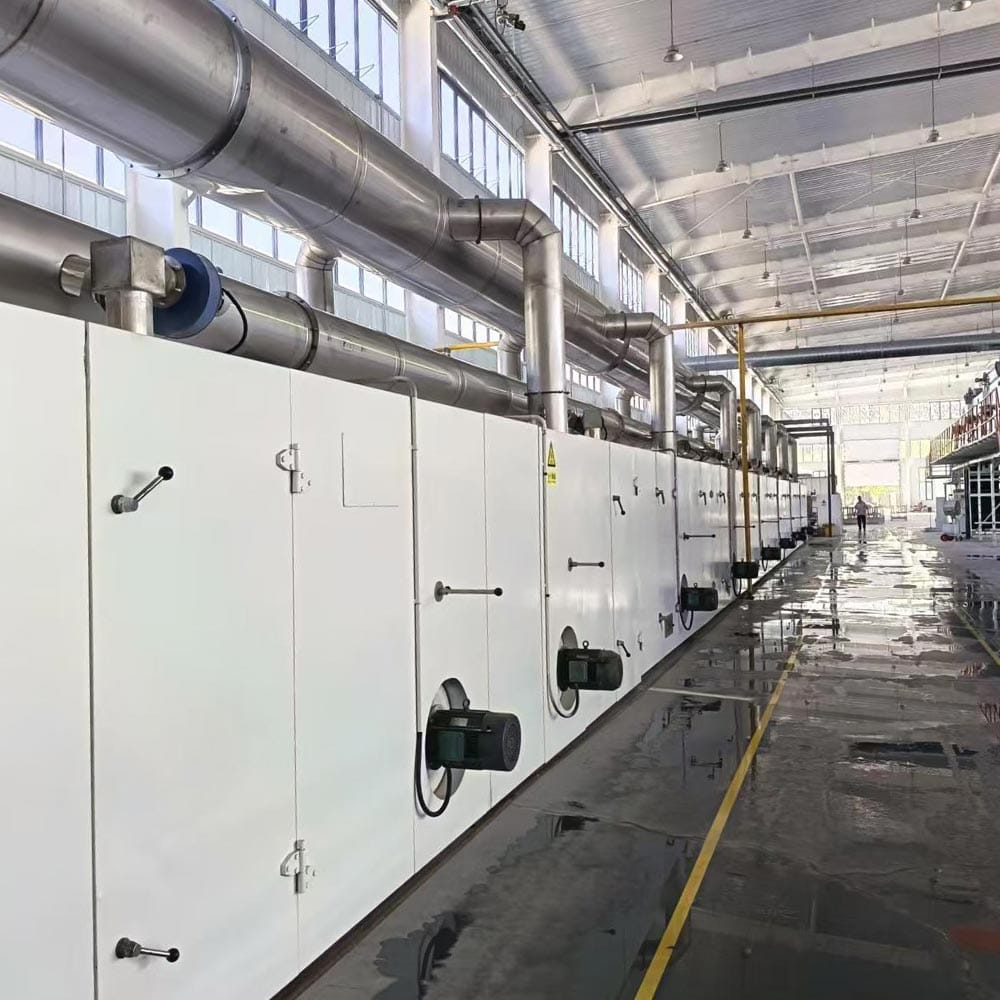
A well-designed PVC foaming furnace uses optimized airflow circulation and insulated chamber structures to ensure consistent heat transfer across the material width.
3. Consistent Conveying Speed
Line speed must be synchronized with:
- Material formulation
- Foaming agent activation temperature
- Desired expansion ratio
Even small speed variations can alter foaming time, resulting in structural inconsistency.
This is why integrated control between the conveying system and furnace heating zones is critical.
Common Foaming Problems and Practical Solutions
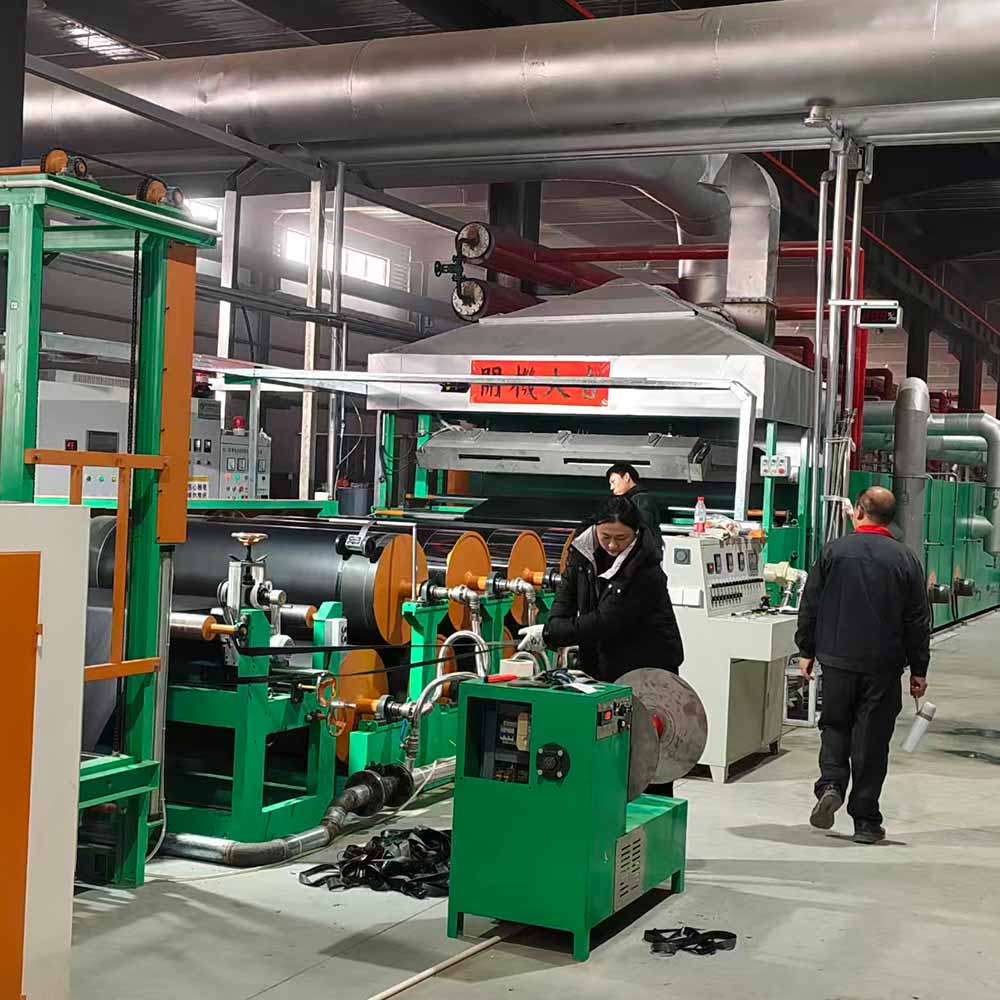
In real production environments, foaming defects typically stem from equipment instability rather than material formulation alone.
Common Issues:
- Uneven foaming density
- Surface bubbles or pinholes
- Thickness variation
- Edge shrinkage
- Internal structural collapse
Root Causes Often Include:
- Poor thermal insulation
- Inconsistent airflow design
- Slow temperature recovery
- Unstable conveyor tension
A professionally engineered PVC foaming furnace minimizes these risks through stable structural design, optimized airflow channels, and responsive control systems.
In large-scale synthetic leather production, reliability over continuous operation is far more important than short-term high heating output.
The Role of PVC Foaming Furnace in a Complete Production Line
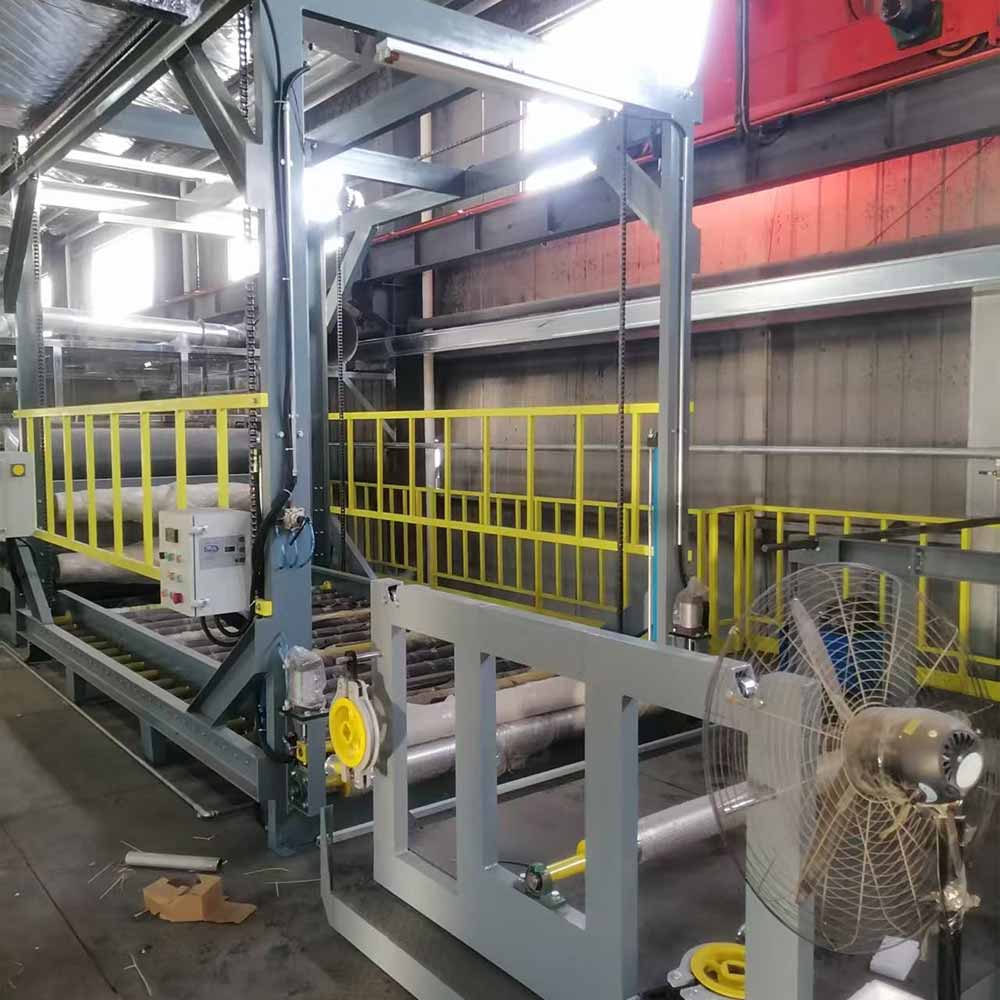
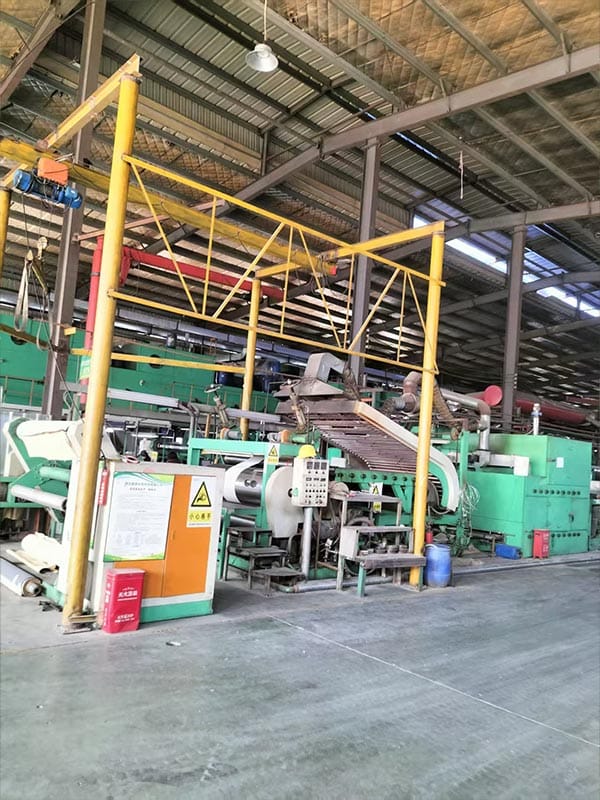
In a full PVC synthetic leather production line, the PVC foaming furnace must operate in harmony with:
- Coating machines
- Gelation ovens
- Embossing units
- Cooling systems
- Winding systems
Any mismatch in speed or temperature control can disrupt downstream processing.
This is why integrated production line solutions outperform isolated equipment purchasing. A PVC foaming furnace must be engineered as part of a coordinated system, not as a standalone machine.
Nanjing Jinzhihang Machinery Co., Ltd. Design Philosophy for PVC Foaming Furnaces
As a professional manufacturer of leather processing machinery, Nanjing Jinzhihang Machinery Co., Ltd. focuses on long-term operational stability rather than short-term peak heating performance.
Our PVC foaming furnace design philosophy includes:
- Multi-zone independent temperature control
- Optimized hot air circulation systems
- High-efficiency thermal insulation structure
- Stable conveying and tension control integration
- Energy-efficient operation for continuous production
We emphasize:
Thermal stability + continuous reliability + system integration
Because in industrial PVC leather production, consistency is profitability.
Long-Term Value of a High-Quality PVC Foaming Furnace
While some manufacturers prioritize lower initial equipment cost, the long-term operational impact of a high-quality PVC foaming furnace includes:
- Reduced scrap rates
- Stable lightweight performance
- Lower energy consumption
- Shorter commissioning time
- Higher production efficiency
- Extended equipment lifespan
In competitive synthetic leather markets, consistent foaming quality directly enhances product competitiveness.
Conclusion
The PVC foaming furnace plays a decisive role in determining the structural integrity, weight, softness, and overall performance of synthetic leather.
For manufacturers seeking stable lightweight PVC leather production, investing in a well-designed, thermally stable, and fully integrated PVC foaming furnace is not optional—it is essential.
Nanjing Jinzhihang Machinery Co., Ltd. is committed to delivering reliable, high-performance PVC foaming furnace solutions that support efficient and scalable leather production.
FAQ
What is a PVC foaming furnace?
A PVC foaming furnace is a specialized thermal processing unit used in synthetic leather production. It activates foaming agents within PVC material under controlled temperature conditions to create a uniform microporous structure.
How does temperature affect PVC foaming quality?
Foaming agents decompose within a specific temperature range.
If the temperature is unstable or uneven:
Cell structure becomes inconsistent
Surface defects may appear
Density control becomes inaccurate
Precise multi-zone temperature control is critical for consistent foaming expansion.
Why is airflow design important in a PVC foaming furnace?
Uniform airflow ensures consistent heat transfer across the full material width. Poor airflow design can cause:
Local overheating
Uneven thickness
Surface blistering
Optimized circulation systems improve thermal stability and energy efficiency.
What causes uneven foaming in PVC synthetic leather?
Uneven foaming is typically caused by:
Temperature fluctuations
Inconsistent conveyor speed
Tension instability
Poor furnace insulation
Stable mechanical structure and synchronized control systems help eliminate these issues.
How is a PVC foaming furnace integrated into a complete production line?
In a full PVC leather production line, the PVC foaming furnace must operate in synchronization with:
Coating systems
Gelation ovens
Embossing units
Cooling and winding systems
Integrated control ensures stable material flow and consistent expansion ratios.