Table of Contents
The global demand for high-performance synthetic leather continues to grow as manufacturers seek materials that combine durability, softness, and breathability. Among various production technologies, the Wet Process PU Leather Manufacturing Line remains one of the most technically advanced and commercially competitive solutions for producing premium polyurethane leather.
If you are planning to invest in a new production line or upgrade an existing plant, understanding how a wet process line works and how to select the right configuration is critical. This guide will walk you through the full production process, core equipment, cost structure, environmental considerations, automation trends, and strategic decision-making factors. By the end, you will have a clear technical and commercial framework to evaluate your investment with confidence.
Introduction
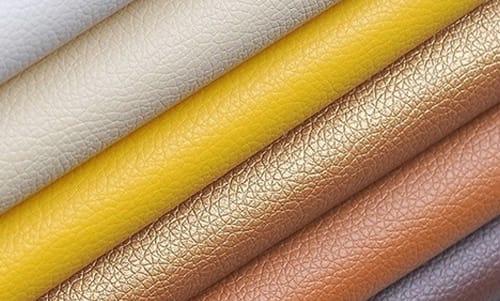
Wet process PU leather is widely recognized for its microporous structure, which enhances breathability and gives the material a more natural hand feel. Compared to dry process PU leather, it offers better flexibility and comfort, making it suitable for high-end upholstery, footwear, and automotive interiors.
According to industry research published by global polymer market analysts in recent years, polyurethane-based synthetic leather continues to experience steady annual growth due to rising demand for lightweight and durable alternatives to natural leather. Wet process technology plays a major role in this growth because of its ability to produce high-performance materials with consistent quality.
For manufacturers, this means one thing: investing in a reliable Wet Process PU Leather Manufacturing Line is not just about production capacity; it is about staying competitive in a performance-driven market.
What Is a Wet Process PU Leather Manufacturing Line?
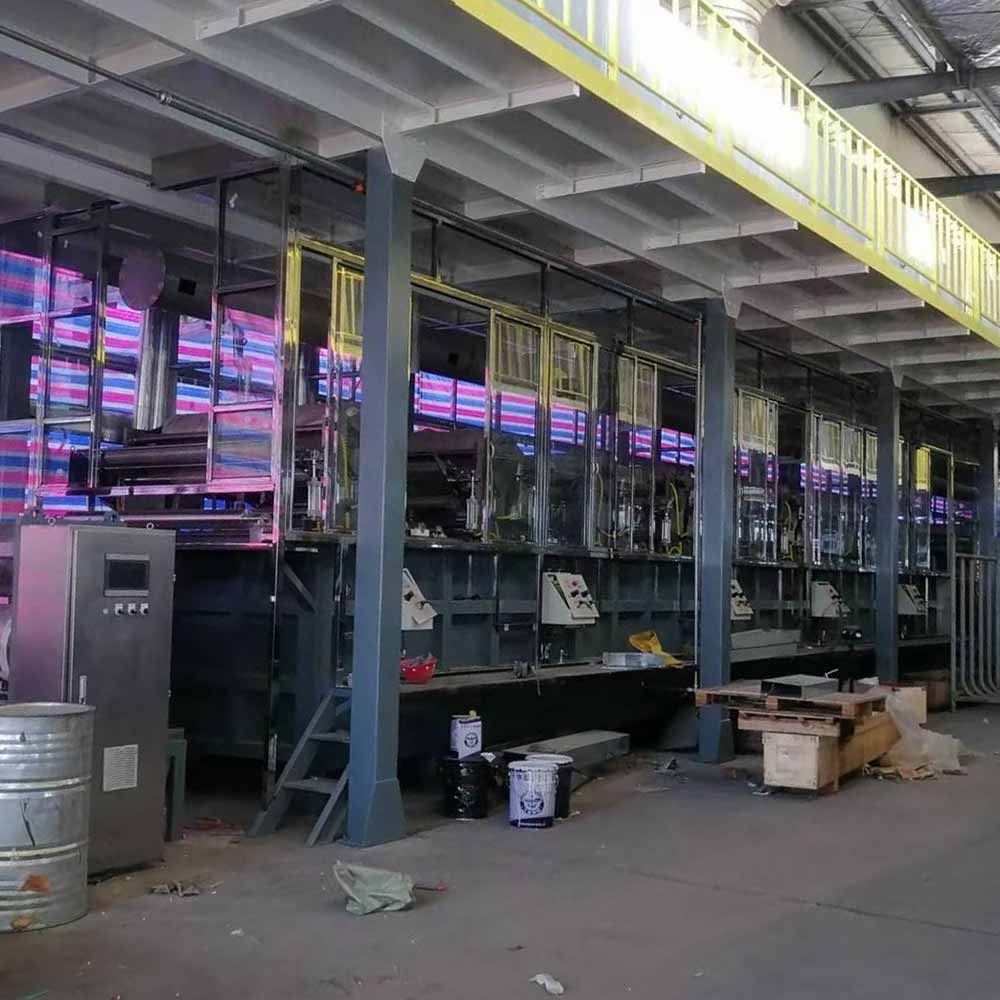
A Wet Process PU Leather Manufacturing Line is a continuous industrial system designed to produce polyurethane synthetic leather using a coagulation process. In simple terms, PU resin dissolved in a solvent is coated onto a base fabric and then passed through a coagulation bath, where water triggers phase separation and forms a microporous structure.
Unlike dry process production, which relies mainly on solvent evaporation, wet process production involves controlled chemical and physical reactions. This results in superior breathability and softness.
Key advantages include:
- Enhanced air permeability
- Improved flexibility and softness
- Strong bonding between coating and substrate
- Better adaptability for high-end applications
Understanding these characteristics helps you position your product correctly in the market.
Complete Production Process Breakdown
To make informed decisions, you need to understand each stage of the Wet Process PU Leather Manufacturing Line.
Base Fabric Feeding System
The process begins with feeding the base fabric into the line. Tension control systems ensure consistent alignment and prevent wrinkles.
PU Resin Preparation and Mixing
Polyurethane resin is mixed with solvent and additives. Viscosity control at this stage directly affects coating thickness and final texture.
Coating Section
The resin mixture is evenly applied to the fabric using precision coating equipment. Thickness control here is essential for product uniformity.
Coagulation Tank System
This is the core of the wet process. When the coated fabric enters the water bath, solvent exchange occurs. The water causes phase separation, creating a microporous structure that defines wet process PU leather.
Washing and Solvent Removal
Multiple washing stages remove residual solvent. Efficient washing reduces environmental impact and improves product safety.
Squeezing and Dehydration
Excess water is removed mechanically to prepare the material for drying.
Drying and Curing
Controlled heating removes remaining moisture and stabilizes the polymer structure.
Surface Finishing and Embossing
Depending on product requirements, embossing or surface treatment enhances texture and appearance.
Each stage must be precisely synchronized. A minor imbalance in temperature, speed, or concentration can affect final product quality.
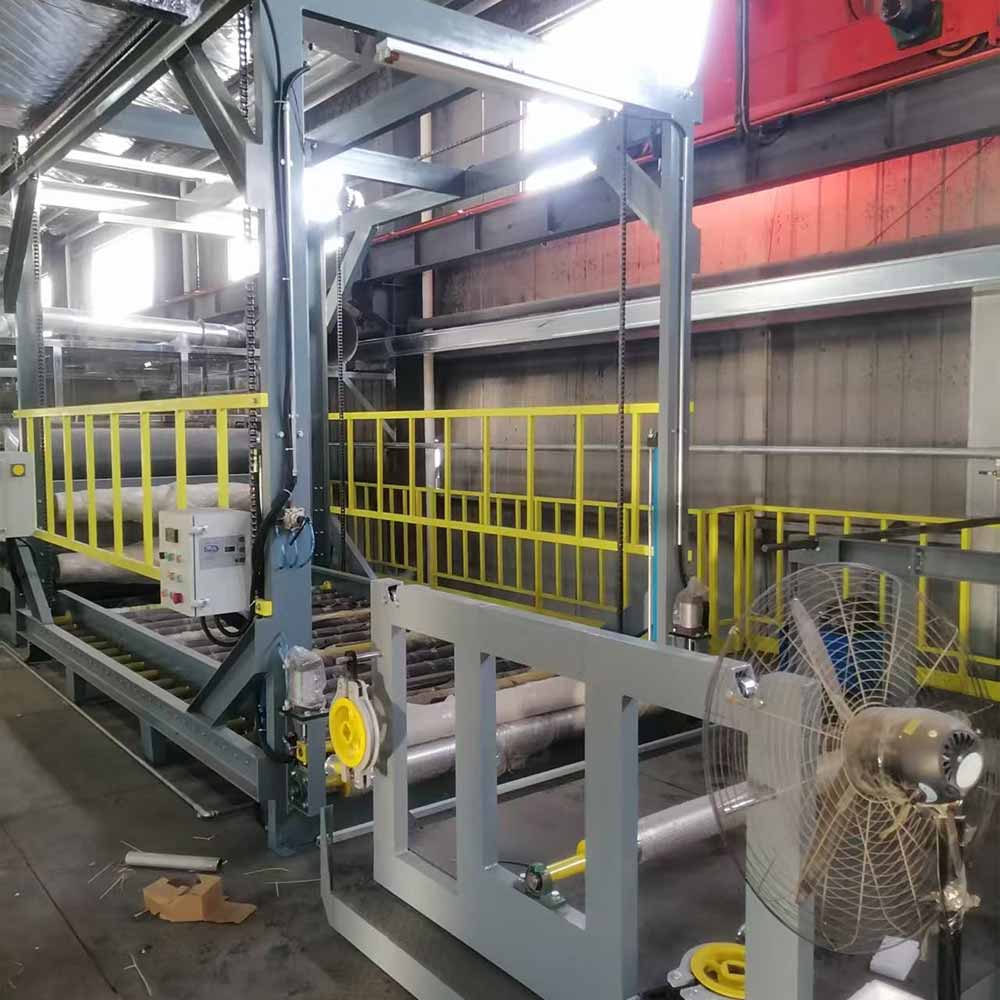
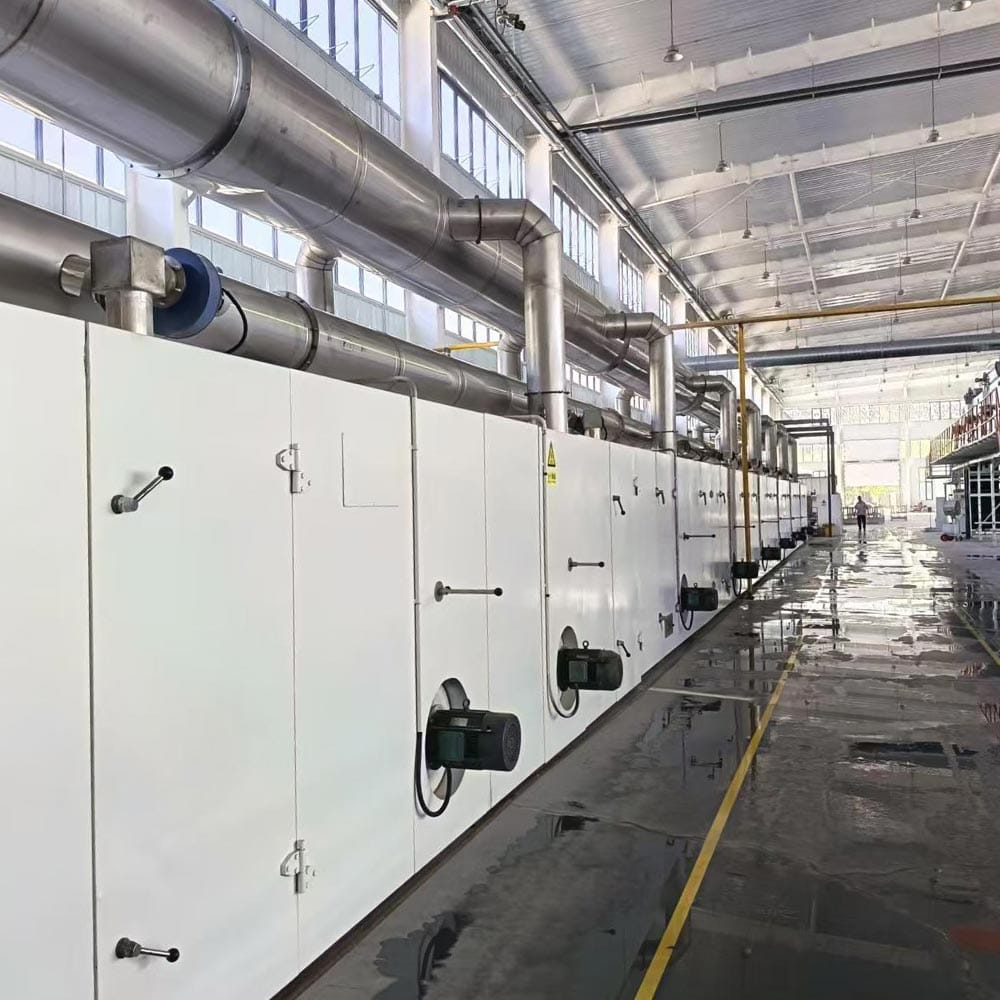
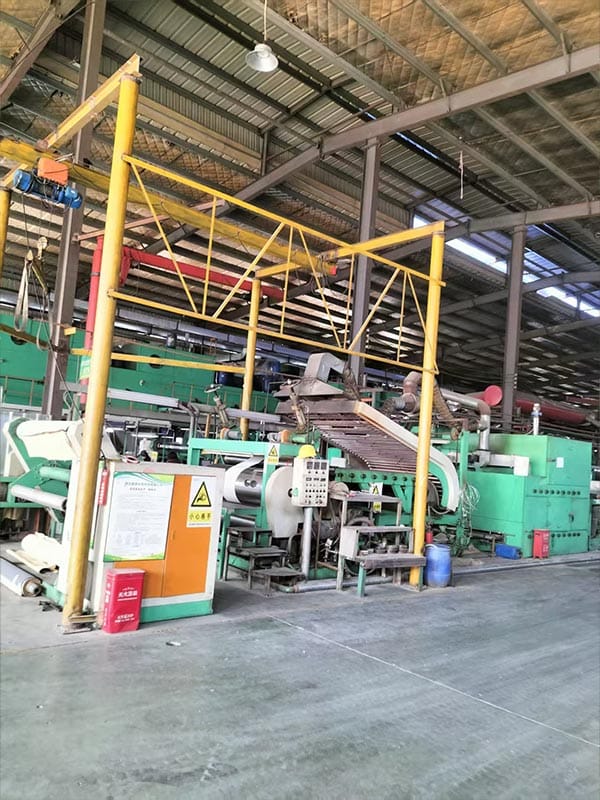
Key Equipment in a Wet Process PU Leather Manufacturing Line
A complete line typically includes:
- Coating machine with adjustable gap control
- Coagulation bath with temperature regulation
- Multi-stage washing unit
- Squeezing machine
- Drying oven system with segmented heating zones
- DMF recovery system
- PLC-based automation and tension control systems
The integration level of these systems determines overall efficiency and consistency.
Understanding the Coagulation Process in Depth
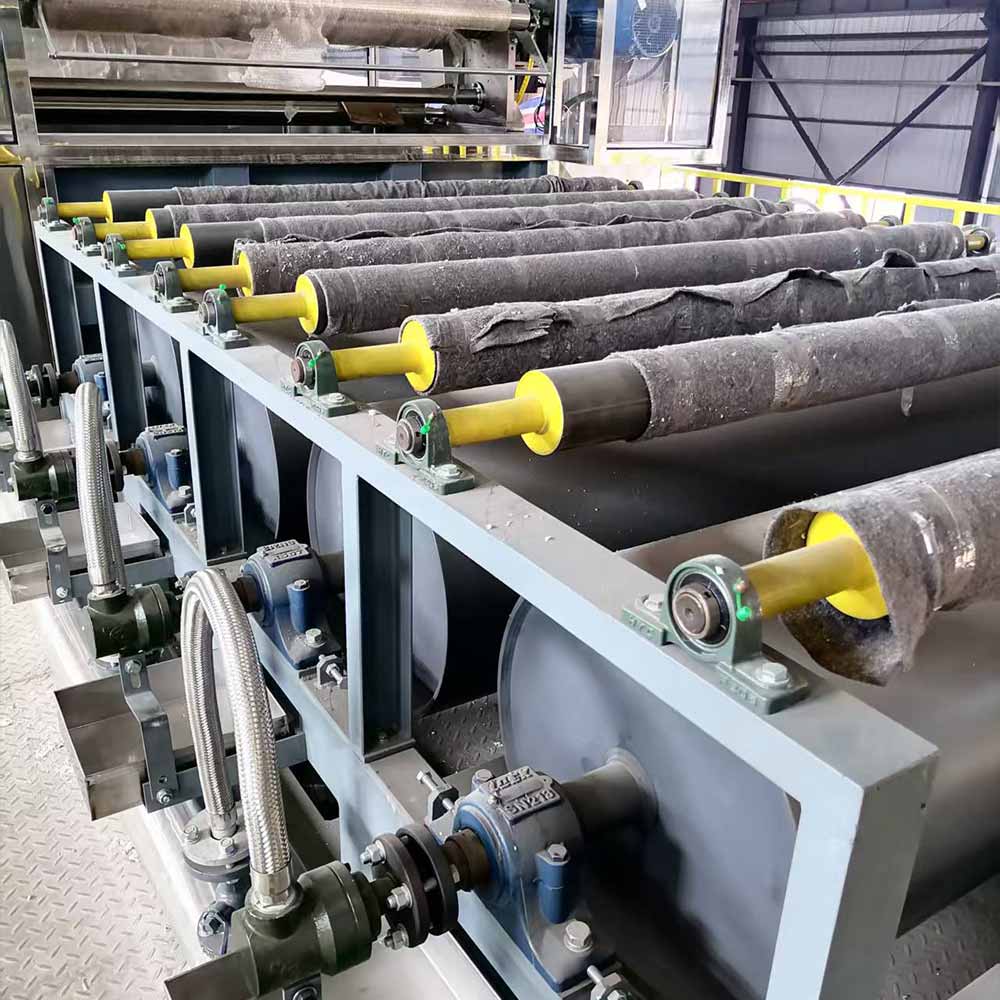
The coagulation stage is what differentiates wet process technology from other methods.
When the PU resin solution contacts water, solvent diffuses outward while water diffuses inward. This exchange triggers polymer precipitation, forming interconnected micropores. The structure influences:
- Breathability
- Mechanical strength
- Surface softness
Key factors affecting quality include:
- Water temperature
- Line speed
- Resin viscosity
- Solvent concentration
Precise control ensures stable pore formation. Advanced lines incorporate automated monitoring to reduce variation.
Production Capacity and Technical Specifications
Production capacity depends on line width, speed, and drying efficiency. The following table provides a simplified technical reference for medium to large-scale operations:
| Parameter | Typical Range |
|---|---|
| Line Width | 1370–2000 mm |
| Production Speed | 5–25 meters/min |
| Daily Output | 8,000–30,000 meters |
| Drying Temperature | 80–150°C |
| Coagulation Bath Temperature | 20–35°C |
Actual performance varies depending on configuration and product specifications.
When planning capacity, consider not only current demand but also future expansion potential.
Investment Cost and ROI Analysis
Investment in a Wet Process PU Leather Manufacturing Line involves several cost categories:
- Core machinery
- Installation and commissioning
- Utility systems
- DMF recovery equipment
- Maintenance and spare parts
Industry cost benchmarks suggest that machinery accounts for a significant portion of initial capital expenditure, but operational efficiency determines long-term profitability.
ROI is influenced by:
- Product value positioning
- Production stability
- Energy consumption
- Solvent recovery rate
Factories that implement solvent recycling systems often reduce raw solvent consumption significantly, improving cost efficiency over time.
DMF Recovery and Environmental Compliance
Dimethylformamide (DMF) is commonly used as a solvent in wet process PU production. Efficient recovery systems are essential for both environmental compliance and cost reduction.
A typical recovery system captures solvent vapors during drying and washing stages, condenses them, and purifies them for reuse.
Benefits include:
- Lower solvent purchasing costs
- Reduced emissions
- Improved workplace safety
- Regulatory compliance
According to environmental engineering data from industrial solvent management studies, high-efficiency recovery systems can reclaim a substantial portion of solvent used in production, significantly lowering operating costs.
Automation and Smart Manufacturing Trends
Modern Wet Process PU Leather Manufacturing Line systems are increasingly integrated with digital controls.
PLC systems allow operators to:
- Monitor temperature and line speed in real time
- Adjust coating thickness automatically
- Record production data for quality analysis
Smart manufacturing improves traceability and reduces downtime. Predictive maintenance systems detect anomalies before failure occurs, preventing costly interruptions.
If you are planning a long-term investment, automation should not be considered optional.
How to Choose the Right Wet Process PU Leather Manufacturing Line
Choosing the right line requires balancing technical and commercial considerations.
Start by defining:
- Target product applications
- Required production capacity
- Automation level
- Budget constraints
Evaluate suppliers based on:
- Technical expertise
- Engineering support
- Customization capability
- After-sales service
You should also request performance validation data and, if possible, observe trial production runs.
Common Production Challenges and Solutions
Even advanced lines can face challenges.
Uneven coating thickness
Solution: Upgrade precision control and improve viscosity management.
Surface defects
Solution: Optimize coagulation temperature and maintain clean washing systems.
Excessive solvent residue
Solution: Improve washing stages and enhance recovery efficiency.
High energy consumption
Solution: Implement segmented heating control and energy-efficient drying systems.
Addressing these challenges systematically ensures stable long-term operation.
Applications of Wet Process PU Leather
Wet process PU leather is widely used in:
- Upholstery materials
- Automotive interiors
- Footwear components
- Industrial protective materials
Its balance of comfort and durability makes it suitable for performance-driven applications.
Installation, Commissioning, and After-Sales Support
Installation typically involves:
- Equipment positioning
- Utility connection
- Calibration
- Trial production
Comprehensive training ensures operators understand parameter control and maintenance procedures. Long-term technical support is critical to sustain productivity.
Conclusion
Investing in a Wet Process PU Leather Manufacturing Line requires more than comparing equipment prices. You must understand the technology, evaluate long-term operating costs, and align machinery capabilities with market demand.
When properly designed and maintained, a wet process production line provides consistent quality, environmental compliance, and strong profitability potential. By focusing on technical precision, automation integration, and strategic planning, you position your factory for sustainable growth in a competitive synthetic leather market.
Making informed decisions today will define your production efficiency and market position for years to come.
FAQ
What equipment is included in a Wet Process PU Leather Manufacturing Line?
A full line includes coating, coagulation, washing, drying, recovery, and control systems.
How much does a complete line cost?
Cost depends on capacity, automation level, and configuration.
What production capacity should I choose?
Capacity should match projected demand with room for future growth.
Is customization available?
Most manufacturers offer customized solutions based on product requirements.
How long does installation take?
Installation time varies depending on project scale and technical complexity.
What is the lifespan of the equipment?
With proper maintenance, industrial equipment can operate reliably for many years.
Need Help Choosing the Right Wet Process PU Leather Manufacturing Line?
If you’re unsure which production line is best for your factory or product requirements, our experts are here to guide you. Contact us today for a personalized consultation, and ensure your leather production line delivers consistent quality, efficiency, and profitability. Don’t wait—get in touch now to optimize your factory and stay ahead in the synthetic leather market!