Table of Contents
In the synthetic leather industry, selecting the right production line equipment is far more than a decision about machinery—it is a strategic investment that directly influences product quality, consistency, and operational efficiency. From hand feel and thickness uniformity to adhesion strength and long-term durability, every aspect of PU leather quality is shaped by the equipment and process setup.
Choosing the wrong equipment often results in unstable batches, higher scrap rates, reduced throughput, and increased operating costs. For manufacturers targeting medium- to high-end synthetic leather markets, making the right choice at the outset ensures both profitability and customer satisfaction.
Understanding the Core Processes: PU Dry vs PU Wet
PU Dry Process Production Line
The dry process forms multi-layer PU films by evaporating solvents from solvent-based PU resin. It is typically used for products requiring:
- High tensile and tear strength
- Smooth surface finish
- Strong adhesion between layers
Common applications include:
- Footwear uppers
- Bags and luggage
- Automotive interior surfaces
Dry process synthetic leather excels in durability and surface quality but requires precise oven and solvent evaporation control.
PU Wet Process Production Line
The wet process produces porous PU material through a water–DMF exchange reaction, creating a breathable, soft, and natural-feel base material.
Applications include:
- Furniture upholstery
- Automotive seating
- Functional PU leather (breathable or moisture-regulating)
Wet process lines emphasize tension control, water tank stability, and uniform coagulation to maintain microporous structure and ensure comfort and flexibility.
Why Complete Line Matching Matters
High-quality synthetic leather production depends on precise coordination across all production stages. A mismatched production line—even with high-quality individual machines—can lead to:
- Uneven coating or foaming
- Surface defects during drying or curing
- Misaligned textures or embossing
- Inconsistent layer thickness
A well-matched synthetic leather production line ensures:
- Synchronized line speeds
- Coordinated temperature zones
- Stable tension control
- Optimized curing and finishing parameters
By engineering the complete line as a unified system, manufacturers minimize defects, maximize output, and maintain long-term operational stability.
Key Considerations When Choosing Synthetic Leather Production Line Equipment
- End-Use Requirements
- Determine whether your focus is footwear, bags, automotive interiors, or furniture upholstery.
- Match process type (dry vs wet) to the desired product properties.
- Production Capacity
- Evaluate target output and batch sizes.
- Ensure the line can meet both current demand and future scalability.
- Process Integration
- Look for equipment capable of seamless integration across coating, foaming, drying, curing, surface treatment, and finishing.
- Material Compatibility
- Ensure machines handle oil-based, water-based, and solvent-free PU formulations without compromising quality.
- Automation and Control Systems
- Advanced PLC and HMI control systems reduce human error, improve reproducibility, and simplify troubleshooting.
Jinhang Machinery’s Systematic Solution
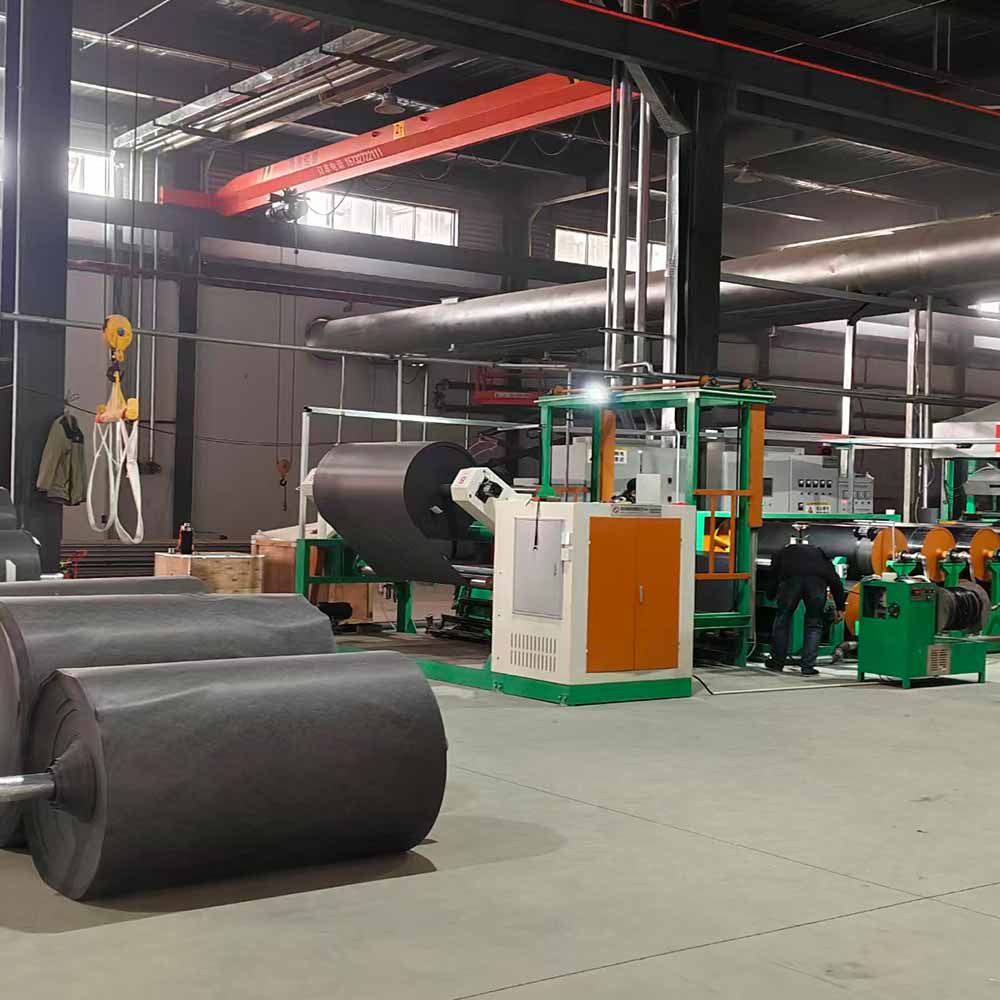
At Jinhang Machinery, we provide customized synthetic leather production lines tailored to product positioning, market demand, and capacity requirements. Key features of our turnkey solutions include:
- End-to-end production line design: Coating, foaming, drying, curing, surface treatment, and finishing.
- Process optimization: Coordinated control of temperature, tension, and line speed.
- Material versatility: Support for oil-based, water-based, and solvent-free PU systems.
- Operator training and technical support: Ensures consistent production quality and efficient maintenance.
By offering complete production lines rather than isolated machines, Jinhang Machinery ensures that each stage of the process works in harmony, delivering consistent, high-quality synthetic leather with long-term operational stability.
Conclusion
Selecting the right synthetic leather production line is not just a purchase decision—it is a strategic investment that shapes product quality, operational efficiency, and market competitiveness.
Whether producing dry process PU leather for durability and appearance or wet process PU leather for softness and breathability, complete, well-matched production lines are essential for achieving consistent, high-end results.
With Jinhang Machinery’s turnkey solutions, manufacturers can confidently produce premium synthetic leather that meets demanding quality standards while optimizing efficiency and minimizing defects.
FAQ
What is a synthetic leather production line?
A system of machines for PU leather manufacturing, including coating, foaming, drying, and finishing.
How do PU dry and wet processes differ?
Dry process produces strong, smooth leather; wet process creates soft, breathable, porous leather.
Why is complete line matching important?
Synchronized line speed, tension, and temperature prevent defects and ensure consistent product quality.
What should manufacturers consider when choosing equipment?
Product type, production capacity, process integration, material compatibility, and control systems.
How does Jinhang Machinery support synthetic leather production?
Provides turnkey production lines with coordinated processes, operator training, and support for oil/water/solvent-based PU.