Table of Contents
Introduction
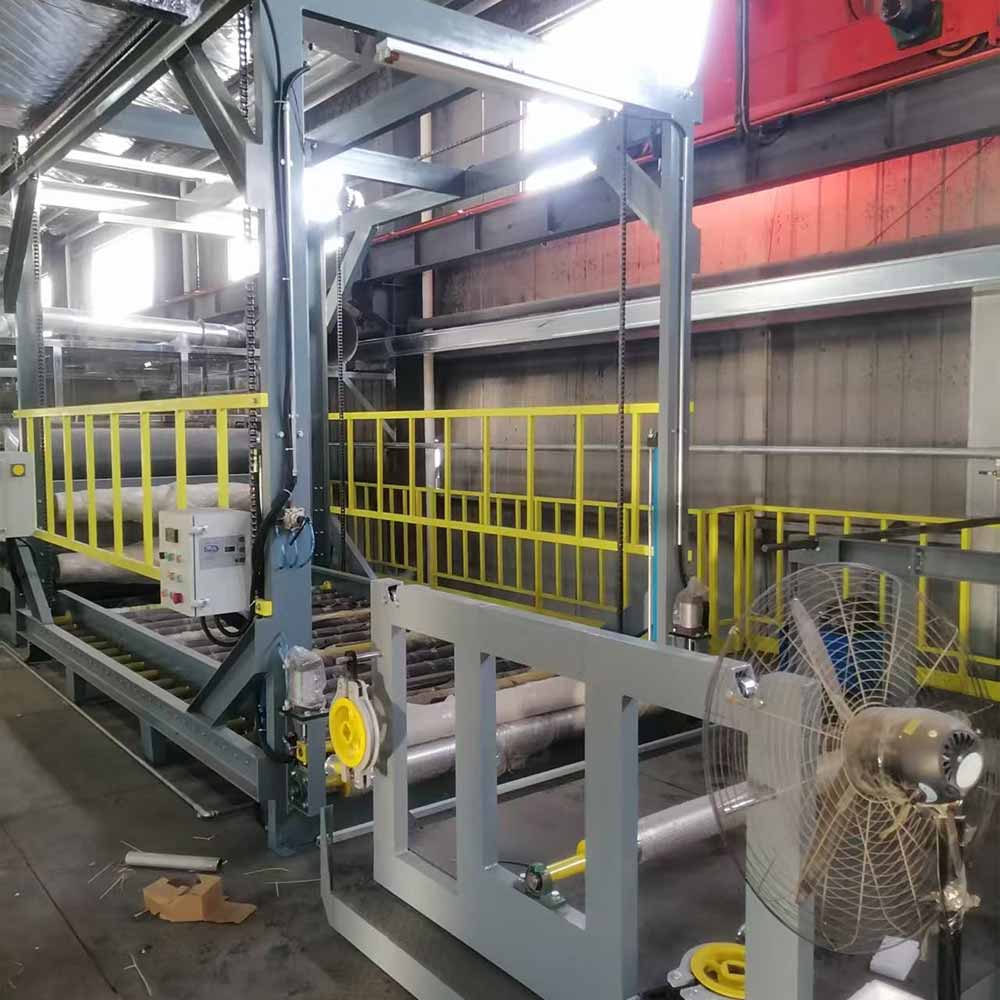
Choosing a Leather skiving machine for industrial production is not simply a matter of finding a machine that can remove material from a leather edge. The real question is whether the machine can repeatedly produce the required thickness, angle, width, and surface quality across the materials your factory actually processes.
That distinction matters.
A machine may produce an acceptable sample at low speed but become inconsistent during continuous production. Another may work well on firm material but struggle when the surface is soft, highly elastic, laminated, or backed with textile. The best choice therefore depends on the relationship between your material, finished product, skiving profile, production rhythm, and operator requirements.
For an industrial user, the main selection priorities should be:
- Confirm what materials will actually be processed.
- Define the required incoming and finished thickness.
- Identify whether you need edge, taper, step, or wider skiving.
- Evaluate blade stability rather than focusing only on cutting speed.
- Check feed consistency on both straight and curved workpieces.
- Test repeatability across multiple samples.
- Examine adjustment, cleaning, and blade-maintenance procedures.
- Consider how the machine fits into the surrounding production process.
A well-selected Leather skiving machine should make the downstream operation easier. Sewing, folding, bonding, edge wrapping, and assembly should become more consistent rather than requiring operators to compensate for uneven skiving.
What Does a Leather Skiving Machine Do in Industrial Production?
In simple terms, skiving is the controlled removal of part of a leather material’s thickness, commonly in areas that will later be folded, joined, sewn, or assembled.
Industrial skiving is more demanding than occasional workshop skiving because the machine has to reproduce the same result over many pieces.
The target is not merely “thinner leather.” The target may be:
- a gradual tapered edge;
- a narrow reduced-thickness strip;
- a consistent folding allowance;
- a defined step between two thickness levels;
- a prepared overlapping joint;
- or a controlled edge profile for sewing.
Skiving vs. Full-Thickness Splitting
These two processes are often confused.
A splitting machine generally reduces thickness across a much larger area of the material. A Leather skiving machine normally removes material selectively, especially along edges or specified zones.
For example, a 2.0 mm material may need to remain at its original thickness through most of the component while being reduced near the edge for folding. That is a typical skiving requirement rather than simple full-surface thickness reduction.
Why Edge Preparation Matters
The quality of a finished leather component is often influenced by what happens before sewing or assembly.
An excessively thick edge can create bulky folds, raised seams, difficult bonding, or irregular appearance. Excessive skiving creates the opposite problem: the edge becomes weak, unstable, or difficult to control.
Industrial skiving therefore requires a balance between thickness reduction and structural integrity.
Start with Your Material and Production Requirements
Before comparing machine specifications, define what enters the machine and what must come out of it.
This is one of the most effective ways to avoid selecting equipment based on specifications that look impressive but have little relevance to actual production.
Leather Type and Material Structure
Different materials behave differently when passing through a blade and feeding mechanism.
Your sample set may include:
- firm natural leather;
- soft leather;
- coated leather;
- PU materials;
- PVC materials;
- synthetic leather;
- laminated materials;
- textile-backed artificial leather;
- multilayer composites.
A soft material may stretch before reaching the cutting point. A harder material may require greater cutting stability. A textile backing may react differently from the surface layer when material is removed.
This is particularly important for factories already operating broader synthetic leather processing machinery, because the skiving stage must match the physical characteristics created during earlier coating, drying, embossing, laminating, or finishing operations.
Incoming Material Thickness
Do not evaluate only the nominal thickness shown in your material specification.
Measure real samples from different positions and different production batches. Flexible materials rarely behave as though every piece is perfectly identical.
A useful machine test should include the thinner and thicker ends of your normal production range.
Finished Skiving Profile
Before machine testing, write down the result you actually need.
Instead of saying:
“The edge needs to be thinner.”
Define:
- original thickness;
- target thickness;
- skiving width;
- taper length;
- acceptable variation;
- edge shape;
- surface appearance;
- downstream operation.
This turns equipment selection into a measurable engineering decision.
Choose the Right Type of Leather Skiving Machine
Not every Leather skiving machine is designed for the same production environment.
The machine structure should match the type of skiving you expect operators to perform repeatedly.
Bell Knife Skiving Machine
The bell knife system is widely associated with leather edge skiving.
Its rotating knife removes material while a feed mechanism guides the workpiece through the cutting area. The relationship between the knife, feed roller, presser foot, and workpiece determines the final profile.
This design can be particularly suitable for applications requiring controlled edge thinning and repeated processing of shaped components.
The important question is not simply whether a machine uses a bell knife. You should evaluate how precisely the entire cutting system can be adjusted.
Manual and Semi-Automatic Systems
Operator-controlled machines provide flexibility where workpieces vary frequently.
They may be useful when:
- components have irregular shapes;
- production involves many product styles;
- skiving lengths vary;
- operators need to react to curves and corners.
However, the finished result can become more dependent on operator skill.
Automated Industrial Skiving Systems
Higher automation becomes valuable when the process is repetitive and the required profile is well defined.
Automation may improve:
- feeding consistency;
- cycle repeatability;
- thickness stability;
- speed control;
- production standardization.
Automation should not be treated as automatically superior. If your factory processes highly varied components in relatively short runs, flexibility may be more important than maximum automation.
Evaluate the Blade and Cutting System
The blade is one of the most important components of a Leather skiving machine, but blade quality cannot be evaluated separately from the rest of the machine.
A sharp knife with unstable feeding can still produce poor results.
Blade Sharpness and Geometry
A properly maintained blade should cut rather than pull, crush, or tear the material.
Watch the cut surface carefully during testing.
Possible warning signs include:
- fuzzy cut surfaces;
- torn backing;
- material pulling;
- inconsistent tapering;
- heat-related surface marking;
- thickness variation from one side to another.
A clean cut generally indicates that blade condition, machine adjustment, material support, and feeding are working together correctly.
Blade-to-Feed Adjustment
The relationship between the knife and the feeding components determines how much material is removed.
Small changes can significantly affect the finished edge.
For industrial production, an adjustment system should therefore be:
- easy to access;
- sufficiently precise;
- stable after adjustment;
- understandable to operators;
- repeatable after maintenance.
If the machine requires repeated trial-and-error adjustment every time the blade is serviced, production consistency will be difficult to maintain.
Examine the Feed System and Thickness Control
Many skiving problems that appear to be blade problems are actually feeding problems.
The feed mechanism must hold and transport the material consistently as it reaches the cutting point.
Feed Roller Stability
The feed roller should move the workpiece without uncontrolled slipping, stretching, or marking.
During testing, pay attention to:
- straight-line feeding;
- curved components;
- narrow strips;
- soft material;
- thicker edges;
- transitions between different shapes.
The same Leather skiving machine may behave very differently when tested with a rigid sample and a highly flexible one.
Presser Foot Control
The presser foot helps define how the material enters the cutting area.
Its design and adjustment influence:
- skiving width;
- taper shape;
- material support;
- control around curves;
- pressure on soft surfaces.
For factories producing different products, interchangeable or adjustable presser-foot configurations can provide useful flexibility.
Repeatable Thickness Adjustment
A good adjustment mechanism should allow an operator to return to an established setting with minimal experimentation.
This becomes increasingly important when a production line switches between several product specifications.
Repeatability reduces dependence on individual operator judgment.
Match the Machine to Your Skiving Width and Profile
One of the most common selection errors is focusing on maximum material thickness while overlooking skiving shape.
Industrial leather components often require different geometries.
Edge Skiving
Edge skiving reduces thickness near the boundary of the material.
Typical downstream operations include:
- folding;
- edge wrapping;
- overlapping;
- sewing;
- bonding.
The machine needs enough control to prevent the skived zone from becoming wider or narrower as the workpiece moves.
Tapered Skiving
A taper gradually transitions from the original material thickness to the reduced edge thickness.
This can create smoother folds and less visible transitions.
The transition should be predictable rather than abrupt or irregular.
Step Skiving
Some products require a clearly defined reduced-thickness area instead of a gradual taper.
This places greater emphasis on accurate skiving width and depth.
Wider Surface Thinning
If your application requires removing material across a wide area, determine whether skiving is actually the correct process.
A Leather skiving machine is especially valuable for localized and shaped thickness reduction. Wider and highly uniform full-surface reduction may require a different machine concept.
Consider Automation and Production Efficiency
Production speed matters, but it should not be assessed alone.
A faster Leather skiving machine provides little practical advantage if operators need to stop frequently to correct settings, inspect defective edges, or rework components.
Three factors deserve more attention.
Speed Control
Variable speed can help when one factory processes both simple straight components and complicated curved pieces.
Straight edges may support faster feeding, while detailed shapes require greater operator control.
Operator Dependency
Ask how much the finished quality changes between an experienced operator and a recently trained operator.
If quality changes dramatically, the process may depend too heavily on individual technique.
A stable industrial system should make acceptable results easier to reproduce.
Repeatability Between Batches
Test the machine, stop it, adjust it for another material, and then return to the first specification.
Can you reproduce the original result?
That is a much more meaningful industrial test than producing ten acceptable pieces without changing the setup.
Test Skiving Quality Before Selecting a Machine
A machine demonstration should reproduce your production environment as closely as practical.
Using only one easy-to-process sample can hide important limitations.
Build a Representative Sample Set
A useful test set could include:
- Your thinnest regular material.
- Your thickest regular material.
- Your softest material.
- Your most elastic material.
- A textile-backed sample.
- A curved component.
- A narrow component.
- A component requiring precise tapering.
For each sample, record the same variables.
This creates comparable evidence instead of relying on visual impressions.
Measure More Than the Final Thickness
Do not judge a Leather skiving machine only with a thickness gauge.
Also examine:
- width consistency;
- taper smoothness;
- surface cleanliness;
- edge strength;
- backing damage;
- straightness;
- behaviour around curves;
- performance after repeated cycles.
An industrial-quality skived edge should perform correctly in the next process, not merely look acceptable on the inspection table.
Leather Skiving Machine Selection Comparison
The following framework can help you match machine characteristics to production conditions.
| Selection Factor | Lower-Variation Production | High-Mix Production | Why It Matters |
|---|---|---|---|
| Material range | Narrow and predictable | Multiple structures and thicknesses | Determines required adjustment flexibility |
| Skiving profile | Repeated profile | Frequent profile changes | Influences setup and tooling needs |
| Feeding | Highly standardized | Operator-guided flexibility | Affects repeatability |
| Speed control | Consistent production speed | Wider speed adjustment | Helps manage different shapes |
| Presser foot | Fixed or limited variation | Multiple configurations | Controls width and taper |
| Adjustment system | Repeatable preset focus | Fast manual adjustment | Reduces setup difficulty |
| Operator role | Lower intervention | Higher operator control | Influences training requirements |
| Blade maintenance | Scheduled repetitive routine | More frequent condition checks | Maintains cut quality |
| Component geometry | Mainly straight | Curves and irregular shapes | Changes feeding requirements |
| Production priority | Repeatability | Flexibility | Determines ideal machine configuration |
The purpose of this comparison is not to identify one universal “best” machine.
It is to determine which machine architecture has the fewest compromises for your actual production profile.
Safety and Operator Usability
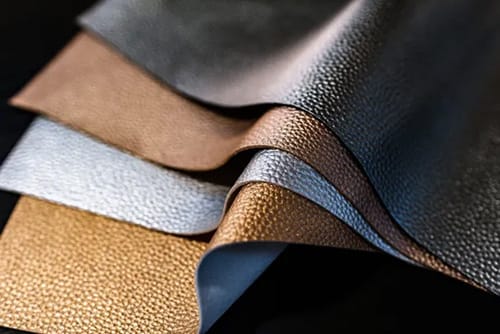
Industrial equipment selection should include the operator’s daily interaction with the machine.
A Leather skiving machine contains a cutting system, moving feed components, and adjustment points that require appropriate machine protection and operating procedures.
Machine Guarding
Evaluate how the cutting area is protected during normal production.
Maintenance access and normal operating access should be clearly differentiated so that operators are not encouraged to bypass protection for routine adjustments.
Working Position and Adjustment Access
Ergonomics affect process stability more than many specifications suggest.
If an operator cannot clearly see and control the workpiece, curved skiving becomes more difficult. If common adjustment points are difficult to reach, machine settings may not be checked as frequently as they should be.
Good usability supports good process discipline.
Maintenance Requirements and Long-Term Stability
A Leather skiving machine should be evaluated in both new and maintained condition.
The real production question is how easily the machine can continue producing the same edge after regular use.
Blade Maintenance
Blade condition directly affects:
- cutting force;
- surface cleanliness;
- taper consistency;
- backing integrity;
- operator control.
A practical maintenance system should make sharpening, checking, and replacement procedures straightforward.
Feed Components
Feed rollers and related components deserve regular inspection because contamination, wear, or incorrect adjustment can alter material movement.
If feeding becomes inconsistent, operators may compensate manually without identifying the true problem.
Cleaning and Routine Inspection
Leather particles, fibres, coating residues, and other debris can accumulate around working areas.
A daily inspection routine might include:
- blade condition;
- feed roller cleanliness;
- presser-foot condition;
- cutting-area cleanliness;
- unusual vibration;
- abnormal noise;
- fastener condition;
- setting verification.
Preventive inspection is easier than diagnosing unexplained variation after finished components begin failing inspection.
Integrating a Leather Skiving Machine into Industrial Production
Machine selection should consider where skiving sits in your entire production sequence.
A typical workflow may involve:
material preparation → cutting → skiving → folding or bonding → sewing → assembly → finishing.
If skiving cannot keep pace with surrounding operations, it becomes a bottleneck.
If skiving quality fluctuates, downstream operators spend more time compensating for inconsistent edges.
For this reason, evaluate:
Material Flow
How will parts enter and leave the station?
Unnecessary handling increases the chance of mixing specifications or damaging prepared edges.
Workpiece Identification
If several skiving specifications are produced on the same machine, operators need a clear way to associate each product with the correct settings.
Production Changeovers
Record standard settings for recurring jobs.
A simple setup sheet can include:
- material code;
- initial thickness;
- target thickness;
- skiving width;
- presser-foot configuration;
- feed setting;
- machine speed;
- blade condition.
That information converts operator experience into a repeatable production standard.
A Practical Leather Skiving Machine Selection Checklist
A useful selection process can be divided into five stages.
1. Define the Material
List every major material structure the machine must handle.
Do not describe the requirement simply as “leather.” Record firmness, thickness range, elasticity, surface treatment, backing structure, and other properties that affect cutting.
2. Define the Geometry
Specify what the finished skived area should look like.
Include width, minimum thickness, taper, straight or curved geometry, and required transition.
3. Run Production-Like Tests
Avoid demonstrations consisting only of a few ideal pieces.
Run enough samples to determine whether the result remains stable after repeated feeding.
4. Change the Setup
Switch materials or specifications and then return to the original setup.
This exposes whether adjustment is truly repeatable.
5. Inspect the Downstream Result
Take the skived sample through folding, sewing, bonding, or whichever operation follows.
The strongest machine evaluation is often not the skived edge itself but the quality of the finished assembly.
Common Selection Mistakes to Avoid
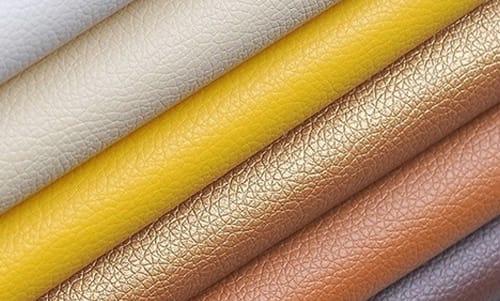
Choosing by Maximum Specification Alone
Maximum thickness or speed tells you little about performance on your most difficult workpiece.
Production quality is determined by your working range, not a machine’s extreme specification.
Testing Only One Material
A Leather skiving machine that performs well on one firm material may behave differently on soft synthetic leather or a textile-backed structure.
Test the range you actually manufacture.
Ignoring Curves
Straight strips are usually easier to skive than shaped components.
If your products contain curves, test those curves.
Focusing Only on Speed
Speed without consistent feeding can create more variation.
The goal is usable output, not simply rapid material movement.
Ignoring Adjustment Repeatability
A machine that requires extensive operator experimentation after every material change becomes difficult to standardize.
Overlooking Blade Maintenance
Even excellent machine geometry cannot compensate indefinitely for an unsuitable or poorly maintained blade.
Blade maintenance should be considered during selection, not after installation.
Conclusion
Choosing a Leather skiving machine for industrial production starts with understanding the workpiece rather than comparing machines in isolation.
Material structure, incoming thickness, required profile, feed behaviour, blade control, adjustment repeatability, operator interaction, and maintenance all influence the final result.
For many factories, the most useful test is simple: give the machine several real production materials, establish measurable target profiles, change between jobs, and determine whether the original settings can be reproduced.
A machine that performs consistently during that process is much more valuable than one that produces a single perfect demonstration sample.
Before defining a final configuration, organizing your material samples, component drawings, target thicknesses, skiving widths, production rhythm, and other production requirements makes technical evaluation much more precise.
The right Leather skiving machine should reduce variation before the component reaches sewing, folding, bonding, or assembly. That is ultimately what industrial skiving is supposed to accomplish: not simply removing material, but creating a controlled and repeatable preparation process.
FAQ
What is a Leather skiving machine used for?
A Leather skiving machine removes a controlled amount of material from selected areas, especially edges that will later be folded, sewn, bonded, or overlapped. Industrial machines are designed to create repeatable thickness, width, and taper profiles across multiple workpieces.
How do I choose a Leather skiving machine for factory production?
Start with your material range, original thickness, target thickness, skiving width, component shape, and required production consistency. Then test real samples and evaluate feeding, blade control, adjustment repeatability, curved-edge performance, and the quality of downstream assembly.
Can a Leather skiving machine process synthetic leather?
Many machines can process suitable synthetic leather, but performance depends on material structure, elasticity, backing, surface coating, thickness, and feed settings. PU, PVC, textile-backed, and multilayer materials should therefore be tested individually rather than treated as identical materials.
What is the difference between skiving and leather splitting?
Skiving normally reduces thickness in a selected area, such as an edge or folding zone, and may create a taper or step. Splitting usually reduces thickness across a wider portion of the material. The correct process depends on whether you need localized preparation or broad thickness reduction.
Why does a Leather skiving machine produce uneven thickness?
Uneven skiving may result from blade wear, incorrect knife position, unstable feeding, unsuitable presser-foot adjustment, material stretching, contamination, or inconsistent operator guidance. Diagnosis should examine the entire cutting and feeding system instead of assuming the blade is the only cause.