Table of Contents
Introduction
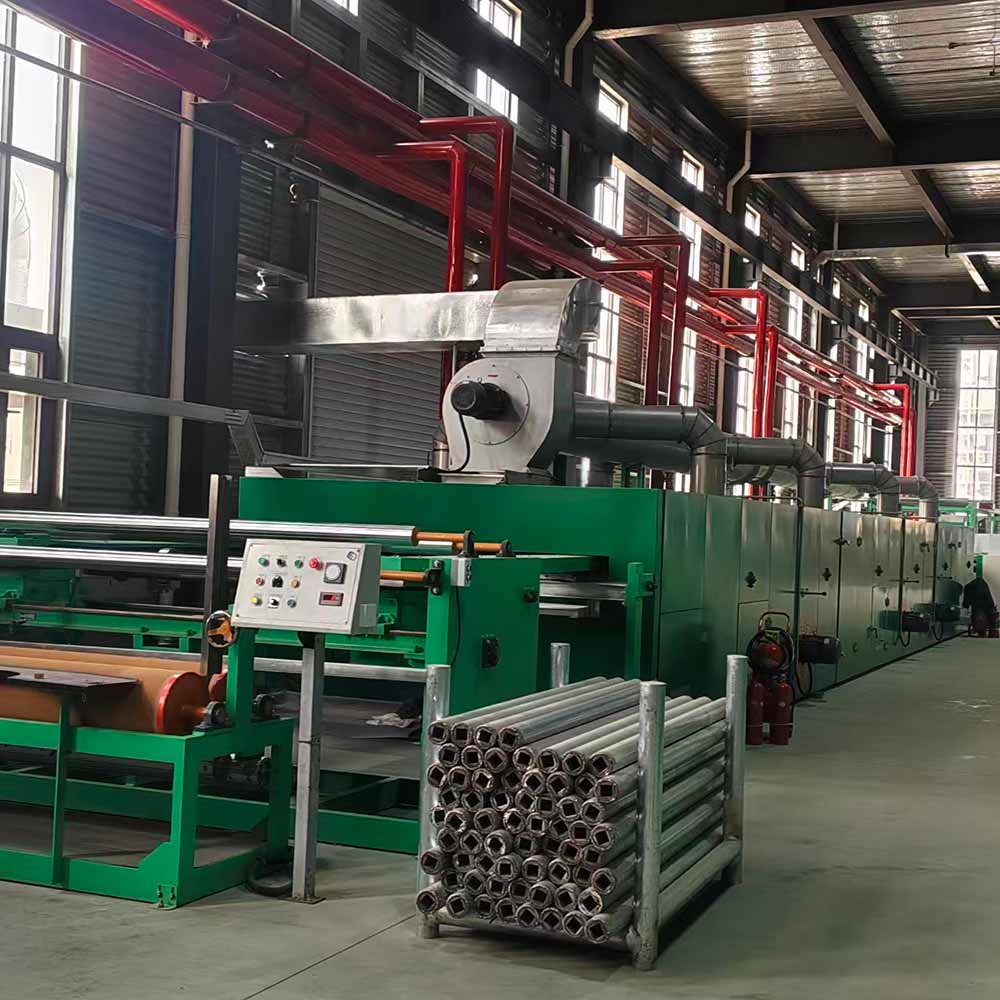
Laminating Machines are a critical part of many synthetic leather manufacturing systems because they determine how reliably separate material layers become one stable composite. A surface layer may look excellent before lamination, but if the backing is stretched, the adhesive layer is uneven, the nip pressure varies across the web, or the laminate is wound before it stabilizes, defects can appear later during embossing, cutting, folding, sewing, or other downstream operations.
This is why industrial lamination should not be evaluated as a simple “bond two layers together” process. It is a coordinated web-handling and material-conversion operation involving substrate behavior, tension, pressure, temperature, adhesive application, alignment, production speed, drying or curing, cooling, and rewinding.
For manufacturers comparing Laminating Machines, the most important questions are not limited to maximum working width or mechanical speed. A stronger evaluation asks whether the machine can maintain dimensional stability across flexible substrates, keep bonding conditions uniform from edge to edge, reproduce validated settings after a product change, and produce a laminate that remains stable after leaving the line.
Key points covered in this guide include:
- Main types of Laminating Machines used for flexible materials
- How industrial lamination works
- Why substrate behavior determines machine configuration
- Web tension and alignment requirements
- Pressure, temperature, and speed relationships
- Adhesive and thermal lamination differences
- How to prevent bubbles, wrinkles, curling, and delamination
- How lamination fits into PU synthetic leather production
- Quality-control methods for continuous rolls
- Machine testing, maintenance, and selection considerations
The goal is not simply to create strong adhesion. It is to produce a composite structure whose layers continue to behave as one material throughout subsequent manufacturing.
What Are Laminating Machines?
Laminating Machines are systems designed to combine two or more material layers into a composite structure using pressure, heat, adhesives, or a suitable combination of these methods.
The general manufacturing concept of lamination involves joining material layers so the resulting composite gains properties created by the combined structure. Heat, pressure, adhesives, and other joining techniques can all be involved depending on the application.
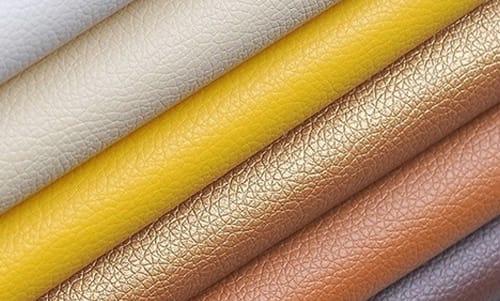
In synthetic leather production, the layers processed by Laminating Machines may include PU or PVC surface materials, woven fabrics, knitted fabrics, nonwovens, foams, films, reinforcement layers, or other flexible substrates.
The finished structure may be designed to provide a particular combination of thickness, flexibility, backing support, surface appearance, dimensional stability, or subsequent processability.
This means lamination is fundamentally a structural operation. Printing changes visual appearance, while embossing primarily creates physical surface texture. Lamination changes how multiple layers interact as a single material.
Why Different Laminating Machines Serve Different Production Needs
Not every lamination application requires the same equipment architecture. Two machines may both be described as Laminating Machines while using very different bonding technologies, heating methods, web-control arrangements, and drying systems.
The best configuration depends on what materials are being joined and what must happen to the laminate afterward.
Heat-Assisted Laminating Machines
Heat-assisted systems use controlled thermal energy to activate a bonding layer, adhesive system, or thermally responsive material.
Their effectiveness depends on achieving sufficient activation without damaging the substrate. Flexible synthetic materials can change dimensions, gloss, softness, or surface character when exposed to unsuitable temperatures, so thermal capability should be judged by controllability rather than by maximum temperature alone.
Adhesive Laminating Machines
Adhesive lamination introduces a bonding medium between the materials. The process may require coating control, drying, activation, nip bonding, curing, and other stages depending on the selected adhesive system.
In this configuration, consistent adhesive distribution becomes as important as mechanical pressure.
Pressure-Oriented Laminating Systems
Some structures depend strongly on controlled roller pressure combined with compatible bonding layers. The challenge is achieving sufficient and uniform contact across the full working width without overcompressing soft materials.
Integrated Continuous Laminating Systems
In larger synthetic leather production systems, lamination may be incorporated directly into coating, drying, cooling, and winding operations rather than performed as an isolated process.
This arrangement can reduce repeated material handling and make production parameters easier to coordinate across multiple stages.
Start With Material Structure Before Comparing Machines
Selecting Laminating Machines should begin with the substrate combination rather than the equipment specification.
A useful technical evaluation identifies each layer individually and then considers how they behave together.
For the surface layer, determine its thickness, elasticity, backing structure, surface coating, heat sensitivity, dimensional behavior, and expected working width. Repeat the same assessment for the secondary layer.
The differences between the two are especially important.
A dimensionally stable surface laminated to a stretchable knitted backing creates a very different processing challenge from two relatively stable films. Likewise, a foam-backed structure responds differently to pressure from a thin textile laminate.
The complete composite should therefore be tested for more than immediate adhesion. Manufacturers should also examine flatness, curling, thickness, flexibility, edge stability, surface appearance, and dimensional recovery after the laminate has been removed from machine tension.
How Industrial Laminating Machines Work
Although individual equipment layouts differ, most continuous Laminating Machines perform a sequence of connected operations.
The materials are first unwound separately and guided toward the bonding area. Tension must be controlled before the layers meet because unwanted stretching at this stage can remain locked into the final composite.
Depending on the lamination process, one substrate may then receive adhesive, thermal conditioning, coating preparation, or another bonding treatment. The materials are subsequently aligned before entering the laminating nip.
At the nip, rollers apply controlled contact pressure. Heat may also be present depending on the process. After bonding, the material can pass through drying, curing, cooling, or stabilization stages before being rewound.
Every one of these operations influences finished quality. A good laminating nip cannot compensate completely for unstable unwinding, poor adhesive application, or severe tension imbalance upstream.
Web Tension Is a Core Control Point
One of the most important engineering considerations in Laminating Machines is web tension.
Flexible materials change shape when force is applied. Some substrates stretch only slightly, while knitted or highly elastic materials can respond much more noticeably.
Imagine a flexible backing being stretched during lamination while the upper synthetic leather layer remains relatively stable. Both materials may look flat immediately after they leave the pressure rollers because machine tension is still acting on them.
After the laminate is released, the backing attempts to return toward its original dimensions. The bonded surface layer resists this movement.
The result can be curling, waviness, internal stress, dimensional distortion, or unstable roll formation.
A laminate can therefore have strong adhesion and still be a poor-quality composite.
The target is not high tension. It is controlled tension appropriate to each substrate.
Where materials behave differently, independent tension adjustment can provide greater process control.
Why Web Alignment Matters Across Long Production Runs
Alignment problems can gradually reduce usable material width even when bonding itself remains strong.
If two layers begin correctly aligned but one gradually tracks sideways, the finished laminate may show exposed backing on one side and an overhanging surface layer on the other.
This can lead to additional trimming and downstream feeding difficulties.
Web guiding should therefore remain stable through startup, acceleration, steady operation, deceleration, and normal roll changes.
The real test is not whether the material is aligned for the first few meters. It is whether that relationship remains consistent throughout the production run.
Pressure Uniformity Matters More Than Maximum Pressure
Laminating Machines commonly use roller pressure to create intimate contact between the material layers.
Maximum available pressure is easy to compare between machines, but pressure distribution is often more relevant to finished quality.
Consider a machine where the center receives more pressure than the edges. A sample taken from the center might show excellent bonding, while edge sections remain weaker.
Increasing total pressure can make the center even more compressed without correcting the fundamental cross-web imbalance.
For this reason, industrial trials should include samples from the left, center, and right sections of the laminate.
The inspection should compare bond condition, thickness, surface appearance, dimensional behavior, and any pressure-related marking.
Soft foams deserve additional attention because excessive compression can alter the final thickness or tactile characteristics of the composite even when the adhesive bond itself is satisfactory.
Temperature, Pressure, and Speed Must Work Together
Lamination settings should never be treated as unrelated numbers.
Temperature affects bonding activation and material behavior. Pressure determines contact. Line speed influences how long the material remains exposed to heating, drying, bonding, or cooling conditions.
If line speed increases significantly while the other parameters remain unchanged, the material has less residence time in each process zone.
The result may be incomplete drying, insufficient thermal activation, unstable bonding, or reduced cooling time.
Increasing temperature may compensate in some situations, but it can also create unwanted surface or dimensional changes.
The better approach is to develop a validated operating window in which speed, temperature, and pressure remain balanced.
| Process Variable | Main Function | Potential Problem When Unstable |
|---|---|---|
| Web tension | Controls material movement | Stretching, curling, wrinkles |
| Web alignment | Keeps substrates positioned | Edge mismatch and trimming |
| Nip pressure | Creates layer contact | Weak bonding or overcompression |
| Temperature | Supports activation or drying | Poor bonding or thermal deformation |
| Line speed | Determines process exposure | Insufficient drying or stabilization |
| Adhesive distribution | Creates bonding layer | Local weak zones |
| Cooling or curing | Stabilizes the laminate | Post-process movement |
| Rewinding tension | Builds finished roll | Distortion or loose winding |
| Roller condition | Maintains uniform contact | Repeating defects |
| Process repeatability | Supports recurring production | Long setup and inconsistent batches |
This relationship explains why a defect should not automatically be assigned to the laminating nip. The source may exist several stages earlier.
Adhesive Application Can Define Bonding Consistency
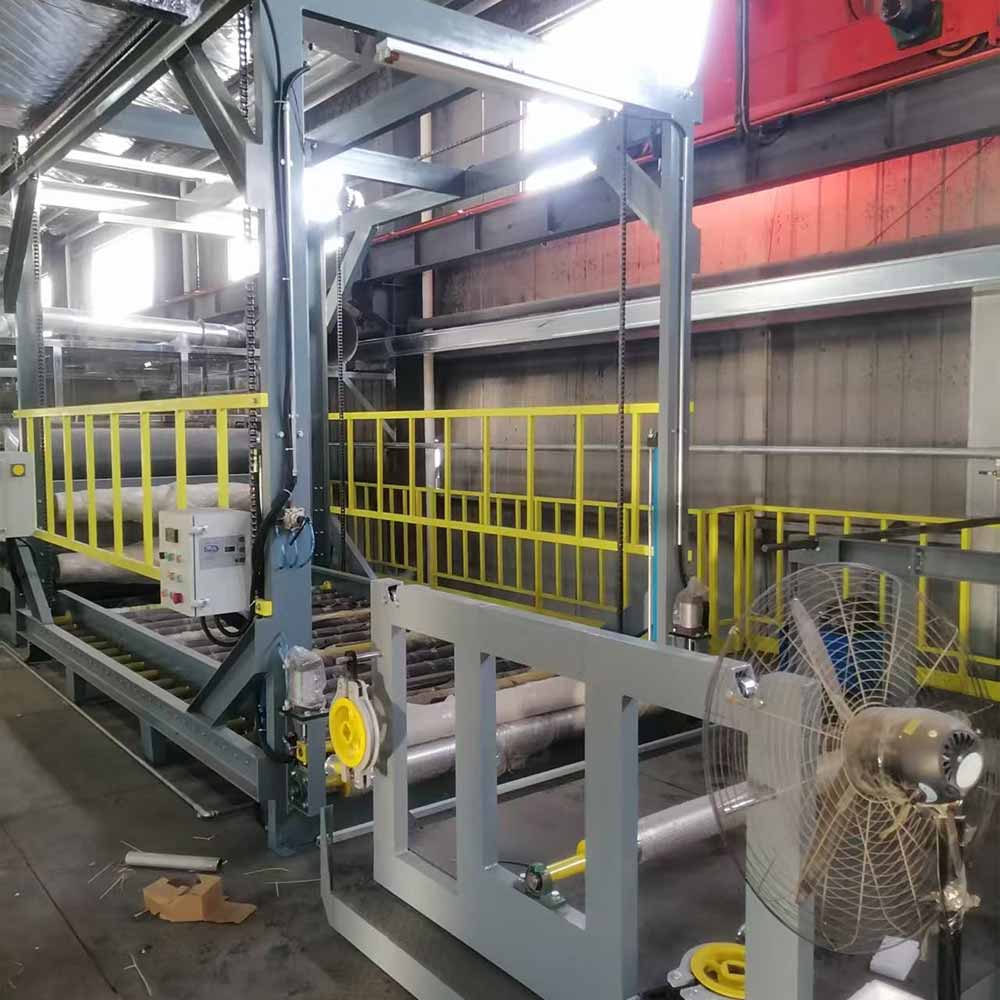
For adhesive-based Laminating Machines, uniform coating is fundamental.
If one section receives less bonding medium than another, pressure alone may not restore consistent performance.
Manufacturers should evaluate adhesive distribution across both the material width and production length. Changes in formulation condition, coating behavior, machine speed, or application geometry can cause gradual variation.
The adhesive system should also be compatible with both substrates.
A strong bond on one material combination does not prove the same adhesive and machine settings will work equally well with another.
When production uses multiple composite structures, each recurring combination should have its own validated process recipe rather than relying on one universal machine setting.
Laminating Machines in PU Synthetic Leather Production
Lamination becomes especially important in dry-process PU manufacturing, where coating, drying, film formation, bonding, cooling, and finishing need to operate as coordinated stages.
Jinzhihang’s PU Leather Dry Production Line combines coating and drying functions with the formation and bonding of multilayer PU structures, illustrating why lamination has to be evaluated as part of the overall material-production sequence rather than as an isolated roller operation.
Upstream conditions directly affect lamination. If coating thickness varies or the PU layer enters the bonding stage under unstable conditions, the laminating section inherits those differences.
Lamination also influences downstream processes. An internally stressed composite may become more visibly distorted after embossing, while localized weak bonding may first appear during cutting, sewing, folding, or repeated flexing.
For this reason, production-line quality should be evaluated through the full process rather than at the exit of one machine.
Laminating Machines vs Standalone Laminators
The terminology surrounding lamination equipment is not always used consistently. “Laminating machine,” “laminator,” and “lamination machine” may overlap in industrial discussions, but the actual equipment configurations can differ substantially.
Instead of choosing based on naming alone, evaluate the functions included in the system.
A production-oriented machine may need:
- multiple unwinding stations;
- independent tension control;
- coating or adhesive application;
- heating and drying;
- web guiding;
- controlled nip pressure;
- cooling;
- automatic or controlled rewinding;
- process monitoring.
A simpler laminator may perform only a narrower bonding operation.
The appropriate system depends on whether lamination is a standalone conversion process or one stage within a larger synthetic leather manufacturing line.
Common Problems With Laminating Machines
Several defects appear frequently in continuous lamination, but their visible location does not always reveal their root cause.
Bubbles Between Layers
Bubbles can develop because of trapped air, contamination, uneven adhesive application, insufficient pressure, inadequate drying, moisture, or poor substrate contact.
Instead of immediately increasing roller pressure, identify the first location where the bubble becomes visible.
If trapped air is already present before the nip, the investigation should focus on feeding and layer contact. If bubbles appear during curing or later stabilization, bonding or drying conditions may deserve more attention.
Wrinkles
Wrinkles are commonly associated with web-handling problems.
Possible causes include tension imbalance, poor alignment, unstable unwinding, differences in substrate elasticity, or incorrect winding conditions.
A useful diagnostic rule is to inspect the material before it reaches the bonding point. If a wrinkle is already present upstream, changing nip pressure will not remove the underlying cause.
Curling
Curling after lamination frequently indicates an imbalance between the bonded layers.
One substrate may have been stretched more than the other, or the two layers may respond differently to thermal exposure.
Curling can also develop only after the material has rested, which is why immediate machine-side inspection should not be the only quality check.
Edge Lifting
Edge lifting can indicate insufficient pressure near the sides, irregular adhesive coverage, contamination, or alignment problems.
If the same edge repeatedly fails across different rolls, a systematic equipment or process issue should be investigated.
Delamination
Delamination is the separation of layers within a laminated structure. Potential causes include incompatible materials, inadequate surface preparation, insufficient bonding conditions, uneven adhesive application, or inappropriate curing.
The failure should be analyzed according to where separation occurs within the multilayer structure rather than being treated simply as “weak glue.”
Repeating Surface Marks
A defect appearing at a regular interval often points toward a rotating machine component.
Roller contamination, local damage, or buildup can reproduce the same mark repeatedly throughout a long roll.
Measuring the repeat distance can help narrow the source before operators begin adjusting unrelated parameters.
How to Test Laminating Machines Before Production
A useful equipment trial should be built around real factory materials.
Testing only one easy material combination may demonstrate that lamination is possible, but it provides limited information about operating flexibility and process stability.
A representative test set should include the thinnest regular substrate, thickest structure, most elastic backing, softest composite, heat-sensitive material, widest common roll, and any material combination that has historically been difficult to process.
The machine should also run long enough to expose gradual changes in tension, temperature, alignment, adhesive application, and winding.
One especially valuable repeatability test is to run Product A, change the machine to Product B, and then return to Product A.
If the original result can be recovered using documented settings with limited trial adjustment, the process is suitable for standardization. If operators need extensive experimentation each time, changeover repeatability deserves further attention.
Quality Control Should Continue After Lamination
A laminate that looks flat and smooth immediately after production is not necessarily finished from a quality perspective.
Allow the material to stabilize before final inspection.
Check the left, center, and right portions of the roll for bond uniformity and dimensional behavior. Compare material from the beginning, middle, and later sections to identify process drift.
Depending on the intended manufacturing route, representative samples should also be taken through later operations such as embossing, cutting, folding, sewing, or additional surface finishing.
This downstream evaluation often reveals defects that remain hidden during initial inspection.
For example, weak local bonding may become obvious only during embossing, while tension imbalance may become more apparent after a component has been cut from the roll.
Build Production Recipes for Different Laminates
Industrial Laminating Machines become more valuable when successful conditions can be reproduced.
For each regular composite, create a process record covering the surface material, backing material, thickness range, working width, adhesive or bonding system, temperature, pressure, line speed, web tension, cooling conditions, winding conditions, and inspection criteria.
The purpose of this record is not simply documentation.
It establishes a known starting point for future production.
When a defect appears, operators can compare current conditions with an earlier validated process instead of adjusting several variables from memory.
Over time, these records also help identify which materials require narrower processing windows and which ones tolerate broader operating conditions.
How Automation Improves Laminating Machines
Automation is most valuable when it improves process consistency rather than merely increasing machine complexity.
Useful control functions can support:
- tension stability;
- synchronized line speed;
- web guiding;
- temperature monitoring;
- pressure adjustment;
- winding control;
- recurring process settings.
However, automation cannot eliminate the need to understand material behavior.
A poorly selected machine recipe remains a poor recipe even when stored electronically.
The strongest combination is accurate control hardware together with validated material-specific settings.
Maintenance Directly Affects Lamination Quality
Maintenance should be treated as part of quality assurance rather than only as a response to breakdowns.
Rollers should remain clean because adhesive residue, fibers, coating deposits, or other contamination can alter pressure and create repeating surface defects.
Alignment should be checked when unexplained side-to-side differences appear.
Tension-control components also deserve regular inspection. Drives, sensors, guides, brakes, bearings, and winding mechanisms can gradually change, producing slow process drift that may not immediately trigger a machine alarm.
Where heating is involved, operators should verify process behavior rather than relying only on the displayed temperature value.
The question is whether the material experiences consistent conditions across the working width.
How to Choose Between Laminating Machines
A structured machine comparison should begin with the final product.
Define your normal and difficult material combinations, working width, thickness range, substrate elasticity, bonding method, required line speed, product-change frequency, downstream processes, and accepted quality criteria.
Then compare machines against those requirements.
A good selection process should answer several questions:
Does the system control different substrates independently?
Can pressure remain uniform across the working width?
Can difficult flexible materials be guided without excessive stretching?
Can validated settings be reproduced after changeovers?
Is the drying or thermal section appropriate for the bonding system?
Does rewinding preserve the dimensions of the newly laminated structure?
Can operators inspect and maintain critical components without creating unnecessarily difficult setup routines?
These questions provide more meaningful information than a simple comparison of maximum specifications.
Mistakes to Avoid When Evaluating Laminating Machines
One common mistake is selecting the machine with the highest mechanical speed without determining the stable production speed for the actual laminate. If faster operation introduces insufficient drying, unstable tension, or weak bonding, the nominal output increase has little practical value.
Another mistake is evaluating only bond strength. A strongly bonded material can still curl, wrinkle, compress excessively, or become dimensionally unstable.
Testing only one substrate can also create an unrealistic impression of machine performance. Difficult materials should be part of the evaluation from the beginning.
Manufacturers should also avoid changing pressure, speed, tension, and temperature simultaneously when troubleshooting. If the result improves, it becomes difficult to identify which adjustment was responsible.
Finally, lamination should not be approved without considering downstream processing. The finished composite must remain suitable for whatever happens next.
Practical Laminating Machines Selection Checklist
| Selection Question | Why It Matters |
| Which materials will be bonded? | Defines process compatibility |
| How elastic is each substrate? | Determines tension strategy |
| What thickness range is required? | Influences feeding and pressure |
| What working width is needed? | Determines machine configuration |
| Which bonding method will be used? | Defines heating, coating, or adhesive needs |
| Is thermal processing required? | Affects temperature-control design |
| How will the laminate stabilize? | Determines cooling or curing needs |
| How often do products change? | Influences adjustment flexibility |
| Can earlier settings be recovered? | Determines repeatability |
| What happens after lamination? | Defines final quality criteria |
| Are wide-web results uniform? | Reveals pressure and alignment stability |
| Can difficult substrates be tested? | Confirms real production capability |
When a factory is planning a new line or preparing to process additional material combinations, defining substrate structure, width, thickness, bonding method, target output, and downstream operations as part of the initial production requirements makes equipment configuration and technical evaluation much more precise.
Conclusion
Laminating Machines should be evaluated as complete material-control systems rather than simple bonding devices.
Stable lamination depends on how accurately the equipment handles material tension, alignment, adhesive distribution, pressure, temperature, line speed, cooling, curing, and rewinding. These variables interact, and changing one can influence several others.
For synthetic leather production, the strongest evaluation method is to use real substrates, include difficult material combinations, test the entire working width, run long enough to reveal process drift, document successful settings, and inspect the laminate after downstream manufacturing.
A machine that produces one excellent sample is useful. A machine that can reproduce that same composite after roll changes, material changes, production interruptions, and repeated manufacturing cycles is far more valuable.
That repeatability is what distinguishes reliable industrial Laminating Machines from equipment that can simply bond two materials under ideal conditions.
FAQ
What are Laminating Machines used for in synthetic leather production?
Laminating Machines combine two or more flexible layers into a stable composite. They can join synthetic leather surfaces with textile, foam, nonwoven, film, or other backing materials while controlling tension, alignment, pressure, temperature, bonding conditions, cooling, and rewinding.
What is the most important feature of industrial Laminating Machines?
There is no single feature that determines quality. Reliable machines need coordinated web tension, pressure uniformity, alignment, speed control, bonding or adhesive management, and stable winding. The best configuration is the one that reproduces acceptable results with your actual material combinations.
Why do materials curl after passing through Laminating Machines?
Curling commonly develops when bonded layers experience different tension, thermal exposure, shrinkage, or dimensional recovery. A stretchable backing may contract after leaving the machine while a more stable surface layer resists that movement, creating internal stress and visible curvature.
How can Laminating Machines reduce bubbles and wrinkles?
Stable unwinding, appropriate web tension, accurate guiding, clean substrates, uniform adhesive application, controlled nip pressure, and suitable drying conditions all help. Operators should identify where a defect first appears because bubbles and wrinkles can originate before the main laminating rollers.
Can the same Laminating Machines process different materials?
Suitable industrial Laminating Machines can support multiple flexible-material combinations, but each structure may need its own validated settings. PU, PVC, fabrics, films, foams, and nonwovens can behave differently under tension, heat, and pressure, so representative material testing is essential.