Table of Contents
Introduction
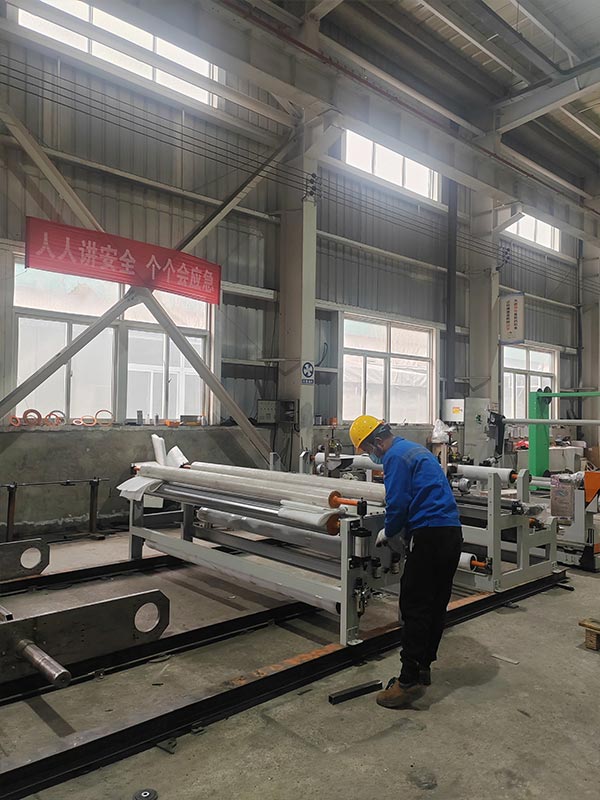
A Laminator machine is an important part of many synthetic leather and flexible-material production systems because it determines how consistently two or more layers are bonded into a stable composite structure. The machine may appear straightforward—feed materials, apply adhesive or heat, press the layers together, and rewind the finished material—but industrial lamination involves much more precise control.
When lamination is unstable, manufacturers may see bubbles, wrinkles, edge lifting, poor peel strength, uneven bonding, material stretching, or dimensional changes. These problems often become visible only after the laminated material reaches embossing, cutting, sewing, thermoforming, or other downstream operations.
For this reason, choosing and operating a Laminator machine should be treated as a process-engineering decision rather than simply an equipment decision.
Key points covered in this guide include:
- How industrial lamination works
- What determines bonding consistency
- How substrates influence machine configuration
- Why roller pressure, tension, temperature, and speed must work together
- Differences between common laminating methods
- How to test a machine before full production
- How to reduce bubbles, wrinkles, delamination, and uneven bonding
- What manufacturers should consider when integrating lamination into a complete production line
For manufacturers working with PU, PVC, fabrics, films, foams, and other flexible structures, the goal is not simply to join two materials. The goal is to create a laminated structure that remains consistent throughout subsequent manufacturing.
What Does a Laminator Machine Do?
A Laminator machine combines two or more material layers through controlled bonding.
Depending on the product structure, these layers may include:
- synthetic leather;
- fabric;
- knitted backing;
- nonwoven material;
- polymer film;
- foam;
- release material;
- protective film;
- coated textile;
- reinforcement layer.
The machine brings these materials together under controlled pressure and, depending on the process, temperature and adhesive conditions.
Lamination Is More Than Pressing Two Layers Together
A common misunderstanding is that stronger pressure automatically produces stronger bonding.
In practice, lamination quality depends on a combination of factors:
material compatibility → adhesive behavior → coating uniformity → web tension → alignment → temperature → nip pressure → line speed → cooling or curing.
Changing one variable can affect several others.
For example, increasing production speed reduces the amount of time the material remains in a heated or pressure-controlled zone. Increasing temperature may compensate in some processes, but excessive heat can distort the substrate or change its surface characteristics.
A reliable process therefore requires balanced parameters rather than maximum settings.
What Makes Industrial Lamination Different?
In occasional processing, producing one acceptable laminated sample may be sufficient.
Industrial production requires something more difficult: producing the same result continuously across long rolls and multiple batches.
That means a Laminator machine must provide:
- stable web handling;
- predictable tension;
- uniform pressure;
- accurate temperature regulation;
- consistent adhesive application;
- reliable alignment;
- repeatable machine settings.
The difference between laboratory-quality bonding and industrial-quality bonding is repeatability.
Understand the Materials Before Choosing a Laminator Machine
Machine selection should begin with the material structure rather than the machine specification sheet.
Synthetic leather production can involve several material combinations, each of which behaves differently during heating, tensioning, pressing, and bonding.
PU-Based Materials
PU materials can vary considerably in softness, elasticity, surface structure, coating composition, and backing construction.
The chemistry and properties of polyurethane (PU) allow it to appear in coatings, adhesives, flexible structures, and many other material systems. This versatility also means that PU-based laminating applications cannot be evaluated using one universal machine setting.
A soft and elastic PU surface, for example, may require different tension control from a relatively stable fabric backing.
PVC-Based Materials
PVC synthetic materials may also require careful temperature and pressure management.
When heat is part of the process, the operator should consider:
- surface sensitivity;
- dimensional stability;
- coating structure;
- backing material;
- bonding layer;
- required finished hand feel.
Excessive temperature or pressure can alter the finished surface even when the bond itself appears satisfactory.
Textile Backings
Fabric is rarely perfectly rigid.
Knitted materials may stretch, woven materials may react differently in warp and weft directions, and nonwoven structures can compress under pressure.
This makes tension control particularly important.
If one layer stretches more than another during lamination, the final roll may appear acceptable immediately after processing but develop curling, contraction, or dimensional distortion when tension is released.
Foam and Soft Intermediate Layers
Foam introduces another challenge because it can be compressed.
Excessive nip pressure may temporarily reduce thickness or alter surface feel. Insufficient pressure may prevent uniform bonding.
For these materials, operators should evaluate both immediate bond quality and thickness recovery after processing.
How Does a Laminator Machine Work?
Although machine configurations differ, a typical continuous lamination process follows several basic stages.
Material Unwinding
Individual materials are fed from separate unwinding stations.
Stable unwinding matters because irregular roll resistance creates tension fluctuations before the materials even reach the bonding zone.
A well-controlled unwinding system helps maintain:
- smooth feeding;
- predictable web tension;
- accurate alignment;
- fewer wrinkles.
Surface or Adhesive Preparation
Depending on the process, an adhesive, coating, or bonding layer may be introduced.
Uniformity is critical.
If the bonding medium is inconsistent across the working width, increasing roller pressure usually does not solve the underlying problem.
Web Alignment
The material layers must arrive at the laminating point in the correct position.
Edge deviation can create:
- exposed backing;
- uneven usable width;
- trimming losses;
- downstream feeding problems.
Continuous production therefore benefits from reliable guiding and correction systems.
Lamination at the Nip
The nip is the point where rollers bring the materials together.
At this stage, pressure must be distributed as evenly as possible across the working width.
For thermal processes, temperature becomes another major variable.
Cooling, Curing, or Stabilization
Bonding does not always end immediately after the material passes through the roller.
Some structures need:
- cooling;
- adhesive curing;
- solvent evaporation;
- moisture removal;
- stabilization time.
The downstream handling system should therefore match the bonding technology.
Rewinding
The laminated material is collected into a finished roll.
Rewinding tension matters because excessive tension can stretch the newly bonded composite, while unstable winding can produce telescoping, loose edges, or roll deformation.
The Six Parameters That Control Lamination Quality
Operators often focus on a single parameter when troubleshooting a Laminator machine. In reality, the following six variables should be considered as one system.
1. Temperature
Temperature influences adhesive activation, material flexibility, bonding behavior, and process stability.
Too little heat may result in incomplete bonding.
Too much heat may cause:
- surface distortion;
- material shrinkage;
- excessive softening;
- gloss variation;
- backing deformation.
The correct temperature is therefore the temperature required by the complete material system—not simply the highest temperature the machine can produce.
2. Pressure
Nip pressure helps create intimate contact between material layers.
Pressure must be sufficiently uniform across the full width.
Uneven pressure may produce a situation where the center bonds correctly while edges remain weak, or vice versa.
3. Line Speed
Production speed directly affects residence time.
When line speed changes, temperature exposure, coating behavior, drying conditions, and bonding time can change simultaneously.
For this reason, validated production settings should record speed together with temperature and pressure.
4. Web Tension
Tension deserves particular attention when laminating flexible materials.
The objective is not maximum tension.
The objective is enough tension to guide the web smoothly without stretching or deforming it.
5. Adhesive or Bonding Layer Uniformity
The adhesive system must match both substrates and the final application.
Uniform application is particularly important because localized differences may create weak bonding zones even when machine settings are otherwise correct.
6. Roller Condition and Alignment
Rollers influence pressure distribution, web guidance, and surface quality.
Inspect them for:
- contamination;
- damage;
- uneven wear;
- alignment problems;
- unwanted material buildup.
Small roller defects can repeat across long production runs.
Different Types of Laminator Machine
There is no single configuration that is best for every manufacturer. The correct technology depends on the materials and bonding mechanism.
Hot Laminating
Hot lamination uses controlled thermal energy together with pressure to activate or support bonding.
It can be useful when the selected materials or bonding layers respond to heat.
Important considerations include:
- heating uniformity;
- thermal response time;
- surface temperature;
- cooling behavior;
- temperature sensitivity of the substrate.
Cold Laminating
Cold lamination relies primarily on pressure and a suitable bonding system rather than substantial process heating.
It may be appropriate where heat-sensitive surfaces need to be protected.
However, “cold” should not be interpreted as simpler. Adhesive properties, pressure uniformity, cleanliness, and web control remain critical.
Adhesive Laminating
Adhesive laminating introduces a bonding medium between the layers.
The process may require additional control over:
- coating amount;
- viscosity;
- drying;
- open time;
- curing;
- coating uniformity.
The adhesive and substrate must be considered together.
Thermal Bonding
Some materials can be joined through heat-responsive layers or thermoplastic characteristics.
This eliminates or reduces the need for a separately applied adhesive in certain structures.
However, the permissible processing window may be narrow because insufficient heating gives weak bonding while excessive heating affects surface quality or dimensions.
Laminator Machine Selection Comparison
The following table provides a practical framework for evaluating different production requirements.
| Production Requirement | Machine Feature to Evaluate | Main Quality Risk |
|---|---|---|
| Stretchable material | Precision tension control | Material elongation |
| Multiple roll widths | Adjustable web guiding | Edge misalignment |
| Heat-sensitive surface | Accurate temperature control | Surface deformation |
| Thick multilayer structure | Stable nip pressure | Incomplete bonding |
| Foam lamination | Controlled roller pressure | Excessive compression |
| Fabric backing | Independent tension adjustment | Wrinkles or curling |
| High-volume production | Stable continuous feeding | Parameter drift |
| Multiple product structures | Recipe-based adjustment | Long changeovers |
| Sensitive surface finish | Roller surface condition | Marking or gloss change |
| Frequent material changes | Accessible adjustment system | Setup inconsistency |
This comparison illustrates an important principle: machine selection should be based on the most difficult material combination you regularly process, not the easiest one.
How to Evaluate Roller Pressure
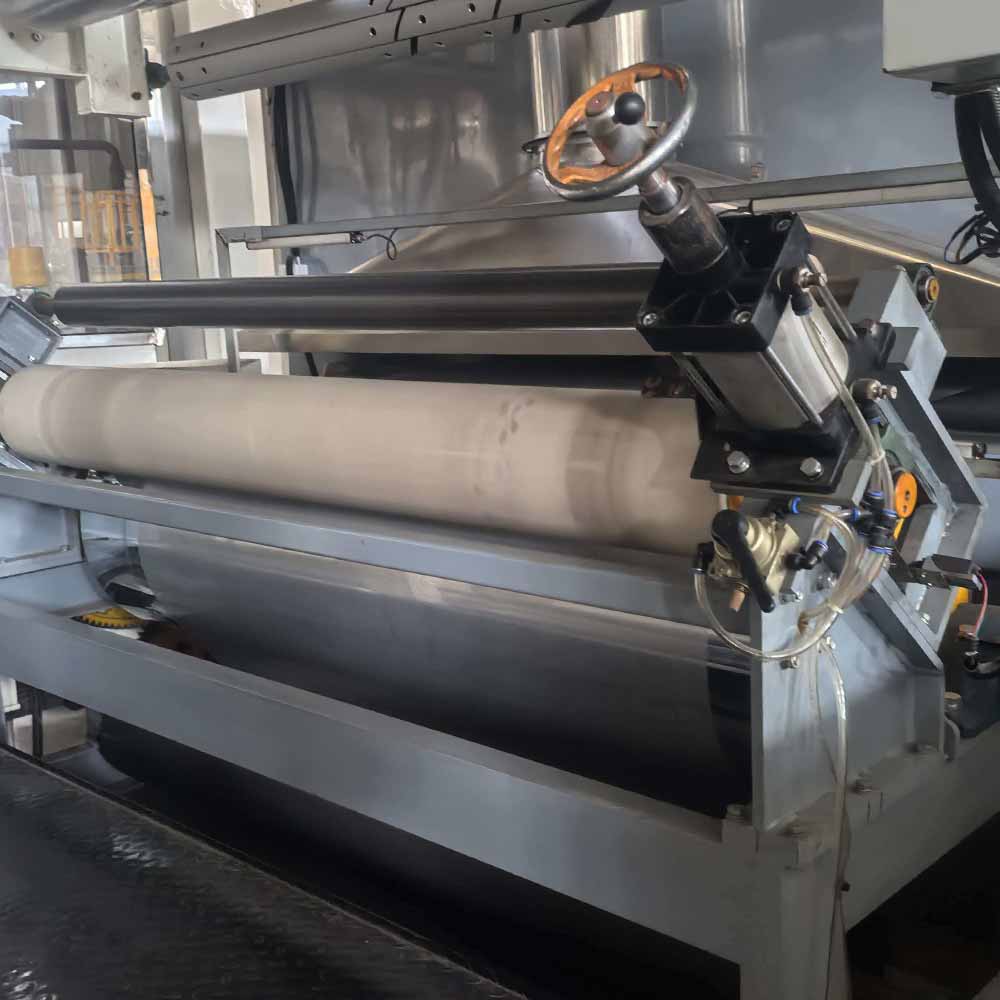
Roller pressure is one of the most important but frequently misunderstood aspects of a Laminator machine.
Pressure Must Be Uniform
The average pressure setting tells only part of the story.
What matters is how evenly pressure is distributed across the working width.
Possible indications of uneven pressure include:
- stronger bonding on one side;
- weak edge adhesion;
- repeated bubbles in one region;
- uneven surface appearance.
More Pressure Is Not Always Better
Increasing pressure may improve contact temporarily, but excessive compression can introduce new defects.
Possible consequences include:
- substrate deformation;
- foam compression;
- texture flattening;
- edge distortion;
- altered hand feel.
The most reliable setting is the minimum stable pressure required to achieve the required bonding quality.
Why Web Tension Matters So Much
Flexible-material lamination is essentially a web-handling process.
Even if bonding chemistry is correct, poor web tension can make the finished product unusable.
Imagine bonding an elastic fabric to a less elastic synthetic leather layer.
If the fabric is stretched during bonding and then released afterward, it attempts to return to its original dimensions. The other layer resists that movement.
The result may be:
- curling;
- waviness;
- internal stress;
- dimensional instability.
Independent Tension Control
When materials have different mechanical properties, controlling them independently before the bonding point becomes especially useful.
The target is synchronized feeding rather than identical numerical tension.
Stable Tension During Acceleration
A machine should also behave consistently when:
- starting;
- accelerating;
- running steadily;
- slowing;
- stopping.
A system that works well only at constant speed may still generate defects during normal production transitions.
How to Reduce Bubbles and Wrinkles
Bubbles and wrinkles are among the most visible lamination defects, but they do not always have the same cause.
Possible Causes of Bubbles
Bubbles may result from:
- trapped air;
- uneven adhesive distribution;
- contaminated surfaces;
- incorrect pressure;
- insufficient bonding activation;
- moisture;
- poor roller contact.
Instead of immediately increasing pressure, determine where the bubble first appears.
That observation often reveals the real process stage causing the problem.
Possible Causes of Wrinkles
Wrinkles are more strongly associated with:
- tension imbalance;
- roll misalignment;
- poor web guiding;
- uneven feeding;
- substrate stretching;
- incorrect winding.
If wrinkles appear before the bonding nip, the laminating pressure is unlikely to be the root cause.
A Better Troubleshooting Method
Use a process map:
unwinding → guiding → coating → drying → tensioning → nip → cooling → rewinding.
Observe the material at each stage.
The first point where the defect appears is normally more useful diagnostically than the location where it becomes most visible.
Test a Laminator Machine with Real Production Materials
A demonstration using an easy, perfectly prepared sample provides limited information.
Industrial evaluation should reproduce real production conditions as closely as possible.
Prepare a Representative Test Matrix
Instead of bringing one sample, include:
- thinnest material;
- thickest material;
- softest material;
- most elastic material;
- most sensitive surface;
- widest regular roll;
- most difficult backing;
- most complex multilayer structure.
Factories using broader synthetic leather processing equipment should also evaluate whether lamination settings remain compatible with coating, embossing, surface finishing, and other upstream or downstream processes.
Do Not Judge Only by Appearance
A visually smooth laminated roll is not necessarily a successful product.
Evaluate:
- peel behavior;
- dimensional stability;
- surface integrity;
- edge bonding;
- thickness uniformity;
- curling;
- flexibility;
- downstream processability.
The laminated sample should also be tested after it has had sufficient time to stabilize.
Create a Repeatable Laminating Process
The most valuable industrial improvement is often not a faster machine but a more repeatable process.
A Laminator machine should allow successful settings to be documented and reproduced.
Build a Process Recipe
For every recurring material combination, record:
- top-layer material;
- backing material;
- material thickness;
- roll width;
- bonding system;
- temperature;
- line speed;
- roller pressure;
- unwinding tension;
- rewinding tension;
- cooling conditions;
- inspection criteria.
This creates a production recipe.
When a quality problem occurs later, operators can compare actual parameters against the validated baseline rather than adjusting the machine by instinct.
Establish a First-Article Inspection
After each major changeover, inspect the first production section before processing a complete roll.
A practical first-article inspection may check:
- alignment;
- usable width;
- surface appearance;
- bond consistency;
- edge condition;
- thickness;
- dimensions.
This is especially valuable when changing substrates or bonding systems.
Integrating a Laminator Machine into Synthetic Leather Production
The Laminator machine should not be evaluated as an isolated production island.
In a modern line, the material may move through several processes:
coating → drying → lamination → stabilization → embossing → surface finishing → inspection → winding.
The performance of one stage affects the next.
A laminating process that produces excessive tension, for example, may cause difficulty during embossing. Likewise, unstable layer alignment may reduce usable width during trimming or cutting.
A broader leather processing machinery system therefore needs coordinated line speed, material handling, process sequence, and quality control rather than individually optimized machines that operate independently.
Match Production Speeds
One machine operating significantly faster than surrounding equipment does not necessarily improve overall productivity.
The useful production rate is determined by the complete process.
Reduce Unnecessary Material Handling
Every additional unwinding, rewinding, storage, and transfer stage introduces opportunities for:
- contamination;
- roll damage;
- misidentification;
- tension changes;
- surface marking.
Integration can reduce unnecessary handling.
Consider Downstream Requirements
Lamination quality should ultimately be judged by downstream performance.
Ask:
- Does the material emboss evenly?
- Does it remain flat during cutting?
- Can it be sewn without layer separation?
- Does the surface remain stable during finishing?
- Does the composite retain the desired flexibility?
These questions provide more practical information than appearance alone.
Maintenance Factors That Affect Lamination Quality
Machine maintenance should be viewed as part of process control.
A Laminator machine gradually changes as components wear, become contaminated, or move out of adjustment.
Roller Cleaning
Rollers should remain free from adhesive, fibers, dust, coating residues, and other contamination.
Even small deposits can create recurring surface marks or localized pressure differences.
Roller Alignment
Check alignment when unexplained side-to-side differences appear.
A machine producing excellent bonding on one edge and poor bonding on the opposite edge may have a mechanical issue rather than a material issue.
Temperature System Inspection
Temperature sensors, heating elements, controllers, and roller surfaces should be checked according to an established maintenance schedule.
The displayed temperature and actual material-contact condition are not always identical.
Tension-System Inspection
Brakes, motors, sensors, guiding systems, bearings, and winding components all influence web tension.
Gradual wear can lead to gradual process drift that operators may not notice immediately.
Common Laminator Machine Selection Mistakes
Choosing by Maximum Speed
Maximum line speed is not the same as stable production speed.
The more useful question is:
At what speed can the machine maintain acceptable bonding, alignment, tension, and surface quality for your actual material?
Ignoring Material Stretch
A material can look perfectly flat while under tension but deform after rewinding or storage.
Testing should include dimensional recovery after processing.
Testing Only Easy Materials
Machine evaluation should emphasize your difficult materials.
If a system handles the most demanding combination reliably, easier structures are normally less challenging.
Treating Temperature as an Independent Setting
Temperature interacts with speed, material thickness, bonding chemistry, and cooling.
Changing temperature without evaluating these variables together can make troubleshooting confusing.
Increasing Pressure to Solve Every Problem
Pressure cannot correct poor adhesive distribution, incorrect tension, contaminated materials, or unstable temperature.
Each defect should be traced to its actual process stage.
Ignoring Changeover Repeatability
A machine may perform well once but still be difficult to standardize.
Switch from Product A to Product B and then back to Product A.
If operators cannot reproduce the original result efficiently, the adjustment system deserves further evaluation.
A Practical Laminator Machine Evaluation Checklist
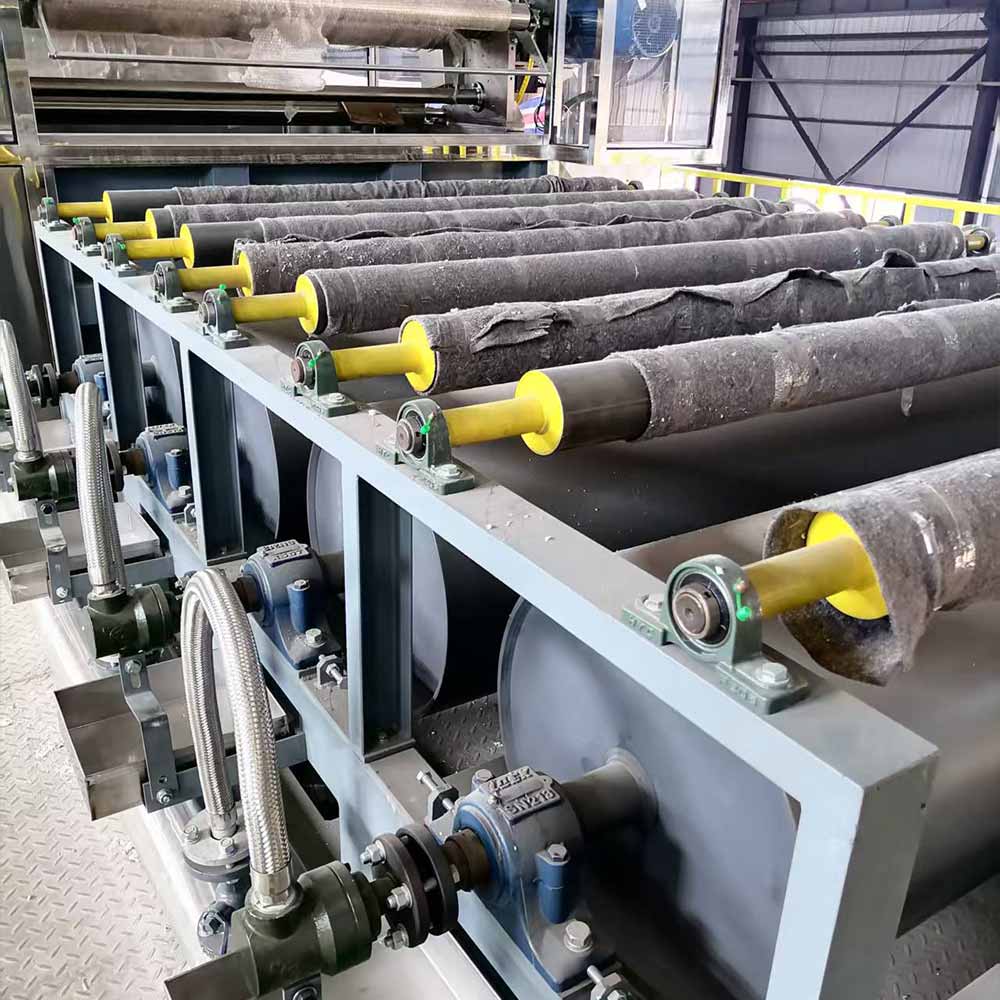
Before selecting or configuring equipment, define the following information.
Material
Record:
- substrate type;
- backing type;
- material thickness;
- roll width;
- elasticity;
- surface sensitivity.
Bonding
Define:
- adhesive or bonding technology;
- required bonding strength;
- heat sensitivity;
- curing or cooling conditions.
Web Handling
Evaluate:
- unwinding;
- tension control;
- alignment;
- nip feeding;
- rewinding.
Quality
Set measurable criteria for:
- bubbles;
- wrinkles;
- alignment;
- bond consistency;
- dimensions;
- surface appearance.
Production
Consider:
- operating speed;
- product change frequency;
- material combinations;
- required repeatability;
- downstream processes.
This approach turns Laminator machine selection from a general equipment comparison into a structured production-engineering assessment.
Conclusion
A reliable Laminator machine is defined less by one impressive specification and more by its ability to control several interacting variables consistently.
Material behavior, web tension, roller pressure, temperature, line speed, adhesive distribution, alignment, cooling, and rewinding all contribute to the finished laminate.
For synthetic leather manufacturers, the strongest evaluation method is to test the equipment with real production materials and examine the laminated structure through downstream operations—not only immediately after it exits the machine.
The best system should allow operators to establish stable process recipes, return to previous settings, control difficult material combinations, and detect changes before they become large production defects.
When lamination is treated as part of the entire manufacturing process rather than a standalone bonding step, manufacturers gain better control over surface quality, dimensional stability, bonding consistency, and production repeatability.
FAQ
What is a Laminator machine used for?
A Laminator machine bonds two or more material layers into a composite structure using controlled pressure, heat, adhesive, or a combination of these methods. In synthetic leather production, it can combine surface layers with fabrics, films, foams, nonwovens, or other backing materials.
How do I choose a Laminator machine for synthetic leather?
Start with your actual substrates, thickness range, roll width, elasticity, bonding method, production speed, and required finished quality. Then evaluate tension control, roller pressure, temperature accuracy, web alignment, rewinding stability, and repeatability using real production samples.
What causes bubbles when using a Laminator machine?
Bubbles can result from trapped air, surface contamination, uneven adhesive application, moisture, incorrect nip pressure, poor bonding activation, or unstable web feeding. The best troubleshooting method is to identify the first process stage where the bubble begins rather than simply increasing pressure.
Why does laminated material wrinkle after production?
Wrinkles can develop when material layers are fed under different tensions, when one substrate stretches more than another, or when web alignment and rewinding are unstable. The finished laminate may appear flat under machine tension and then distort after that tension is released.
What parameters should be checked on a Laminator machine?
The main parameters include line speed, temperature, nip pressure, unwinding tension, rewinding tension, web alignment, adhesive application, and cooling or curing conditions. These variables should be evaluated together because changing one can affect the performance of several others.