Daftar Isi
Introduction
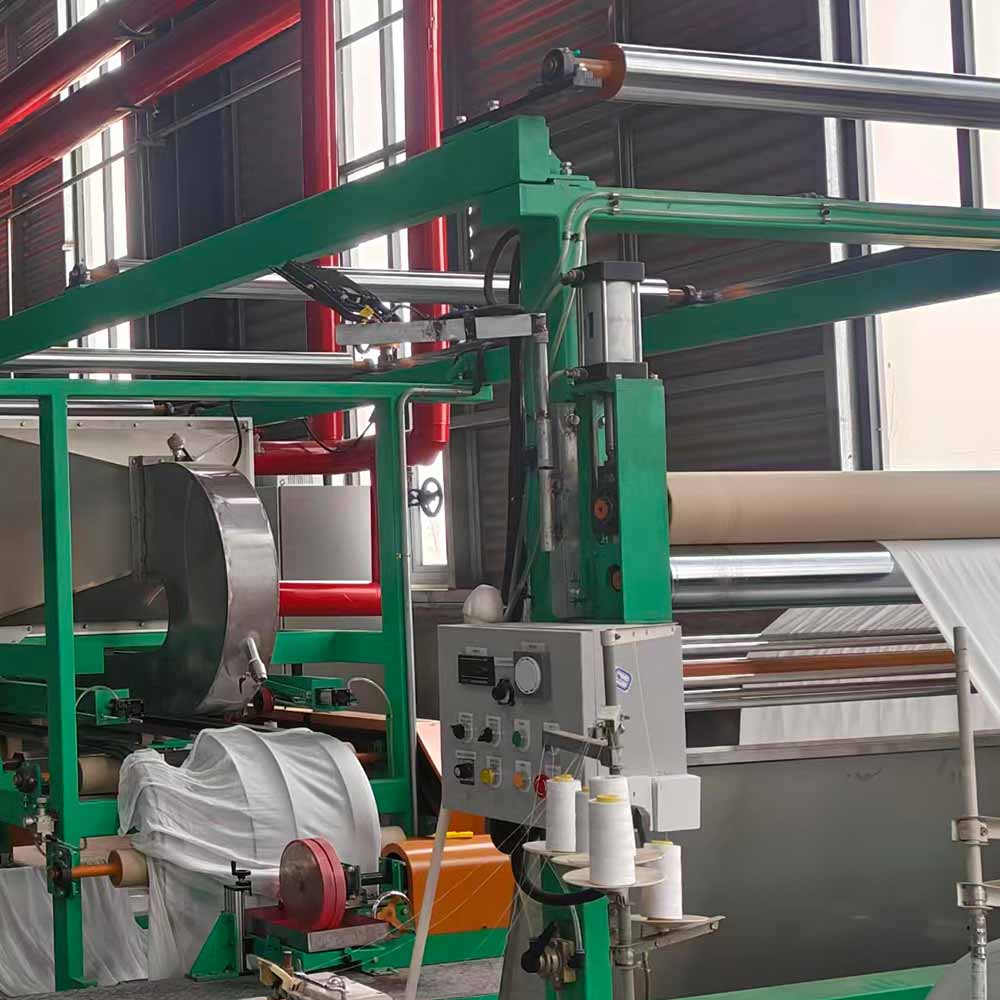
Mesin laminating memainkan peran penting dalam pembuatan kulit sintetis karena menentukan bagaimana lapisan material yang berbeda dapat diandalkan menjadi satu struktur komposit yang stabil. Dalam produksi kulit PU dan PVC, prosesnya mungkin melibatkan ikatan lapisan permukaan dengan dukungan tekstil, busa, kain bukan tenunan, film, atau lapisan fungsional lainnya.
Pada pandangan pertama, laminasi terlihat sederhana: dua bahan masuk ke mesin dan satu bahan laminasi keluar. Produksi industri jauh lebih menuntut. Mesin harus mengontrol ketegangan, keselarasan, distribusi perekat, tekanan, suhu, kecepatan, pendinginan, dan memutar ulang pada saat yang sama.
Variasi kecil pada satu tahap dapat menyebabkan cacat yang menjadi terlihat jauh kemudian. Kontrol ketegangan yang buruk dapat membuat pengeritingan setelah gulungan dilepaskan. Tekanan yang tidak merata dapat menghasilkan ikatan yang lemah di tepinya. Pengeringan yang tidak memadai mungkin terlihat dapat diterima pada nip laminating tetapi menyebabkan pemisahan selama embossing, pemotongan, atau penjahitan nanti.
Poin yang paling penting ketika mengevaluasi mesin laminating adalah:
- kompatibilitas dengan struktur substrat Anda yang sebenarnya;
- unwinding stabil dan ketegangan web;
- aplikasi perekat atau lapisan ikatan yang seragam;
- kontrol suhu yang akurat ketika pemanasan diperlukan;
- bahkan tekanan di seluruh lebar kerja;
- penyelarasan web yang andal;
- kecepatan produksi yang dapat dikontrol;
- pengeringan, pendinginan, atau pengawetan yang efektif;
- rewinding stabil;
- pengaturan berulang setelah pergantian produk.
Proses laminating yang baik karena itu melakukan lebih dari menahan dua lapisan bersama-sama. Ini menciptakan struktur material yang dapat diprediksi yang dapat berlanjut melalui manufaktur berikutnya tanpa memperkenalkan variasi yang dapat dihindari.
Apa yang Dilakukan Mesin Laminating?
Mesin laminasi menggabungkan dua atau lebih lapisan fleksibel untuk membuat material komposit dengan karakteristik yang mungkin tidak disediakan oleh satu lapisan saja.
Kulit sintetis sendiri umumnya dibangun dari lapisan permukaan polimer dan tekstil atau struktur pendukung lainnya. Konsep umum dari kulit buatan termasuk bahan yang dirancang untuk mereproduksi penampilan atau kinerja seperti kulit melalui struktur berlapis yang diproduksi.
Tergantung pada produk jadi, proses laminasi dapat menggabungkan:
- Bahan permukaan PU dengan dukungan tekstil;
- Bahan PVC dengan kain tenun;
- kulit sintetis dengan busa;
- bahan dilapisi dengan kain bukan tenunan;
- film dengan tekstil;
- bahan permukaan dekoratif dengan penguatan;
- beberapa lapisan fungsional yang fleksibel.
Tujuannya bukan hanya untuk menghasilkan adhesi. Laminasi industri harus menjaga konsistensi ikatan, stabilitas dimensi, kerataan, fleksibilitas, dan kualitas permukaan yang dapat digunakan di seluruh gulungan lengkap.
Laminasi sebagai Proses Struktural
Pencetakan dan embossing terutama mengubah tampilan permukaan atau tekstur suatu bahan. Laminasi mengubah strukturnya.
Lapisan pendukung dapat berkontribusi:
- stabilitas dimensi;
- penguatan;
- kelembutan;
- ketebalan;
- fleksibilitas;
- karakteristik penanganan.
Ini berarti tahap laminasi dapat mempengaruhi bagaimana kulit sintetis yang sudah jadi berperilaku selama embossing, pemotongan, pelipatan, menjahit, atau pemrosesan lainnya.
Bagaimana Cara Kerja Mesin Laminating?
Meskipun konfigurasi mesin bervariasi, laminasi bahan fleksibel yang terus menerus biasanya mengikuti urutan proses yang dapat dikenali:
unwinding → membimbing → persiapan permukaan atau perekat → pengeringan atau aktivasi → penyelarasan → laminasi nip → pendinginan atau pengawetan → inspeksi → rewinding.
Setiap bagian memiliki tanggung jawab yang berbeda.
Bahan Unwinding
Gulungan terpisah memasuki sistem melalui stasiun pelepasannya sendiri.
Mesin perlu memberi makan setiap lapisan dengan lancar tanpa peregangan yang tidak perlu atau perubahan tegangan mendadak.
Jika satu substrat berakselerasi secara berbeda dari yang lain, dimensi relatifnya dapat berubah sebelum mencapai titik laminasi.
Panduan Web
Bahan-bahan harus tetap selaras dengan benar.
Tanpa panduan yang memadai, kedua lapisan mungkin secara bertahap bergeser ke samping, menghasilkan:
- dukungan terbuka;
- tepi tidak rata;
- mengurangi lebar yang dapat digunakan;
- pemangkasan ekstra;
- masalah pelacakan hilir.
Penyelarasan tepi sangat penting selama proses produksi berkelanjutan yang panjang.
Persiapan Perekat atau Ikatan
Tergantung pada prosesnya, lapisan perekat atau ikatan yang responsif terhadap panas dapat dimasukkan.
Aplikasi yang seragam penting karena variasi lokal dapat menjadi variasi lokal dalam kinerja obligasi.
Menambahkan lebih banyak tekanan nip tidak dapat sepenuhnya mengkompensasi lapisan ikatan yang pada dasarnya tidak merata.
Laminasi Nip
Lapisan bertemu di antara rol yang dikontrol.
Pada titik ini, tekanan membawa mereka ke dalam kontak intim. Suhu juga dapat memainkan peran tergantung pada proses ikatan yang dipilih.
Persyaratan penting adalah keseragaman di seluruh lebar kerja.
Pendinginan, Penyembuhan, dan Rewinding
Struktur yang dilaminasi mungkin tidak mencapai kondisi stabil akhirnya segera setelah meninggalkan gigitan.
Tergantung pada sistem ikatannya, material mungkin memerlukan pendinginan, pengawetan, pengeringan, atau stabilisasi sebelum penggulungan akhir.
Tegangan penggulungan ulang kemudian harus dikontrol dengan hati-hati sehingga struktur yang baru dilaminasi tidak terlalu diregangkan atau terdistorsi.
Mulai Pemilihan Mesin Laminating Dengan Bahan
Salah satu kesalahan pemilihan peralatan yang paling umum dimulai dengan spesifikasi mesin maksimum, bukan material sebenarnya.
Mesin laminating harus dipilih di sekitar kombinasi substrat yang paling menuntut yang akan secara teratur memasuki produksi.
Identifikasi Lapisan Pertama
Rekam its:
- jenis bahan;
- ketebalan;
- lebar;
- fleksibilitas;
- elastisitas;
- kondisi permukaan;
- sensitivitas suhu.
Identifikasi Lapisan Kedua
Lakukan hal yang sama untuk substrat pendukung atau sekunder.
Hal ini penting karena dua bahan dapat bereaksi sangat berbeda terhadap tegangan yang sama.
Misalnya, bahan permukaan yang relatif stabil secara dimensi dan dipadukan dengan alas rajutan elastis menciptakan tantangan penanganan jaring yang berbeda dari dua lapisan stabil serupa.
Pertimbangkan Komposit Lengkap
Jangan mengevaluasi setiap substrat secara independen.
Tanyakan apa yang terjadi setelah mereka bergabung.
Komposit akhir harus diperiksa untuk:
- pengeritingan;
- penyusutan;
- ketebalan;
- fleksibilitas;
- penampilan permukaan;
- keseragaman ikatan;
- processability hilir.
Konfigurasi mesin yang tepat ditentukan oleh perilaku seluruh struktur laminasi.
Enam Variabel Yang Mendefinisikan Kualitas Laminasi
Mesin laminating yang andal mengontrol beberapa variabel secara bersamaan.
1. Ketegangan Web
Ketegangan web menentukan bagaimana material berjalan melalui sistem.
Tujuannya bukan ketegangan maksimum. Tujuannya adalah ketegangan stabil tanpa peregangan yang tidak perlu.
Jika backing elastis diregangkan selama ikatan, mungkin berkontraksi setelah meninggalkan mesin. Ketika melekat pada lapisan permukaan yang kurang elastis, pemulihan itu menciptakan tekanan internal.
Hasil yang mungkin termasuk:
- pengeritingan;
- waviness;
- distorsi dimensi;
- tepi tidak rata.
Kontrol independen menjadi sangat berguna ketika substrat memiliki perilaku mekanis yang sangat berbeda.
2. Tekanan Roller
Tekanan memberikan kontak antar lapisan.
Tekanan yang tidak mencukupi dapat berkontribusi pada ikatan yang tidak lengkap. Tekanan yang berlebihan dapat menciptakan masalah sendiri, terutama ketika busa lunak atau struktur kompresibel terlibat.
Efek potensial dari tekanan berlebihan meliputi:
- pengurangan ketebalan;
- penandaan permukaan;
- kompresi busa;
- perasaan tangan yang berubah;
- deformasi tepi.
Oleh karena itu, tekanan seragam lebih penting daripada sekadar memiliki tekanan tertinggi yang tersedia.
3. Temperatur
Beberapa proses laminasi memerlukan panas yang terkontrol untuk aktivasi, pengeringan, pengikatan, atau pengkondisian material.
Masukan termal yang terlalu sedikit dapat menyebabkan aktivasi atau pengeringan yang tidak lengkap.
Terlalu banyak yang dapat mempengaruhi:
- stabilitas dimensi;
- gloss;
- kelembutan;
- kondisi permukaan;
- perilaku backing.
Suhu harus selalu dievaluasi bersama dengan kecepatan garis karena kecepatan mengubah waktu pemaparan.
4. Kecepatan Garis
Kecepatan mesin mempengaruhi lebih dari output produksi.
Itu berubah:
- waktu pengeringan;
- paparan pemanasan;
- perilaku perekat;
- waktu kontak;
- waktu pendinginan.
Garis yang menghasilkan ikatan yang dapat diterima pada satu kecepatan mungkin memerlukan pengaturan berbeda ketika kecepatan berubah secara substansial.
Oleh karena itu, kecepatan produksi yang relevan adalah kecepatan di mana kualitas tetap stabil, bukan hanya kecepatan maksimum mekanis.
5. Distribusi Perekat
Jika proses berbasis perekat digunakan, keseragaman aplikasi adalah hal yang mendasar.
Pabrikan harus memperhatikan apakah lapisan ikatan tetap konsisten:
- di seluruh lebar;
- sepanjang produksi berjalan;
- selama perubahan kecepatan;
- setelah penyesuaian formulasi.
Kekurangan perekat lokal dapat menjadi masalah pemisahan lokal di kemudian hari.
6. Penyelarasan Web
Bahkan ikatan yang baik menjadi kurang berguna secara komersial jika substrat tidak tetap sejajar.
Akurasi panduan harus dievaluasi selama pengoperasian berkelanjutan, bukan hanya selama permulaan.
Variabel Proses Mesin Laminating Dibandingkan
| Variabel Proses | Fungsi Primer | Jika Tidak Stabil | Apa yang Harus Diperiksa |
|---|---|---|---|
| Tensi web | Mengontrol pergerakan material | Curling, keriput, peregangan | Sistem pelepasan dan tegangan |
| Tekanan NIP | Membuat kontak lapisan | Ikatan yang lemah atau tidak rata | Penyelarasan dan tekanan roller |
| Temperatur | Mendukung pengeringan atau aktivasi | Ikatan atau deformasi yang buruk | Sistem pemanas |
| Kecepatan garis | Mengontrol waktu proses | Pengeringan atau ketidakstabilan yang tidak sempurna | Keseimbangan seluruh proses |
| Distribusi perekat | Membuat lapisan ikatan | Delaminasi lokal | Sistem pelapisan |
| Web guiding | Menyelaraskan substrat | Ketidakcocokan tepi | Sistem panduan |
| Pendinginan/pengeringan | Menstabilkan laminasi | Gerakan pasca-proses | Bagian pendingin |
| Rewinding ketegangan | Membangun gulungan jadi | Gulungan peregangan atau longgar | Sistem berliku |
Pelajaran yang berguna dari tabel ini adalah bahwa banyak cacat laminasi yang terlihat berasal sebelum material mencapai roller tekanan utama.
Mengapa Pengendalian Ketegangan Sangat Penting
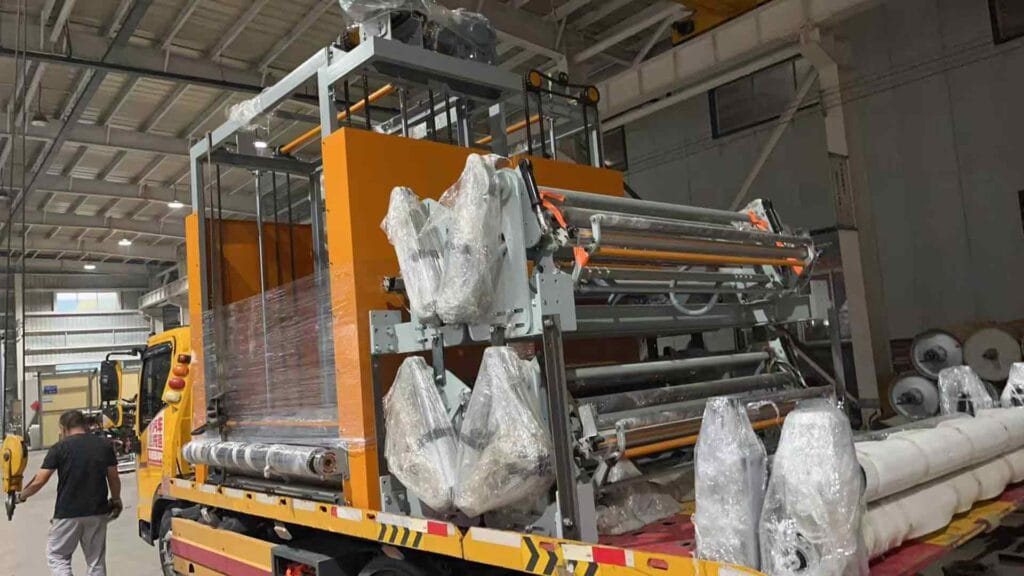
Masalah tegangan bisa sulit diidentifikasi karena bahan mungkin terlihat datar sempurna sementara tetap berada di dalam mesin.
Masalah sebenarnya terkadang muncul hanya setelah ketegangan dilepaskan.
Contoh: Backing Fleksibel dan Lapisan Permukaan Stabil
Bayangkan alas tekstil yang dapat diregangkan dilaminasi ke lapisan kulit sintetis yang relatif stabil.
Jika tekstil memanjang selama ikatan, kedua lapisan meninggalkan mesin bersama-sama. Sementara ketegangan mesin tetap ada, laminasi bisa terlihat datar.
Setelah itu, tekstil tersebut berupaya untuk pulih.
Karena lapisan permukaan tidak berkontraksi dengan jumlah yang sama, komposit dapat mengembangkan kelengkungan atau gelombang.
Laminasi itu sendiri mungkin kuat, tetapi bahannya masih tidak dapat digunakan.
Ini menggambarkan sebuah prinsip penting:
Kekuatan ikatan dan stabilitas dimensi adalah karakteristik kualitas yang terpisah.
Periksa Ketegangan Selama Transisi
Mesin laminating harus tetap stabil tidak hanya selama berjalan kecepatan konstan tetapi juga selama:
- startup;
- percepatan;
- produksi normal;
- perlambatan;
- stopping.
Beberapa sistem penanganan web bekerja dengan baik pada kecepatan konstan dan menjadi tidak stabil selama transisi.
Mengapa Keseragaman Tekanan Lebih Penting Dari Tekanan Maksimum
Spesifikasi mesin sering menyoroti tekanan maksimum, tetapi pengguna industri harus memperhatikan distribusi tekanan dengan cermat.
Misalkan bagian tengah material menerima tekanan lebih besar daripada kedua sisinya.
Anda mungkin melihat:
- ikatan pusat yang kuat;
- ikatan tepi yang lebih lemah;
- penampilan permukaan yang berbeda;
- ketebalan tidak rata.
Meningkatkan tekanan total dapat memperbaiki tepian tetapi menekan bagian tengahnya secara berlebihan.
Solusi sebenarnya adalah keseragaman tekanan.
Gunakan Tes Kiri-Tengah-Kanan
Selama uji coba, kumpulkan sampel dari:
- tepi kiri;
- pusat;
- tepi kanan.
Bandingkan:
- perilaku mengupas;
- ketebalan;
- penampilan permukaan;
- stabilitas dimensi;
- ikatan tepi.
Tes sederhana ini memberikan informasi yang jauh lebih berguna daripada hanya memeriksa sampel pusat yang kecil.
Laminasi Panas vs Laminasi Perekat
Teknologi ikatan yang berbeda cocok untuk struktur material yang berbeda.
| Faktor | Laminasi Berbantuan Panas | Laminasi Perekat |
|---|---|---|
| Prinsip ikatan | Lapisan/bahan yang responsif terhadap panas | Media ikatan terapan |
| Variabel kunci | Temperatur | Aplikasi perekat |
| Kontrol tekanan | Penting | Penting |
| Persyaratan pengeringan | Tergantung pada materi | Seringkali bergantung pada proses |
| Substrat yang peka terhadap panas | Membutuhkan kontrol yang cermat | Dapat menyediakan rute alternatif |
| Risiko kualitas utama | Deformasi termal | Perekat tidak rata atau proses curing tidak sempurna |
| Kompatibilitas bahan | Harus diverifikasi | Diperlukan kompatibilitas perekat/substrat |
Ini bukan perbandingan sederhana antara lebih baik versus lebih buruk.
Teknologi yang tepat tergantung pada struktur yang Anda butuhkan untuk menghasilkan.
Penggunaan Mesin Laminating dalam Produksi Kulit Sintetis PU
Laminasi sangat penting dalam produksi PU kering karena proses tersebut membangun struktur multilapis melalui pelapisan, pengeringan, pembentukan film, dan pengikatan.
Seorang modern PU kulit lini produksi kering mengintegrasikan pelapisan, pengeringan, laminasi, pendinginan, dan penggulungan ke dalam urutan manufaktur yang terkoordinasi.
Kata kuncinya terkoordinasi.
Mengoptimalkan mesin laminating secara independen sementara mengabaikan proses sekitarnya dapat memperkenalkan masalah baru.
Pelapisan Hulu Mempengaruhi Laminasi
Jika lapisan PU yang masuk memiliki ketebalan yang tidak konsisten atau stabilisasi yang tidak mencukupi, tahap laminasi mewarisi variasi tersebut.
Unit laminasi tidak dapat sepenuhnya mengkompensasi proses pelapisan yang tidak stabil.
Pengeringan Mempengaruhi Bonding
Bahan yang masuk laminasi harus dalam kondisi proses yang benar.
Pengeringan yang tidak memadai atau riwayat termal yang tidak tepat dapat memengaruhi cara lapisan bergabung.
Laminasi Mempengaruhi Finishing
Setelah laminasi, bahan dapat melanjutkan ke:
- embossing;
- pencetakan;
- perawatan permukaan;
- inspeksi;
- cutting.
Cacat laminasi yang tampaknya kecil mungkin menjadi lebih terlihat setelah embossing atau pemrosesan permukaan lainnya.
Mesin Laminating vs Mesin Laminator: Adakah Perbezaan?
Pengguna sering mencari baik “mesin laminasi” dan “mesin laminator.”
Dalam banyak konteks industri, istilah-istilah tersebut sangat tumpang tindih dan menggambarkan peralatan yang digunakan untuk menggabungkan lapisan. Namun, “mesin laminasi” sering kali merupakan kata-kata yang lebih luas yang digunakan untuk peralatan industri berkelanjutan dan sistem jalur produksi.
Perbedaan yang penting bukanlah namanya.
Itu adalah konfigurasi proses.
Saat mengevaluasi peralatan, fokuslah pada:
- substrat yang didukung;
- lebar kerja;
- konfigurasi unwinding;
- metode ikatan;
- kontrol ketegangan;
- pemanasan dan pengeringan;
- sistem tekanan;
- pendinginan;
- memutar ulang.
Dua mesin yang dijelaskan dengan nama umum yang sama dapat melayani aplikasi yang sangat berbeda.
Cara Menguji Mesin Laminating Sebelum Produksi
Uji coba mesin harus mereproduksi kondisi pabrik yang sebenarnya sedekat mungkin.
Hindari mengevaluasi peralatan hanya dengan menggunakan kombinasi material yang paling mudah.
Siapkan Set Sampel yang Representatif
Bahan uji yang berguna meliputi:
- substrat biasa tertipis;
- substrat biasa paling tebal;
- dukungan paling elastis;
- bahan permukaan paling lembut;
- sebagian besar bahan peka panas;
- gulungan normal terluas;
- kombinasi yang paling sulit.
Ini menciptakan rentang tes yang realistis.
Jalankan Lebih dari Sampel Singkat
Sampel singkat dapat membuktikan bahwa ikatan itu mungkin.
Itu tidak dapat membuktikan stabilitas yang berkelanjutan.
Sebuah jangka panjang memungkinkan Anda untuk mengamati:
- penyimpangan ketegangan;
- stabilitas suhu;
- perataan tepi;
- konsistensi perekat;
- perilaku berliku.
Ubah Kondisi Produksi
Tes yang sangat berguna adalah:
Produk A → Produk B → kembali ke Produk A.
Dapatkah operator mereproduksi hasil Produk A asli?
Jika tidak, pengulangan penyesuaian dapat menjadi masalah produksi.
Cara Mengevaluasi Kualitas Bahan Laminated
Inspeksi visual seharusnya hanya langkah pertama.
Evaluasi profesional harus mempertimbangkan beberapa dimensi.
Penampilan Permukaan
Periksa untuk:
- gelembung;
- kerutan;
- tanda tekanan;
- kontaminasi;
- waves.
Ikatan Tepi
Tepi sering kali menunjukkan masalah tekanan atau distribusi perekat lebih awal dari bagian tengahnya.
Bandingkan seluruh lebar.
Stabilitas Dimensi
Ukur bahan setelah sempat stabil.
Periksa apakah:
- perubahan lebar;
- curling berkembang;
- kontrak materialnya;
- gulungan menjadi bergelombang.
Konsistensi Obligasi
Laminasi tidak boleh memiliki zona lemah yang terisolasi.
Pengujian harus mengambil sampel beberapa posisi daripada satu titik yang nyaman.
Kinerja Hilir
Ambil bahan yang representatif ke tahap pembuatan berikutnya.
Ini mungkin termasuk:
laminasi → embossing → pemotongan → menjahit.
Laminasi yang terlihat halus pada mesin tetapi gagal selama pemrosesan selanjutnya belum merupakan hasil produksi yang stabil.
Masalah Mesin Laminating Umum dan Penyebabnya
Pemecahan masalah lebih efektif ketika kemunculan pertama cacat diidentifikasi.
Gelembung Antara Lapisan
Kemungkinan penyebabnya antara lain:
- udara yang terperangkap;
- kontaminasi permukaan;
- lapisan ikatan yang tidak rata;
- tekanan yang tidak mencukupi;
- pengeringan salah;
- kontak substrat yang buruk.
Jangan langsung meningkatkan tekanan.
Pertama tentukan apakah gelembung dimulai sebelum, pada, atau setelah nip laminasi.
Kerutan
Kerutan sering kali mengindikasikan masalah penanganan material.
Periksa:
- melepas;
- ketegangan web;
- keselarasan;
- pelacakan roller;
- elastisitas substrat.
Jika kerutan ada sebelum gigitan, perubahan tekanan laminasi tidak mungkin menyelesaikan akar penyebabnya.
Edge Lifting
Tepi yang lemah mungkin terkait dengan:
- tekanan tidak merata;
- cakupan perekat yang tidak memadai;
- kontaminasi tepi;
- keselarasan miskin.
Kegagalan yang konsisten pada sisi yang sama sering kali menunjukkan adanya masalah mesin atau aplikasi yang sistematis.
Curling Setelah Laminasi
Pengeritingan sering kali menunjukkan ketidakseimbangan antar lapisan.
Faktor-faktor yang mungkin termasuk:
- ketegangan substrat yang berbeda;
- perilaku penyusutan yang berbeda;
- paparan termal;
- konstruksi material asimetris.
Kekuatan Obligasi Tidak Merata
Jika beberapa daerah ikatan baik sementara yang lain tidak, memeriksa pola lokasi.
Cacat acak dan cacat yang secara konsisten mengikuti satu posisi di seluruh lebar biasanya memerlukan pendekatan pemecahan masalah yang berbeda.
Mengintegrasikan Mesin Laminating Ke Lini Produksi Lengkap
Mesin laminasi tidak boleh beroperasi sebagai pulau terpencil.
Situsnya lebih luas mesin pengolahan kulit kerangka kerja mencakup proses pelapisan, pengeringan, embossing, laminasi, dan penyelesaian akhir, yang menggambarkan mengapa laminasi perlu dipertimbangkan sebagai bagian dari rangkaian produksi yang terhubung.
Cocokkan Kecepatan Hulu dan Hilir
Unit laminating yang beroperasi jauh lebih cepat daripada proses sekitarnya tidak secara otomatis meningkatkan output keseluruhan.
Kapasitas efektif ditentukan oleh aliran produksi yang lengkap.
Kurangi Penanganan Berulang
Setiap transfer roll tambahan memperkenalkan peluang untuk:
- kontaminasi;
- kerusakan permukaan;
- variasi ketegangan;
- kesalahan identifikasi roll.
Urutan produksi yang terencana dengan baik dapat mengurangi penanganan yang tidak perlu.
Rencana Perubahan Material di Masa Depan
Sebuah pabrik dapat memproses lebih banyak bahan dari waktu ke waktu.
Oleh karena itu, fleksibilitas peralatan dapat bermanfaat jika tidak mengganggu stabilitas proses saat ini.
Bangun Resep Laminasi yang Dapat Diulang
Salah satu cara terkuat untuk mengurangi ketergantungan operator adalah dengan mendokumentasikan pengaturan yang berhasil.
Untuk setiap produk biasa, catat:
- substrat atas;
- substrat backing;
- ketebalan;
- lebar;
- sistem perekat atau ikatan;
- kecepatan garis;
- temperatur;
- tekanan;
- ketegangan unwinding;
- ketegangan rewinding;
- kondisi pendinginan;
- kriteria pemeriksaan.
Mengapa Resep Proses Penting
Tanpa pengaturan yang terdokumentasi, operator dapat melakukan penyesuaian berulang dari memori.
Pendekatan tersebut menjadi sulit ketika melibatkan banyak kombinasi material.
Resep yang divalidasi memberikan titik awal yang diketahui.
Hal ini juga membuat pemecahan masalah menjadi lebih sistematis karena pengaturan saat ini dapat dibandingkan dengan kondisi produksi yang sebelumnya berhasil.
Perawatan Yang Melindungi Kualitas Laminasi
Pemeliharaan harus dianggap sebagai bagian dari kontrol kualitas.
Bersihkan Roller Secara Teratur
Residu perekat, serat, partikel pelapis, dan debu dapat mengubah kontak rol.
Deposit kecil dapat menimbulkan cacat berulang dalam jangka panjang.
Periksa Penyelarasan Rol
Ketidakselarasan dapat mempengaruhi:
- tekanan;
- pelacakan material;
- ketebalan selesai;
- ikatan tepi.
Periksa Sistem Ketegangan
Periksa komponen yang terkait dengan:
- melepas;
- panduan web;
- kontrol drive;
- sensor;
- memutar ulang.
Keausan bertahap dapat menciptakan penyimpangan proses secara bertahap.
Verifikasi Kontrol Suhu
Jika pemanasan digunakan, periksa sistem kontrol dan respons proses sebenarnya.
Nilai yang ditampilkan stabil tidak secara otomatis menjamin kondisi material yang seragam di seluruh lebar kerja.
Cara Memilih Mesin Laminating yang Tepat
Proses seleksi yang berguna dimulai dengan membuat lembar persyaratan teknis.
Persyaratan Material
Mendefinisikan:
- jenis bahan;
- kisaran ketebalan;
- lebar kerja;
- struktur pendukung;
- elastisitas;
- sensitivitas termal.
Persyaratan Laminasi
Mendefinisikan:
- struktur dua lapis atau multilayer;
- metode ikatan;
- persyaratan perekat;
- ketebalan selesai yang dibutuhkan;
- fleksibilitas yang diharapkan.
Persyaratan Produksi
Mendefinisikan:
- kecepatan operasi reguler;
- frekuensi perubahan produk;
- dimensi gulungan;
- operasi berkelanjutan yang diperlukan;
- proses hilir.
Persyaratan Kualitas
Tentukan tingkat yang dapat diterima untuk:
- kerutan;
- gelembung;
- perataan tepi;
- perubahan dimensi;
- keseragaman ikatan;
- permukaan menandai.
Semakin jelas persyaratan ini sebelum konfigurasi peralatan, evaluasi mesin menjadi lebih bermakna.
Kesalahan Umum Saat Memilih Mesin Laminating
Memilih dengan Kecepatan Maksimum
Kecepatan mekanik maksimum tidak sama dengan kecepatan produksi yang dapat digunakan.
Pertanyaan pentingnya adalah seberapa cepat bahan laminasi yang dapat diterima dapat diproduksi secara terus menerus.
Mengabaikan Elastisitas Material
Dua bahan fleksibel dapat memiliki karakteristik perpanjangan yang sangat berbeda.
Pengendalian ketegangan harus mencerminkan perilaku mereka daripada menerapkan perlakuan yang sama secara otomatis.
Menguji Hanya Satu Materi Mudah
Evaluasi yang kuat berfokus pada kombinasi yang sulit.
Mesin harus ditantang dengan rentang produksi yang sebenarnya.
Berfokus Hanya pada Kekuatan Obligasi
Suatu bahan dapat memiliki ikatan yang kuat dan masih menderita:
- pengeritingan;
- kerutan;
- ketidakstabilan dimensi;
- kompresi berlebihan.
Kualitas harus dievaluasi sebagai struktur yang lengkap.
Mengabaikan Pengulangan Pergantian
Jika pabrik sering berpindah antar produk, maka akan dimungkinkan untuk kembali ke pengaturan yang sudah ada tanpa eksperimen yang berlebihan.
Mengevaluasi Laminasi Tanpa Pengujian Hilir
Laminasi harus diperiksa setelah proses yang sebenarnya akan dialaminya.
Masalah yang muncul selama embossing mungkin dimulai selama laminasi.
Daftar Periksa Pemilihan Mesin Laminating Praktis
| Pertanyaan | Mengapa Itu Penting |
|---|---|
| Bahan apa yang akan dilaminasi? | Mendefinisikan kompatibilitas proses |
| Seberapa berbeda sifat elastis mereka? | Menentukan persyaratan ketegangan |
| Kisaran ketebalan apa yang terlibat? | Mempengaruhi tekanan dan makan |
| Lebar kerja apa yang diperlukan? | Mendefinisikan konfigurasi mesin |
| Metode ikatan mana yang digunakan? | Menentukan struktur proses |
| Apakah pemanasan diperlukan? | Mempengaruhi kontrol termal |
| Bagaimana pengeringan atau curing akan terjadi? | Mempengaruhi stabilitas ikatan |
| Berapa kecepatan produksi yang diharapkan? | Mempengaruhi waktu tinggal |
| Apa yang terjadi setelah laminasi? | Mendefinisikan persyaratan kualitas akhir |
| Seberapa sering produk berubah? | Menentukan fleksibilitas setup |
| Apakah pengaturan dapat direproduksi? | Menentukan repeatability proses |
Pertanyaan-pertanyaan ini memberikan landasan yang lebih berguna daripada memilih mesin dari spesifikasi umum saja.
Kesimpulan
Mesin laminasi harus dievaluasi sebagai sistem kontrol proses, bukan sekadar sepasang rol yang mengikat material menjadi satu.
Kualitas komposit akhir tergantung pada seberapa baik peralatan mengelola perilaku material, ketegangan, keselarasan, distribusi perekat, suhu, tekanan, kecepatan, pendinginan, pengawetan, dan rewinding.
Metode seleksi yang paling dapat diandalkan menggunakan bahan produksi yang sebenarnya.
Uji substrat yang sulit. Periksa sisi kiri, tengah, dan kanan. Jalankan mesin cukup lama untuk mengidentifikasi penyimpangan proses. Biarkan material stabil. Kemudian ambil laminasi melalui operasi manufaktur hilirnya.
Untuk produsen yang merencanakan kombinasi material baru atau konfigurasi jalur produksi, menentukan substrat, lebar kerja, ketebalan, persyaratan pengikatan, operasi hilir, dan target kualitas sebelum berdiskusi persyaratan produksi membuat konfigurasi peralatan secara signifikan lebih tepat.
Pada akhirnya, mesin laminating yang baik tidak ditentukan oleh satu spesifikasi maksimum. Ini ditentukan oleh apakah ia dapat mereproduksi struktur komposit yang stabil di seluruh gulungan penuh, di seluruh batch produksi berulang, dan setelah pergantian produk normal.
Pengulangan itulah yang mengubah laminasi menjadi proses manufaktur industri yang terkendali.
FAQ
Apa itu mesin laminating yang digunakan dalam produksi kulit sintetis?
Sebuah mesin laminating ikatan dua atau lebih lapisan bahan ke dalam struktur komposit yang stabil. Dalam pembuatan kulit sintetis, mungkin menggabungkan PU atau PVC permukaan dengan kain, busa, bahan nonwoven, film, atau lapisan pendukung lainnya sambil mengendalikan ketegangan, tekanan, keselarasan, dan kondisi ikatan.
Apa yang harus saya periksa ketika memilih mesin laminating?
Periksa jenis substrat, ketebalan, lebar kerja, elastisitas, metode ikatan, kontrol tegangan web, keseragaman tekanan, persyaratan pemanasan, kecepatan garis, pendinginan, dan rewinding. Uji coba material nyata lebih berguna daripada hanya membandingkan spesifikasi mesin maksimum.
Mengapa mesin laminating menyebabkan keriput?
Kerutan sering hasil dari ketegangan web yang tidak stabil, keselarasan yang buruk, peregangan substrat, makan yang tidak merata, atau masalah berliku. Tentukan di mana kerutan pertama kali muncul. Jika berkembang sebelum nip laminating, peningkatan tekanan pada titik ikatan tidak mungkin untuk memecahkan penyebab yang mendasarinya.
Bagaimana saya dapat meningkatkan konsistensi ikatan pada mesin laminating?
Kontrol distribusi perekat, kebersihan substrat, tekanan nip, suhu, kecepatan garis, ketegangan web, dan kondisi pengeringan atau pengawetan bersama-sama. Periksa sampel di seluruh lebar material penuh karena ikatan pusat yang kuat tidak menjamin ikatan yang sama stabil di dekat kedua tepi.
Bisakah satu mesin laminating memproses bahan kulit sintetis yang berbeda?
Mesin yang sesuai dapat mendukung beberapa struktur material, tetapi setiap kombinasi mungkin memerlukan pengaturan tegangan, suhu, tekanan, kecepatan, dan ikatan yang berbeda. PU, PVC, kain, busa, dan substrat lainnya harus diuji sebagai struktur komposit lengkap sebelum parameter produksi distandarisasi.