Table of Contents
Introduction
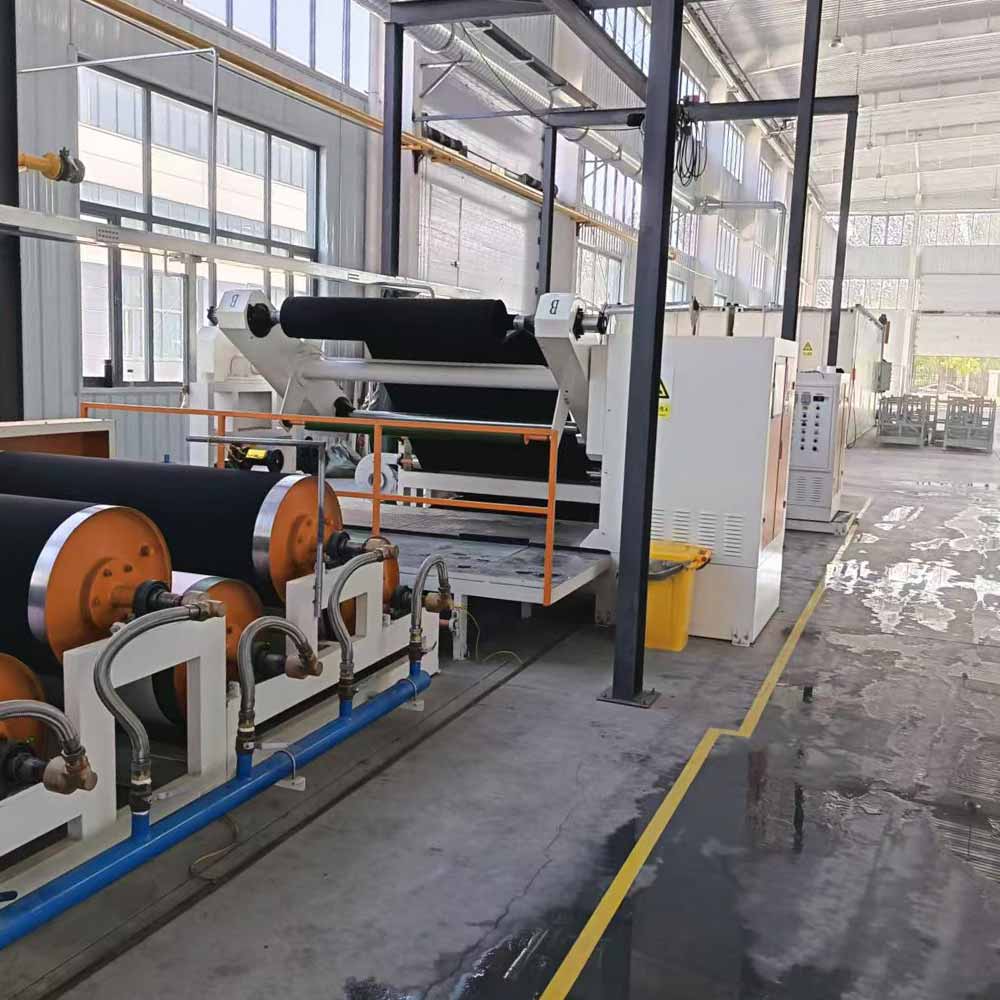
A Leather embossing machine does more than press a decorative pattern onto a material. In industrial leather and synthetic leather production, embossing is a controlled surface-forming process that influences grain definition, visual depth, gloss distribution, tactile feel, dimensional stability, and the consistency of the finished roll.
For manufacturers working with PU leather, PVC leather, coated materials, and other flexible substrates, embossing quality is rarely determined by pressure alone. Temperature, roller geometry, contact time, web tension, production speed, cooling, and the structure of the incoming material all interact.
According to Wikipedia’s overview of leather finishing, embossing is one of the finishing operations used to modify a leather surface. In continuous industrial production, that principle is developed into a repeatable process capable of forming the same grain over long rolls of material.
The most important points to understand are:
- Embossing quality starts with material stability before the embossing station.
- Heat, pressure, speed, and contact time must be treated as connected variables.
- Embossing roller geometry strongly affects the finished grain.
- Maximum pressure does not guarantee better texture.
- Web tension can change both pattern dimensions and surface consistency.
- Cooling helps determine how well the formed texture is retained.
- Printing and embossing should be coordinated when both processes are used.
- Production samples should be checked across the full roll width.
- Machine repeatability matters more than a single impressive sample.
- The final texture should be evaluated after downstream processing.
Understanding these relationships makes it easier to select, operate, and evaluate a Leather embossing machine based on actual production requirements rather than isolated machine specifications.
What Is a Leather Embossing Machine?
A Leather embossing machine is equipment used to create a controlled pattern or three-dimensional texture on a leather or synthetic leather surface.
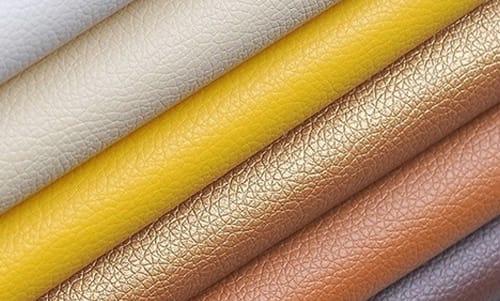
Instead of changing only the color of the material, embossing modifies the geometry of the surface itself. Depending on the selected roller or tooling, the finished material can receive fine grains, deeper textures, geometric structures, decorative motifs, matte effects, or other repeatable patterns.
A typical industrial embossing system involves:
- controlled material feeding;
- temperature conditioning where required;
- an engraved embossing roller or forming tool;
- pressure application;
- line-speed control;
- cooling or stabilization;
- finished-material rewinding.
Jinzhihang Machinery’s Leather Embossing Machine is designed for leather and synthetic leather embossing and includes hot-press and high-frequency process options for different production requirements.
Embossing Creates More Than a Visible Pattern
Texture changes how light reflects from the surface.
Raised areas, recessed areas, and transitions between them create highlights and shadows. This means two materials with the same basic color may look very different after embossing.
Texture can also influence how the material feels when touched. For this reason, the grain is both a visual and tactile characteristic.
Industrial Embossing Requires Repeatability
Creating one acceptable sample is relatively straightforward compared with maintaining that appearance through continuous production.
Industrial embossing should reproduce:
- similar texture depth;
- consistent grain definition;
- stable dimensions;
- uniform gloss;
- reliable pattern repeat.
That requirement for repeatability is what makes process control so important.
How Does a Leather Embossing Machine Work?
The basic working principle is simple: a patterned surface contacts the material under controlled conditions and transfers its geometry into the surface.
What happens around that contact point determines whether the result is stable.
A typical workflow is:
unwinding → web control → thermal conditioning → embossing → cooling → inspection → rewinding.
Material Feeding
The material enters the machine through a controlled feeding system.
If the web moves sideways, wrinkles, or stretches before embossing, surface quality can vary even when the embossing roller itself is accurate.
Stable feeding therefore establishes the conditions for consistent texture formation.
Thermal Conditioning
Some synthetic leather structures become easier to form when the surface reaches an appropriate processing condition.
Temperature must be controlled rather than simply maximized.
Too little thermal conditioning may make it difficult to reproduce fine details. Excessive heat may change gloss, dimensions, coating behavior, or surface characteristics.
Pattern Formation
The material contacts the embossed roller or forming surface.
At this point, pattern reproduction depends on several factors:
temperature + pressure + roller geometry + contact time + material response.
Line speed directly affects contact time, which is why production speed cannot be evaluated independently.
Cooling and Stabilization
The formed surface may still be relatively flexible when it leaves the embossing area.
Cooling helps stabilize the new texture before winding or further processing.
If the surface remains too soft, part of the embossed grain may recover or change as tension is released.
How the Embossing Roller Defines Surface Character
The embossing roller is one of the most important components of a Leather embossing machine.
Its engraved geometry establishes the basic texture that will be transferred to the material.
Fine Grain
Fine grains contain small surface details.
They generally require accurate contact and consistent process conditions because minor changes can reduce the definition of small features.
Fine patterns should be evaluated closely across the full working width.
Medium Grain
Medium textures provide a balance between visible pattern depth and manageable process control.
They may be used where a clear leather-like surface is required without a highly pronounced three-dimensional structure.
Deep Texture
Deeper grain structures create stronger surface relief.
However, a deeper engraving does not automatically mean the finished material will achieve the same depth.
Actual texture reproduction depends on:
- material softness;
- temperature;
- pressure;
- production speed;
- cooling;
- elastic recovery.
Geometric and Decorative Patterns
Not every embossed surface needs to imitate a traditional grain.
Industrial embossing can also create:
- lines;
- repeated geometric shapes;
- technical patterns;
- decorative textures;
- custom surface structures.
Regular patterns tend to make dimensional errors more visible because the human eye can easily detect changes in spacing or alignment.
The Four Main Parameters That Control Embossing Quality
Although many variables influence production, four parameters deserve particular attention.
Temperature
Temperature affects the material’s ability to conform to the embossing pattern.
If Temperature Is Too Low
Possible results include:
- shallow grain;
- incomplete pattern transfer;
- reduced detail;
- inconsistent texture.
If Temperature Is Too High
Possible problems include:
- unwanted gloss;
- dimensional changes;
- excessive softening;
- coating deformation;
- surface marks.
The ideal temperature should therefore be developed for the actual material rather than copied from an unrelated production specification.
Pressure
Pressure helps bring the surface into controlled contact with the embossing geometry.
Insufficient Pressure
The texture may remain shallow or inconsistent.
Fine areas of the pattern may not transfer completely.
Excessive Pressure
More pressure is not automatically better.
Excessive compression may:
- alter material thickness;
- flatten backing structures;
- create excessive gloss;
- deform edges;
- exaggerate some parts of the grain.
For production purposes, pressure uniformity is often more valuable than maximum pressure capability.
Line Speed
Speed changes the amount of time the material remains in contact with heated or forming components.
Increasing production speed may reduce the effective forming time.
If operators change speed without reconsidering temperature and pressure, the finished texture can change even though every other displayed setting remains the same.
Web Tension
Web tension controls how the flexible material moves through the machine.
Excessive tension may stretch the material before embossing.
When the web is later released, dimensional recovery can alter:
- grain spacing;
- material width;
- surface flatness.
Insufficient tension can create another set of problems, including unstable tracking and wrinkles.
The objective is stable, appropriate tension—not simply stronger tension.
Leather Embossing Machine Process Variables Compared
| Process Factor | Primary Function | If Too Low or Unstable | If Excessive |
|---|---|---|---|
| Temperature | Conditions the surface for forming | Shallow or incomplete grain | Distortion or gloss changes |
| Pressure | Transfers roller geometry | Weak pattern definition | Compression or deformation |
| Line speed | Controls production and contact time | Lower output | Insufficient forming time |
| Web tension | Stabilizes material feeding | Wrinkles and tracking variation | Stretching and dimensional change |
| Roller accuracy | Defines texture geometry | Irregular surface pattern | Not normally a setting variable |
| Cooling | Stabilizes the formed surface | Texture recovery | Process inefficiency if poorly controlled |
| Roller cleanliness | Preserves fine grain details | Missing or repeated defects | — |
| Alignment | Maintains cross-web consistency | Different grain across width | — |
| Rewinding tension | Controls finished roll stability | Loose winding | Stretching or roll deformation |
This comparison demonstrates why surface defects should not automatically be blamed on the embossing roller. A grain problem can begin in feeding, heating, pressure distribution, cooling, or winding.
Why Pressure Uniformity Matters More Than Maximum Pressure
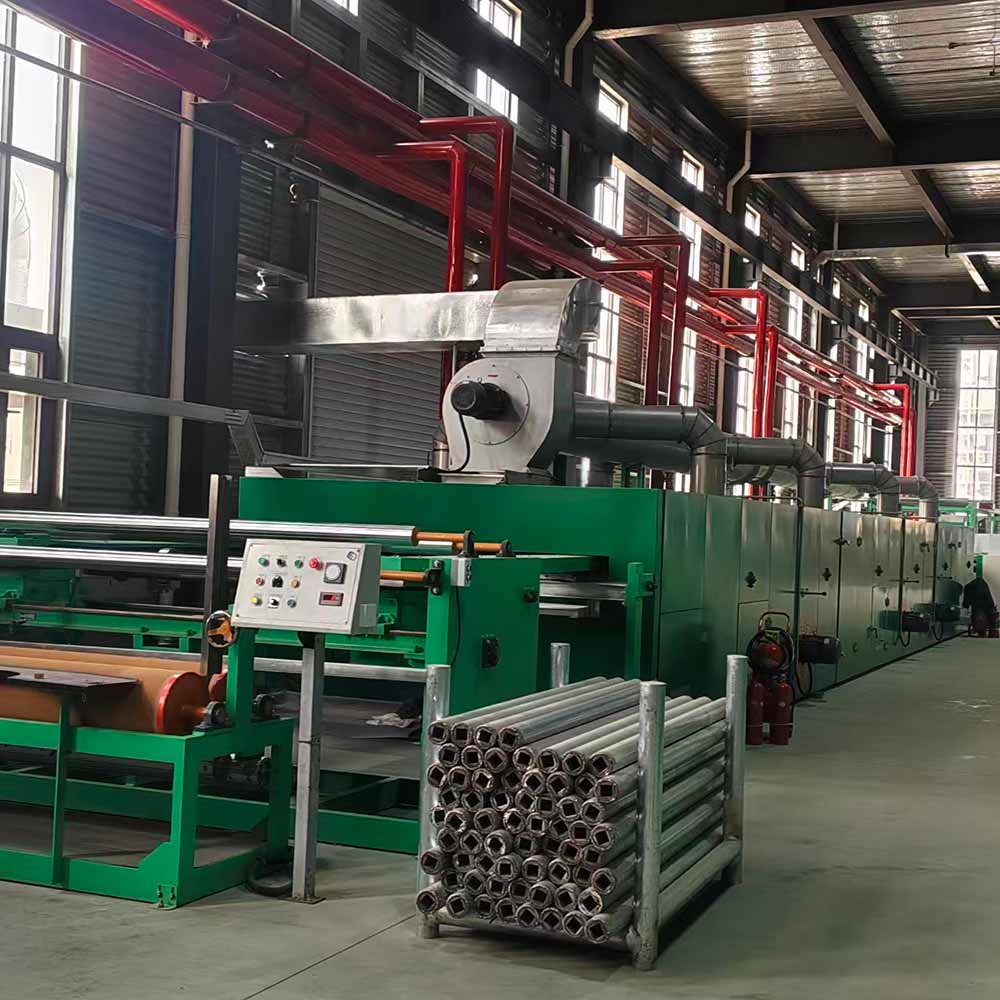
Maximum machine pressure is easy to compare on a specification sheet.
Uniform pressure is more important during real production.
Suppose a roll receives stronger embossing pressure in the center than along its edges. The result may be:
- deeper grain in the center;
- weaker grain near the edges;
- different gloss levels;
- uneven tactile feel.
Increasing the overall pressure might make the center grain even deeper without solving the edge problem.
Use a Cross-Web Test
A practical evaluation method is to inspect samples from three positions:
- Left side
- Center
- Right side
Compare each sample under similar lighting.
Look at:
- grain depth;
- definition;
- gloss;
- dimensions;
- surface marks.
If the same position repeatedly shows a different texture, investigate machine alignment, temperature distribution, pressure distribution, and incoming material variation.
How Material Structure Changes Embossing Results
One Leather embossing machine setting will not necessarily produce identical results on different materials.
This is because the machine forms the surface that already exists.
PU Leather
PU structures can vary in softness, elasticity, coating thickness, backing, and surface finish.
A soft PU material may form easily but also recover more after embossing.
A firmer structure may require different conditions to obtain the same apparent grain depth.
PVC Leather
PVC material can also respond strongly to process temperature.
Operators should evaluate both texture formation and any changes in dimensional or surface characteristics after cooling.
Textile-Backed Materials
The backing influences how the entire composite behaves under pressure and tension.
Stretchable backing fabrics may allow the web to elongate during production.
Firm backings can behave differently during deep embossing.
Laminated Structures
Multilayer materials should be evaluated as a complete structure.
Embossing conditions that successfully form the top layer may still affect:
- bonding layers;
- foam;
- backing fabric;
- overall thickness.
This is why production trials should use actual finished or near-finished material structures.
Leather Embossing Machine vs Manual Embossing
Industrial and manual embossing share the basic objective of creating surface relief, but they serve very different production needs.
| Factor | Leather Embossing Machine | Manual Embossing |
|---|---|---|
| Production format | Continuous or repeated industrial processing | Individual pieces |
| Pattern repeatability | High when properly controlled | Operator dependent |
| Working width | Suitable for larger material formats | Limited |
| Process control | Temperature, pressure, speed and tension | Primarily manual |
| Output consistency | Suitable for repeated production | Varies with technique |
| Pattern changes | Tooling or roller dependent | Flexible for small-scale work |
| Best use | Industrial production | Craft and specialized small work |
Manual methods remain useful for craft applications, but an industrial production environment requires the ability to reproduce defined surface characteristics repeatedly.
How Printing and Embossing Work Together
Printing and embossing are related surface-finishing processes, but they perform different jobs.
Printing adds color or visual design.
Embossing changes physical surface geometry.
Combining them can create a much richer appearance.
Printing Before Embossing
A printed surface can be embossed afterward to add physical texture.
The embossing process may change how the printed color appears because raised and recessed areas reflect light differently.
Heat and pressure may also influence gloss.
If embossing is part of normal manufacturing, the final color should therefore be approved after embossing rather than before it.
Embossing Before Printing
Printing onto an already embossed material can emphasize certain areas of the grain.
Depending on the printing process, color may be concentrated on raised regions or selectively applied within the pattern.
This can create greater visual depth.
Registered Printing and Embossing
More sophisticated surface effects may require a printed design to align with a particular embossing pattern.
This places higher demands on:
- web tension;
- material dimensions;
- pattern repeat;
- roller synchronization.
A small amount of stretching between processes may cause the printed and embossed designs to drift gradually out of alignment.
How a Leather Embossing Machine Improves Surface Consistency
A major advantage of industrial embossing is the ability to convert a surface effect into a controlled manufacturing specification.
The leather embossing surface-finishing process can be integrated with coating, drying and other production stages rather than treated as an isolated decorative operation.
Consistent Grain Depth
Once a validated process is established, the manufacturer can reproduce similar grain characteristics across different rolls.
This requires stable inputs as well as stable machine settings.
More Predictable Surface Appearance
Embossing gives the material a defined visual structure.
When roller condition and process parameters remain controlled, this appearance becomes easier to reproduce.
Controlled Texture Development
Different rollers allow manufacturers to create distinct surface identities from similar base materials.
This provides more flexibility in finished-surface design without necessarily changing the complete material structure.
Better Integration with Surface Finishing
Embossing can be coordinated with:
- coating;
- printing;
- gloss control;
- lamination;
- protective finishing.
The result is a complete surface system rather than an isolated texture.
Common Leather Embossing Machine Problems
Good troubleshooting begins by identifying the pattern of the defect.
Shallow or Weak Grain
Possible causes include:
- insufficient surface conditioning;
- inadequate pressure;
- excessive line speed;
- unsuitable roller pattern;
- excessive material recovery.
Before increasing pressure, verify whether temperature and contact time are appropriate.
Uneven Grain Across the Width
If one side consistently looks different from another, investigate:
- roller alignment;
- pressure distribution;
- heating uniformity;
- material thickness variation;
- web position.
A repeatable side-to-side difference usually has a systematic cause.
Texture Fades After Cooling
Sometimes the surface looks well formed immediately after embossing but becomes shallower after stabilization.
This may indicate excessive material recovery.
Investigate:
- forming conditions;
- material elasticity;
- cooling;
- substrate structure.
Always inspect the material after it has returned to a stable condition.
Unwanted Gloss
Gloss changes can occur because of:
- excessive heat;
- excessive pressure;
- roller surface condition;
- different substrate areas.
Lighting conditions should also remain consistent during visual inspection.
Wrinkles
Wrinkles are often related to material handling rather than embossing pressure.
Check:
- unwinding;
- tension;
- guiding;
- roller alignment;
- cooling;
- rewinding.
Repeating Surface Defects
A defect that appears at the same interval repeatedly is valuable diagnostic information.
Check rotating components, particularly the patterned roller and related contact surfaces.
A localized contaminant or damaged section can reproduce the same mark throughout an entire roll.
How to Test a Leather Embossing Machine
An effective machine trial should be designed around your most difficult production conditions rather than your easiest material.
Build a Representative Material Set
Include samples representing:
- thin material;
- thick material;
- soft surface;
- firmer surface;
- elastic backing;
- sensitive coating;
- common production structure.
Testing only one material gives an incomplete picture of machine capability.
Test More Than One Texture
Where possible, test both fine and deeper grain structures.
Fine patterns show whether the machine can maintain small details.
Deeper grains help evaluate forming capability and material recovery.
Run a Continuous Trial
Very short samples prove that a texture can be created.
A longer trial reveals whether the process remains stable.
During the run, observe:
- temperature stability;
- web tracking;
- grain depth;
- pressure consistency;
- tension;
- surface appearance.
Check the Full Working Width
Do not inspect only the center.
Compare left, center, and right samples.
Check After Cooling
The final inspection should be made after the material has stabilized.
This helps distinguish temporary pattern formation from lasting texture.
Create an Embossing Process Recipe
One of the most effective ways to improve consistency is to document successful production settings.
For every regular product, create a process record.
It might include:
- material identification;
- total thickness;
- backing structure;
- embossing roller;
- grain code;
- temperature;
- pressure;
- line speed;
- web tension;
- cooling condition;
- rewinding condition;
- approved reference sample.
Why Recipes Matter
Without process records, operators may rely heavily on memory.
That becomes increasingly difficult when a factory produces many:
- materials;
- grain patterns;
- thicknesses;
- surface finishes.
A recipe allows operators to return to a known starting point rather than building the process from zero every time.
Establish a Practical Quality-Control Method
Embossing quality should be inspected systematically.
Before Production
Check:
- incoming material;
- roller identification;
- roller cleanliness;
- machine condition;
- process settings.
At Startup
Approve the first section before continuing full production.
Evaluate:
- grain depth;
- pattern definition;
- gloss;
- width;
- dimensional condition.
During Production
Inspect at planned intervals.
A useful sampling pattern is:
left → center → right
and
beginning → middle → later production.
This checks both cross-web variation and process drift.
After Production
After cooling and rewinding, verify:
- texture retention;
- surface appearance;
- dimensional stability;
- roll quality.
After Downstream Processing
The embossed material should also be evaluated after relevant later operations.
For example:
embossing → lamination → cutting → sewing.
If texture or dimensions become unacceptable later, the embossing process may still require adjustment.
Maintenance That Protects Embossing Quality
Maintenance is not separate from quality control.
A Leather embossing machine gradually changes as rollers accumulate residue, bearings wear, alignment shifts, or tension components change.
Clean the Embossing Roller
Fine engraved structures can collect residue.
If the pattern becomes partially filled, texture definition may weaken.
Cleaning procedures should remove contaminants without damaging the engraved surface.
Check Roller Alignment
Alignment influences pressure distribution across the width.
Unexpected side-to-side grain variation should prompt an alignment inspection.
Verify Temperature Control
Heating components and sensors should be checked regularly.
A stable display does not always guarantee that actual conditions remain identical across every contact area.
Maintain the Web-Handling System
Inspect:
- rollers;
- drives;
- guides;
- brakes;
- sensors;
- bearings.
A web-handling problem can appear as an embossing defect.
What Should You Look for When Selecting a Leather Embossing Machine?
Selecting equipment should begin with a production requirement sheet.
Avoid starting only with maximum machine specifications.
Define Your Material
Document:
- material structure;
- thickness;
- working width;
- backing;
- surface coating;
- elasticity;
- heat response.
Define the Texture
Specify:
- grain style;
- pattern scale;
- depth;
- repeat;
- gloss;
- tactile requirement.
Define Production Conditions
Consider:
- required working width;
- normal production speed;
- material change frequency;
- roller change frequency;
- upstream processes;
- downstream processes.
Evaluate Adjustment Repeatability
An industrial machine should not merely be adjustable.
Its settings should be recoverable.
After changing from one product to another, operators should be able to return to the earlier process with limited trial material.
Common Selection Mistakes
Focusing on Maximum Pressure
Maximum pressure does not describe pressure uniformity.
Evaluate the finished surface across the entire working width.
Focusing Only on Maximum Speed
Mechanical speed matters only if texture remains acceptable.
The important figure is stable production speed.
Testing Only One Material
A machine that embosses one soft sample successfully may behave differently with a thicker or more elastic structure.
Use representative production materials.
Ignoring Cooling
Texture stability should be assessed after cooling, not only immediately after forming.
Ignoring Changeovers
If many patterns are required, evaluate roller changing, machine cleaning, recipe recovery, and setup repeatability.
Evaluating Embossing Alone
Surface quality can be influenced by upstream coating and downstream printing, lamination, or finishing.
Evaluate the complete manufacturing route.
A Practical Leather Embossing Machine Selection Checklist
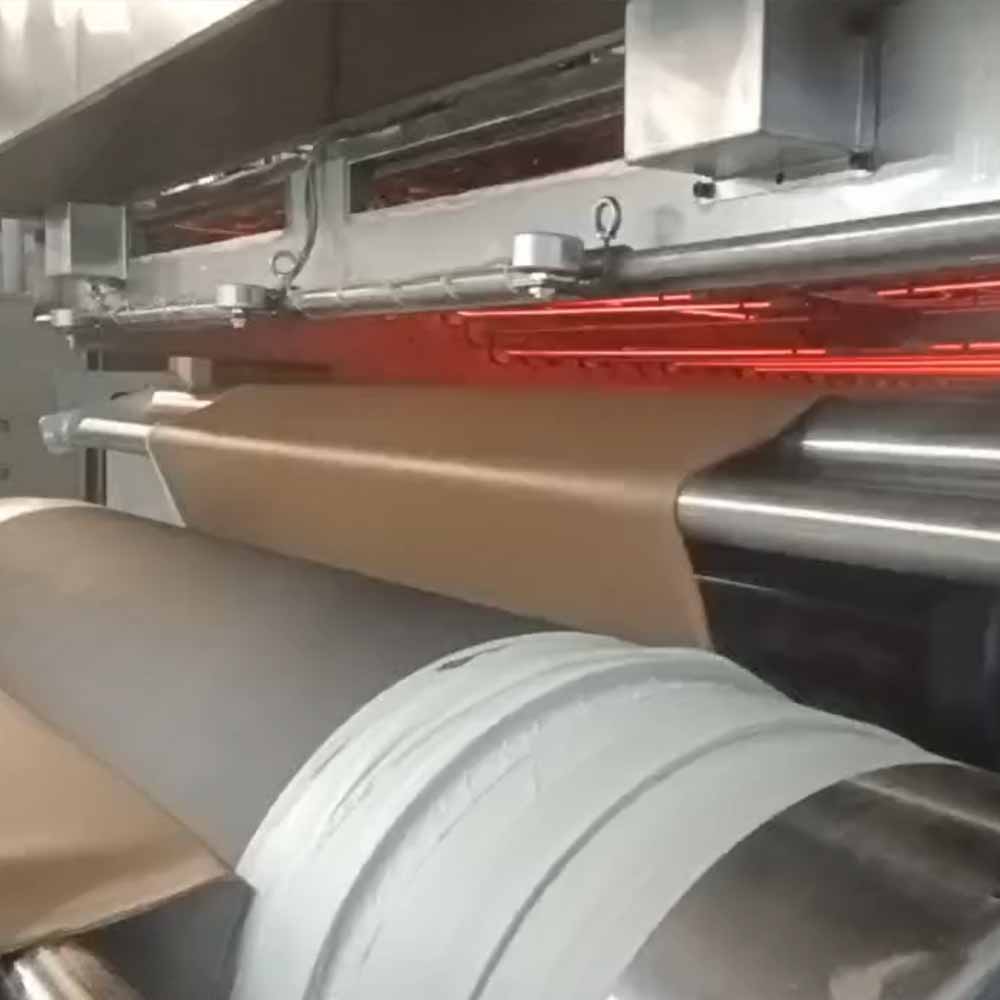
Before making a technical decision, answer these questions:
| Question | Why It Matters |
|---|---|
| What materials will be embossed? | Determines forming behavior |
| What is the thickness range? | Influences pressure and temperature |
| What working width is required? | Defines machine configuration |
| What grain depth is expected? | Influences roller and process design |
| How many patterns will be used? | Affects changeover requirements |
| Is the material printed first? | May affect temperature and alignment |
| Is the substrate stretchable? | Makes tension control more important |
| What production speed is required? | Affects forming time |
| How will the material be cooled? | Influences texture retention |
| What happens after embossing? | Determines final quality requirements |
Answering these questions creates a much stronger equipment specification than simply requesting “a machine for embossing leather.”
Conclusion
A Leather embossing machine is most effective when embossing is treated as an engineered surface-forming process rather than a simple decorative step.
Grain quality develops through the combined influence of material structure, embossing roller geometry, temperature, pressure, production speed, web tension, cooling, and downstream processing.
The most reliable machine evaluation therefore uses real production materials and measurable finished-surface requirements.
Instead of asking only whether a machine can create a pattern, manufacturers should ask:
Can it reproduce the same pattern across the full working width?
Can it maintain that result during continuous operation?
Can the same settings be recovered after a product change?
Does the grain remain stable after cooling and downstream processing?
When those questions can be answered consistently, the Leather embossing machine becomes more than a texture-making device. It becomes a controlled part of the surface-finishing system, helping manufacturers produce stable grain, recognizable surface character, and repeatable material quality.
FAQ
What does a Leather embossing machine do?
A Leather embossing machine forms grains, textures, logos, or decorative patterns on leather and synthetic leather surfaces. It combines a patterned roller or forming tool with controlled pressure, temperature, speed, tension, and cooling to produce repeatable surface structures.
Can a Leather embossing machine process PU and PVC leather?
Yes, suitable machines can process PU and PVC synthetic leather, but the same settings should not automatically be used for both. Surface coating, thickness, backing structure, elasticity, thermal response, and required grain depth all influence the correct embossing conditions.
What affects the texture quality of a Leather embossing machine?
The main factors include embossing roller geometry, temperature, pressure, line speed, web tension, material structure, alignment, and cooling. These variables interact, so changing one setting may influence grain depth, gloss, dimensions, and texture retention at the same time.
Why does a Leather embossing machine produce uneven grain?
Uneven grain can result from irregular pressure, temperature differences, roller misalignment, web tension variation, material thickness changes, or roller contamination. Comparing the left, center, and right sections helps determine whether the defect follows the machine or substrate.
How should I choose a Leather embossing machine?
Start with your actual material, thickness range, working width, grain design, expected texture depth, production speed, and downstream processes. Test representative materials and inspect texture consistency after cooling instead of choosing equipment only by maximum pressure or speed.