If you are working in the synthetic leather industry, you already know that PVC leather is one of the most widely used materials in global manufacturing. From automotive interiors to furniture, footwear, and fashion accessories, PVC leather continues to play a major role because of its balance between cost, durability, and design flexibility.
But here’s the real challenge: producing high-quality PVC synthetic leather consistently at scale is not just about raw materials. It depends heavily on your production process, equipment configuration, and how well you control each stage of manufacturing.
In this guide, you will walk through the full industrial perspective of PVC synthetic leather production, including how it is made, what equipment you need, how to improve quality, real production cases, and how to optimize your factory for better efficiency and lower defect rates.
Table of Contents
What PVC Leather Really Is in Industrial Production
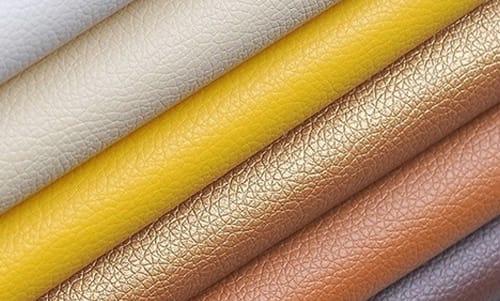
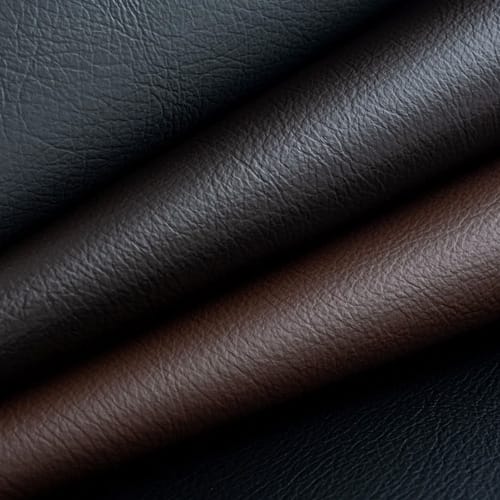
PVC leather, also known as polyvinyl chloride synthetic leather, is a man-made material designed to replicate the appearance and performance of natural leather while offering better cost control and processing flexibility.
In industrial production, PVC leather is typically created by coating a fabric base with PVC resin, plasticizers, stabilizers, and functional additives. The result is a layered material that can be engineered for different softness levels, textures, and durability requirements.
Unlike natural leather, PVC leather allows you to fully control:
- Thickness
- Surface texture
- Color stability
- Water resistance
- Flame resistance (in advanced formulations)
This flexibility is why it is widely used in mass production industries.
Why PVC Leather Is Still in High Demand Globally
Even with the rise of PU and other synthetic materials, PVC leather remains a strong choice for manufacturers due to its cost efficiency and processing stability.
Based on industry material usage reports in the synthetic leather sector, PVC-based materials still account for a significant share of low-to-mid range leather production, especially in high-volume consumer goods.
The main reasons include:
- Lower raw material cost compared to PU systems
- Easier production control in continuous lines
- Strong resistance to moisture and wear
- High adaptability for embossing and surface design
For you as a manufacturer, this means PVC leather can be a stable product line with predictable margins if your production system is well optimized.
How PVC Leather Is Made in Industrial Production Lines
Understanding the production process is essential if you want to improve efficiency or reduce defects in your factory.
Step 1: Base Fabric Preparation
The process starts with selecting and preparing a fabric base, which can be polyester, cotton, or blended textiles.
Key requirements:
- Uniform thickness
- Clean surface without contamination
- Stable tension during feeding
Any inconsistency at this stage will affect coating quality later.
Step 2: PVC Coating Formulation
A PVC mixture is prepared using:
- PVC resin
- Plasticizers
- Stabilizers
- Fillers and additives
The formulation determines:
- Softness
- Flexibility
- Heat resistance
- Final texture
Small adjustments in formulation can significantly change product performance.
Step 3: Coating Application
The PVC mixture is applied onto the fabric using a coating machine.
This stage determines:
- Thickness uniformity
- Surface smoothness
- Adhesion strength
Typical coating thickness ranges from 0.3 mm to 1.2 mm depending on application.
Step 4: Gelation and Heating Process
The coated material enters a heating oven where PVC particles fuse into a continuous layer.
Temperature control is critical:
- Too low → weak bonding
- Too high → surface deformation
This stage defines the final structural stability of PVC leather.
Step 5: Embossing and Surface Finishing
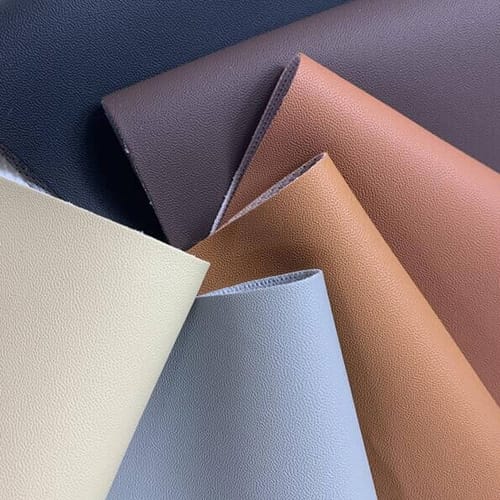
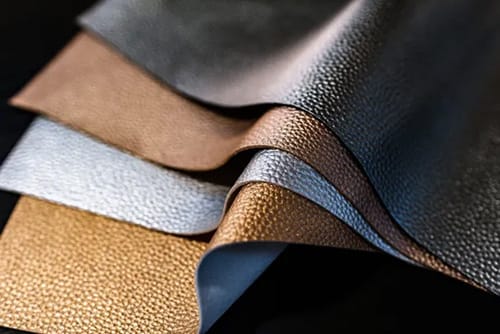
Once gelled, the material is passed through embossing rollers to create textures such as:
- Grain patterns
- Matte finishes
- Glossy surfaces
This is where PVC leather gains its “leather-like” appearance.
Step 6: Cooling and Rolling
The final product is cooled, inspected, and rolled for storage or further processing.
Key Equipment Used in PVC Synthetic Leather Production
A complete PVC leather production line typically includes:
- Coating machine
- Drying and gelation oven
- Embossing unit
- Cooling system
- Winding and tension control system
Each component plays a critical role in ensuring consistency.
Comparison of PVC Leather Production Parameters
| Process Stage | Key Control Factor | Common Issue If Uncontrolled | Impact on Product Quality |
|---|---|---|---|
| Coating | Thickness uniformity | Uneven surface | Poor appearance |
| Mixing formulation | Plasticizer ratio | Hard or brittle material | Reduced flexibility |
| Heating | Temperature stability | Deformation or weak bonding | Structural instability |
| Embossing | Pressure balance | Distorted patterns | Low visual quality |
| Cooling | Speed control | Wrinkling | Surface defects |
Real Production Case: Improving PVC Leather Quality in a Factory Setup
A synthetic leather manufacturer producing PVC leather for furniture applications faced a common issue: inconsistent surface texture and high rejection rates.
The main problems were:
- Uneven coating thickness
- Poor temperature control in the oven
- Irregular embossing pressure
After optimizing their production line, including improved airflow design and better embossing calibration, they achieved:
- 25% reduction in defect rate
- 18% increase in production efficiency
- More stable surface gloss consistency
The key improvement was not changing materials, but improving process control.
Applications of PVC Leather You Can Target
PVC leather is used across multiple industries, and understanding these applications helps you position your production strategy:
- Furniture upholstery (sofas, chairs)
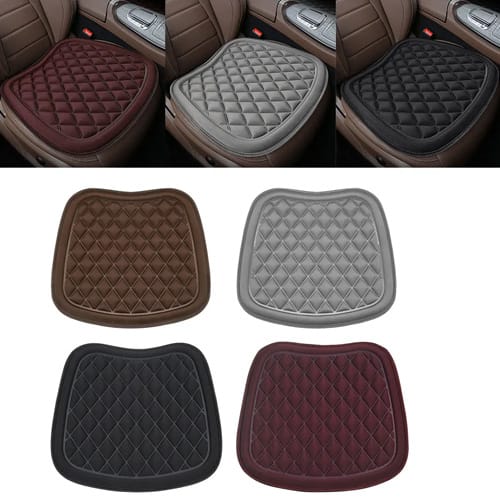
- Automotive interiors (seat covers, dashboards)
- Footwear components
- Bags and luggage
- Decorative interior materials
- Industrial protective coverings
Each application requires different softness, texture, and durability levels.
How You Can Improve PVC Leather Production Quality
If you are managing a production line, here are practical optimization strategies:
Control Your Formulation Consistency
Even small variations in plasticizer ratio can affect flexibility.
Improve Temperature Zoning
Multi-zone heating ensures more stable gelation.
Standardize Coating Thickness
Automated systems reduce human error.
Maintain Embossing Pressure Balance
Uneven pressure leads to inconsistent surface patterns.
Monitor Material Tension
Stable feeding prevents wrinkles and distortion.
Common Production Problems and Solutions
Problem: Surface bubbles
Cause: Rapid heating or trapped air
Solution: Improve pre-heating and degassing process
Problem: Weak adhesion
Cause: Incorrect formulation ratio
Solution: Adjust plasticizer and resin balance
Problem: Uneven embossing
Cause: Roller pressure imbalance
Solution: Recalibrate embossing system
Future Trends in PVC Synthetic Leather Manufacturing
The industry is evolving toward:
- Lower emission PVC formulations
- Energy-efficient heating systems
- Automated production lines with real-time monitoring
- Multi-texture embossing technology
- Hybrid material systems combining PVC and PU layers
These trends are shaping how modern factories compete in the global market.
Practical Insight for Your Production Strategy
If you want to stay competitive, your focus should not only be on raw materials, but on:
- Process stability
- Equipment precision
- Production consistency
- Energy optimization
Factories that control these factors well are usually the ones that achieve lower cost per unit and higher product quality.
Conclusion
PVC leather remains one of the most practical and widely used synthetic materials in industrial production. However, achieving consistent quality requires more than just a basic production setup.
By understanding each stage of the process—from coating to embossing—and optimizing your production line accordingly, you can significantly improve efficiency, reduce defects, and expand your product applications.
For manufacturers, PVC synthetic leather is not just a material—it is a scalable production opportunity when managed correctly.
FAQ
What is PVC leather used for?
PVC leather is widely used in furniture, automotive interiors, footwear, bags, and decorative materials.
Is PVC synthetic leather waterproof?
Yes, PVC leather has strong water resistance due to its synthetic coating structure.
What is the difference between PVC and PU leather?
PVC is more rigid and cost-effective, while PU is softer and more breathable.
Can PVC synthetic leather be customized?
Yes, it can be customized in thickness, color, texture, and surface finish.
Is PVC synthetic leather suitable for mass production?
Yes, it is one of the most stable materials for continuous industrial production.
Need Help Choosing the Right PVC Leather Production Solution?
If you’re unsure which PVC synthetic leather production line is best for your factory, materials, or product requirements, our experts are here to help. Contact us today for a personalized consultation, and ensure your PVC leather products achieve stable quality, high efficiency, and reliable performance. Don’t wait until production issues affect your business—get in touch now to optimize your PVC leather manufacturing process!