If you are planning to build or upgrade a synthetic leather factory, there is one question you cannot afford to get wrong: how do you ensure consistent quality while keeping production efficient and scalable?
The answer, in many cases, lies in how well you understand and configure your Dry PU synthetic leather production line.
Over the past decade, demand for synthetic leather has grown steadily across industries such as footwear, automotive interiors, furniture, and fashion accessories. According to data from industry research reports on synthetic materials, global synthetic leather production continues to expand at an annual growth rate of around 6–8%, driven by increasing demand for durable, cost-effective, and customizable alternatives to natural leather.
But growth alone does not guarantee success. Many manufacturers struggle with unstable coating quality, high defect rates, and rising energy costs. If you have experienced issues like uneven thickness, weak adhesion, or inconsistent surface finishes, your production line configuration is likely the root cause.
This guide is designed to give you a clear, practical, and technical understanding of how a Dry PU synthetic leather production line works, how to optimize it, and how to make better investment decisions that directly impact your profitability.
Table of Contents
What Is a Dry PU Synthetic Leather Production Line?
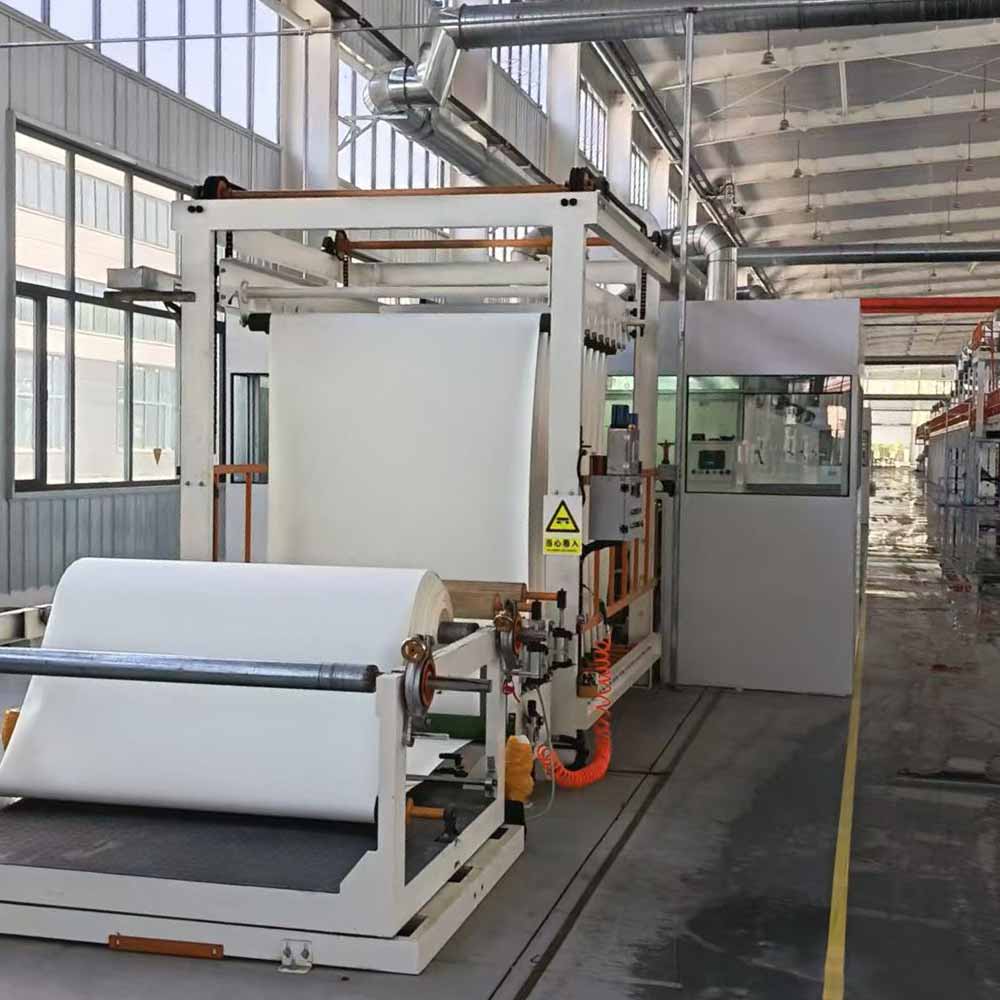
A Dry PU synthetic leather production line is a solvent-based polyurethane coating system used to manufacture synthetic leather through controlled coating, drying, and lamination processes.
At its core, the process involves three essential steps:
- Applying a liquid PU resin formulation onto a surface
- Evaporating the solvent under controlled heat conditions
- Forming a solid PU film that bonds to a substrate
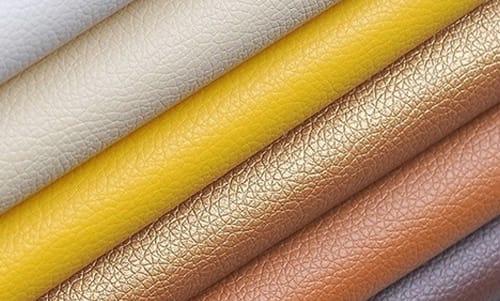
The result is a multi-layer synthetic leather material that replicates the structure, appearance, and mechanical performance of natural leather.
What makes the dry process unique is the way it forms the PU layer. Instead of using water coagulation like wet processes, it relies on solvent evaporation, which allows for:
- Better surface smoothness
- More precise thickness control
- Stronger interlayer bonding
This is why dry PU production lines are widely used for high-quality applications where visual appearance and durability are critical.
Why the Dry Process Continues to Dominate Industrial Production
Despite the emergence of water-based and solvent-free technologies, the dry PU process remains a dominant choice in industrial manufacturing.
The reason is simple: it offers a balance of performance, flexibility, and reliability that is difficult to replace.
Based on technical publications in polymer coating and industrial finishing systems, dry PU processes provide:
- Up to 25–40% better surface uniformity compared to basic coating systems
- Higher peel strength due to controlled film formation
- Greater compatibility with complex formulations
From an operational standpoint, this means fewer production interruptions and more stable output.
For you as a manufacturer, that translates into:
- Lower defect rates
- Reduced material waste
- Higher customer satisfaction
Deep Dive: How the Dry PU Synthetic Leather Production Line Process Works
To truly optimize your production line, you need to understand not just the steps, but what happens at each stage from a material and process perspective.
Coating Stage: Precision Determines Everything
The coating unit applies a solvent-based PU resin onto release paper or fabric. The viscosity of the resin, the speed of the coating roller, and the gap settings all influence the final thickness.
Typical coating thickness ranges from:
- 20–200 microns per layer depending on application
Even a small deviation can lead to:
- Uneven surfaces
- Weak bonding
- Increased rejection rates
Drying Stage: The Most Critical Phase
The coated material passes through a multi-zone drying oven, usually divided into 4 to 8 temperature-controlled sections.
Each zone serves a specific purpose:
- Initial zone: gentle solvent evaporation
- Middle zones: accelerated evaporation
- Final zones: film stabilization
Typical temperature ranges:
- 80°C to 160°C depending on formulation
If solvent evaporates too quickly:
- Bubbles and voids may form
If too slowly:
- Production efficiency drops
Airflow control is equally important. According to drying technology studies, airflow uniformity can influence coating consistency by more than 30%.
Film Formation and Layer Structuring
As solvent leaves the system, PU molecules reorganize and solidify into a continuous film. This stage determines:
- Surface smoothness
- Mechanical strength
- Flexibility
Multi-layer coating allows you to engineer different properties:
- Base layer for adhesion
- Middle layer for strength
- Top layer for texture and finish
Lamination Stage
The PU film is bonded to a textile or non-woven substrate.
Key factors:
- Pressure: typically 2–10 MPa
- Temperature: optimized for adhesion without damaging the substrate
Strong lamination ensures:
- High peel strength
- Long-term durability
Engineering Structure of a Modern Dry PU synthetic leather production line
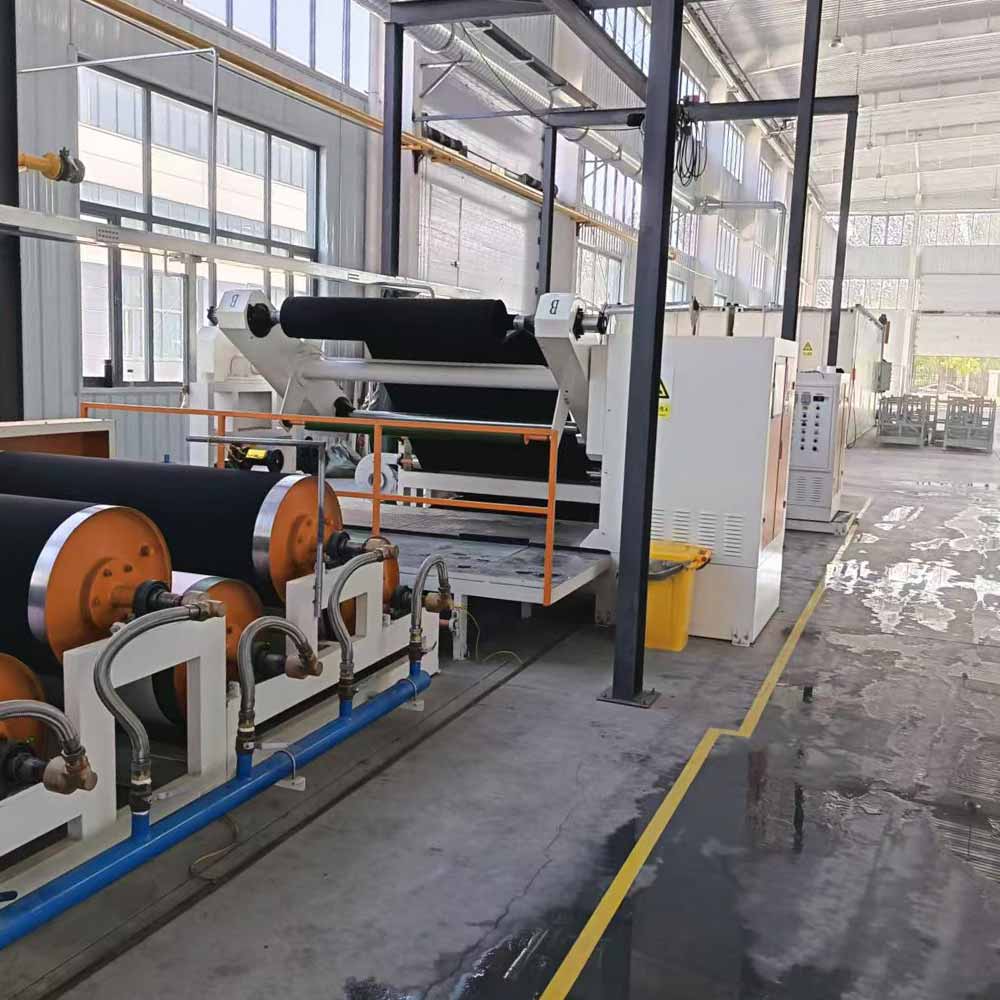
A high-performance dry PU synthetic leather production line includes several integrated systems:
- Precision coating machine
- Multi-zone drying oven
- Air circulation and exhaust system
- Lamination unit
- Cooling and winding system
- Automated control system
Modern lines often include PLC-based control systems that allow real-time monitoring of:
- Temperature
- Line speed
- Coating thickness
Real Industrial Case Study: Performance Optimization
A synthetic leather manufacturer focused on automotive interior materials faced recurring issues:
- Surface pinholes
- Inconsistent gloss levels
- High rejection rate (around 18%)
After upgrading their drying system and airflow control:
- Defect rate dropped to below 6%
- Production speed increased from 12 m/min to 18 m/min
- Annual cost savings exceeded 12%
The key improvement came from better control of solvent evaporation and temperature uniformity.
Comparative Analysis of Different Dry PU Synthetic Leather Production Line Configurations
| Configuration Type | Drying Zones | Output Speed | Best Application |
|---|---|---|---|
| Basic Line | 3–4 zones | Low | Small workshops |
| Standard Line | 5–6 zones | Medium | General products |
| Advanced Line | 7–8 zones | High | Automotive, furniture |
| Custom Line | 8+ zones | Very high | High-end industrial use |
Cost Structure and ROI Analysis
Understanding cost is critical before investment.
Typical cost distribution in a production line:
- Equipment: 40–50%
- Energy consumption: 20–30%
- Labor: 10–15%
- Maintenance: 5–10%
According to industry benchmarks, upgrading to an optimized production line can reduce:
- Energy consumption by 10–20%
- Waste rates by up to 25%
Payback period is typically:
- 1.5 to 3 years depending on production scale
Advanced Customization Options
Modern production lines are rarely one-size-fits-all. You can customize:
- Coating width (typically 1200–2000 mm)
- Oven length (15–40 meters)
- Heating system (gas, electric, thermal oil)
- Air circulation design
- Integration with embossing or finishing units
Customization allows you to match production with specific market needs.
Environmental and Safety Considerations
Solvent-based PU systems require proper environmental management.
Key factors include:
- Solvent recovery systems
- Exhaust gas treatment
- Heat recycling systems
New-generation systems can reduce solvent emissions by up to 60% through optimized airflow and recovery technologies.
Maintenance Strategy for Long-Term Stability
To keep your production line running efficiently:
- Inspect coating rollers weekly
- Clean drying chambers regularly
- Monitor temperature sensors
- Replace worn components proactively
Preventive maintenance can reduce downtime by up to 30% according to industrial equipment studies.
Future Development Trends
Looking ahead, several trends are shaping the industry:
- Water-based PU systems for lower emissions
- Solvent-free coating technologies
- AI-based process monitoring
- Smart factories with digital integration
- Hybrid production lines combining dry and wet processes
These innovations aim to improve efficiency while meeting stricter environmental standards.
Strategic Insight: How You Can Stay Competitive
If you want to stay ahead in the synthetic leather industry, focus on:
- Process control rather than just equipment
- Flexibility in formulation and production
- Energy efficiency and sustainability
- Continuous improvement through data monitoring
The manufacturers who succeed are not just those with the latest machines but those who understand how to optimize them.
Conclusion
A Dry PU synthetic leather production line is more than just a manufacturing system. It is a strategic asset that determines your product quality, cost efficiency, and market competitiveness.
By understanding the process in depth, investing in the right configuration, and continuously optimizing your operations, you can significantly improve your production performance and long-term profitability.
FAQ
What is the main advantage of dry PU synthetic leather production line?
It provides better surface control, stronger adhesion, and higher production efficiency.
How long does a production line typically last?
With proper maintenance, it can operate efficiently for over 10–15 years.
Is customization necessary?
Yes, customization ensures the line matches your specific product and capacity requirements.
What is the biggest challenge in dry PU synthetic leather production line?
Controlling solvent evaporation and maintaining temperature stability.
Can this system support future upgrades?
Yes, most modern lines are designed for modular upgrades and integration.